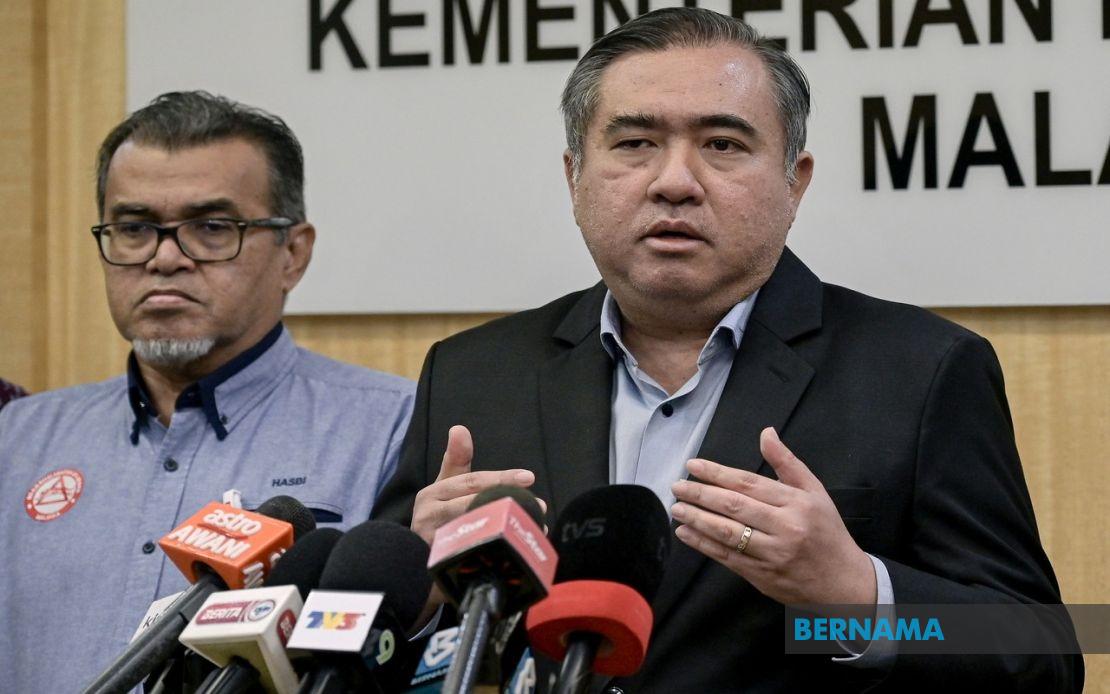
Transport Minister Anthony Loke has dismissed suggestions that government approval is required for port management appointments, clarifying that such decisions remain the prerogative of individual companies rather than state authorities. Speaking in Putrajaya on July 17, Loke explained that while the government maintains strict oversight of ownership structures at strategically significant infrastructure, it deliberately abstains from involvement in day-to-day corporate leadership selections, including those filling positions with international candidates.
The minister's remarks came in response to international media coverage concerning Sultan Ahmed Sulayem, the former chairman and chief executive officer of logistics giant DP World, who recently assumed the role of executive chairman at MMC Ports Holdings Bhd following the abrupt resignation of group chief executive officer Azman Shah Mohd Yusof. This appointment had generated questions about whether such senior-level changes require government endorsement, particularly given the port operator's strategic importance to Malaysia's maritime and economic infrastructure.
Loke articulated the government's regulatory framework with precision: concession holders and operators managing ports designated as strategic national assets must maintain a minimum of 51 per cent Malaysian ownership. This threshold serves as the cornerstone of government policy, ensuring that control of critical port infrastructure remains anchored to Malaysian interests regardless of who occupies management positions. Beyond this ownership requirement, the government deliberately maintains distance from internal corporate governance matters, allowing companies considerable latitude in selecting their leadership teams.
The Port of Tanjung Pelepas (PTP) serves as a practical illustration of this hands-off approach to management appointments. Despite its classification as a strategically important facility, PTP operates under the direction of a foreign national chief executive officer, demonstrating that the government's commitment to neutrality extends even to the country's most vital port operations. This precedent underscores that the absence of government interference in management decisions represents established practice rather than a novel position triggered by recent events.
The distinction Loke drew between ownership oversight and management autonomy reflects a deliberate policy architecture designed to achieve competing objectives simultaneously. The government secures Malaysian stakeholder control over strategic assets while permitting the appointment of qualified professionals irrespective of nationality, potentially enhancing operational efficiency and attracting international expertise. This framework acknowledges that effective port management increasingly demands specialized knowledge and experience that may not be exclusively available within Malaysia's borders.
Nevertheless, Loke emphasized that any substantive alterations to shareholding patterns triggering changes in ownership control must be formally communicated to government authorities. The Public-Private Partnership Unit (UKAS) serves as the institutional mechanism through which such notifications flow, creating a formal record of ownership transitions. This notification requirement preserves government transparency and enables authorities to verify that the critical 51 per cent Malaysian ownership threshold remains satisfied, even as individual executive appointments proceed without formal governmental blessing.
When pressed on whether the ministry had received formal notification regarding any potential shifts in ownership at MMC Ports Holdings Bhd, Loke stated unambiguously that no such communication had been received from either the company or its concessionaire. This response suggests that while media attention focused on the executive leadership change, no underlying restructuring of the shareholding arrangement had been officially disclosed to transport ministry officials. The absence of such notification indicates either that the management transition proceeded without ownership adjustments, or that any such changes remained unreported at the time of the minister's comments.
For Malaysia's port sector, which comprises several significant facilities handling containerized cargo and bulk commodities essential to regional trade flows, the government's position carries substantial implications. Maintaining Malaysian ownership control while permitting international executive leadership potentially positions Malaysian port operators to compete effectively in a globalized shipping environment where efficiency and technological sophistication increasingly determine market success. However, the sector must navigate the boundary between foreign executive expertise and Malaysian strategic oversight with precision.
The episode also reflects broader questions about how Southeast Asian nations balance nationalist economic objectives with the practical demands of modern infrastructure management. Malaysia's approach—separating ownership control from operational leadership—represents a middle path between strict localization requirements that may constrain expertise and completely open management frameworks that could theoretically subordinate strategic assets to foreign interests. This model may offer insights for other regional economies grappling with similar tensions between domestic ownership requirements and the global talent pool from which world-class infrastructure operators increasingly draw.
Loke's comments were delivered while announcing amendments to the Road Transport Department (JPJ) Act establishing accident victim compensation provisions and strengthening the demerit point system for traffic violations, indicating the breadth of portfolio responsibilities within Malaysia's transport sector. The clarification on port governance emerged from reporter queries rather than through a dedicated policy announcement, suggesting that while the government position remains consistent, communication about ownership and management arrangements at port facilities had not previously received explicit ministerial articulation in public forums.
The timing of these remarks comes as Malaysia continues developing its port infrastructure to capture growing volumes of intra-Asian trade and to position itself as a competitive regional logistics hub. Port operators require access to sophisticated operational expertise, advanced technology systems, and strategic commercial knowledge that increasingly transcends national boundaries. Loke's statement signals that the government understands this reality while remaining committed to preserving Malaysian control over ownership structures that ultimately determine strategic decision-making authority at these vital facilities.

