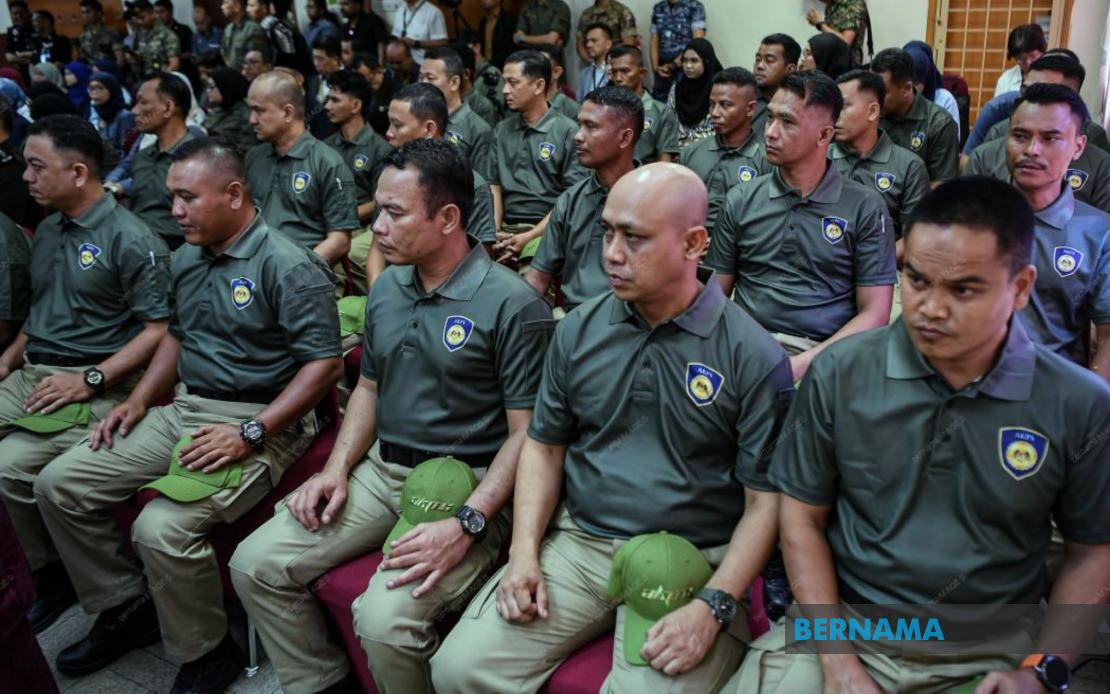
The Malaysian government has provided assurances that personnel working with the Border Control and Protection Agency (AKPS) will face no adverse consequences to their career advancement, seniority standing, retirement entitlements or general welfare during a significant administrative restructuring set to commence on July 1. Deputy Home Minister Datuk Seri Dr Shamsul Anuar Nasarah delivered these guarantees in Parliament, addressing concerns about employment stability within the newly established agency responsible for managing movement control at the country's border checkpoints.
The AKPS, formed through a consolidation of multiple enforcement bodies, operates across 122 entry and exit points nationwide. Its establishment represented a major restructuring aimed at streamlining border security and customs operations under a unified command structure. The transition to PSD oversight introduces a fresh administrative framework intended to enhance operational efficiency and standardize personnel management across these critical functions.
Shamsul Anuar clarified that officers electing to retain their original service classification with their parent agencies would encounter no barriers to advancement or changes to their accumulated benefits. This provision addresses fears among the workforce that the administrative shift might disadvantage those choosing not to transfer fully into the new AKPS service designation. The government's position recognizes the legitimate concerns of experienced personnel who have built their careers within established enforcement organizations.
The AKPS staffing situation reflects the practical challenges of large-scale institutional consolidation. As of mid-June, approximately 6,824 of the 8,403 authorized positions had been filled, leaving approximately 1,579 vacancies requiring attention. This gap represents roughly 19 percent of the total allocation, suggesting the recruitment and placement process remains incomplete as the transition deadline approaches. The Home Ministry, PSD and participating agencies are working collaboratively to address these shortfalls through ongoing recruitment initiatives.
Officers declining the transfer option will initially remain with AKPS on a temporary status while their future placements are finalized. The PSD will subsequently coordinate their reassignment to their original parent departments, taking into account available positions and organizational requirements determined by their respective service leadership. This arrangement provides flexibility for those uncertain about transferring while ensuring their employment security remains intact.
To encourage acceptance of AKPS postings and retain experienced personnel at Malaysia's international gateways, the government has introduced financial incentives. New recruits and transferred staff receive additional annual salary increments designated as KGT allowance, supplemented by a RM200 monthly service incentive. These measures aim to compensate for the demands associated with border control work and maintain service quality at the 122 ports of entry handling millions of people and substantial cargo volumes annually.
The parliamentary exchange revealed the government's commitment to managing institutional change with attention to workforce stability. Deputy Minister Shamsul Anuar responded to questions raised by Rushdan Rusmi, MP for Padang Besar, who expressed concern about enforcement institutional integrity and the welfare of thousands of civil servants affected by the reorganization. The response emphasized that restructuring need not come at the expense of personnel security or career prospects.
For Malaysia's broader civil service environment, the AKPS transition serves as a case study in how large administrative reforms can be executed while protecting incumbent employees. The approach taken—offering choices, maintaining benefits, providing financial sweeteners, and establishing interim arrangements—demonstrates efforts to balance organizational modernization with employee welfare considerations. This balance proves particularly important given the sensitivity surrounding public sector employment, where sudden changes can trigger workforce instability and service disruptions.
The phased completion of AKPS staffing through to July underscores the logistical complexity of consolidating enforcement agencies. Coordination among the Home Ministry, PSD, customs authorities, immigration services and other agencies involved in border control requires careful planning to prevent operational gaps. The government's collaborative approach seeks to prevent the scenario where insufficient personnel might compromise Malaysia's capacity to process travelers and cargo at international ports of entry during the critical transition period.
For regional context, border security reorganization has emerged as a priority across Southeast Asia as governments grapple with growing passenger volumes, expanded trade flows, and evolving security threats. Malaysia's restructuring of border control functions through AKPS reflects this broader regional emphasis on consolidating fragmented enforcement capabilities. How successfully the government manages the welfare and deployment dimensions of this transition may influence future administrative reform initiatives elsewhere in the region.
The government's compensation packages and safeguards suggest recognition that moving experienced border control officers into new institutional structures requires more than mere administrative fiat. The KGT allowance and RM200 monthly incentive address the reality that qualified personnel possess career options and can choose whether to embrace new arrangements. By making AKPS postings financially attractive and protecting existing entitlements, the government seeks to maintain the caliber of staff managing Malaysia's 122 international gateways.
As the July 1 effective date approaches, the success of this transition will depend substantially on how smoothly recruitment, placement and administrative procedures proceed. The remaining 1,579 vacancies require rapid filling to prevent operational strain. Equally important will be ensuring that the interim arrangements for officers awaiting permanent placement function without creating uncertainty or morale problems that might drive experienced staff toward other opportunities outside the civil service.

