The Malaysian government has moved to stabilise Lembaga Tabung Haji (TH) through an emergency financial injection of more than RM10 billion, framing the rescue as a necessary intervention to restore institutional viability rather than a takeover manoeuvre. The bailout was presented to parliament as the only realistic solution to an acute solvency crisis that emerged during the fourth quarter of 2018, when the pilgrimage fund's accumulated deficit had swollen to exceed RM10 billion, leaving policymakers just three months to implement corrective measures or face institutional collapse.
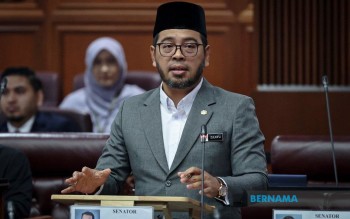
Dr Zulkifli Hasan, the Minister in the Prime Minister's Department overseeing religious affairs, used a special parliamentary sitting to clarify the government's rationale and to firmly rebut circulating allegations that the restructuring involved disposing of TH assets to non-Muslim or Chinese investors. He underscored that the financial rescue was designed exclusively to rehabilitate the organisation's balance sheet and ensure its continued operation as a pilgrimage savings vehicle for Malaysian Muslims, not to facilitate asset seizure or privatisation.
The backdrop to this intervention involved extensive mismanagement and embezzlement at the institution, which had accumulated liabilities far exceeding its asset base. The situation represented a fundamental breach of trust with millions of Malaysian Muslim depositors who had entrusted their hajj savings to TH over decades. By the point of intervention, the organisation faced insolvency, meaning its obligations to members could no longer be met from operational cash flows or asset liquidation alone.
Critically, Dr Zulkifli stressed that any assets held by TH subsidiary entities remain under government control through the Minister of Finance Incorporated framework. Specifically, assets are managed through Urusharta Jamaah, a wholly-owned company operating under this governmental holding structure. This distinction is legally and politically significant because it means no privatisation occurred and no external parties—whether domestic or foreign, Muslim or non-Muslim—obtained material stakes in TH's property or investment portfolios.
The clarification addresses a sensitive undercurrent in Malaysian public discourse. False claims had circulated that TH's restructuring involved selling institutional assets to non-Muslim investors or Chinese business interests. Such narratives carry particular resonance in a nation where religious and ethnic sensitivities around Islamic institutions remain acute. The minister's unambiguous rebuttal suggests government concern that misinformation could undermine public confidence in the hajj savings scheme at the precise moment it required restoration of credibility and member trust.
The Royal Commission of Inquiry into TH's collapse had documented systematic failures in governance, risk management, and oversight. These institutional weaknesses had been exploited through fraudulent transactions, improper lending, and speculative ventures that depleted reserves. The scale of deterioration meant that conventional remedial measures—operational efficiency gains, cost controls, or modest asset sales—could not possibly bridge the RM10 billion gap in the timeframe available.
Government intervention thus represented a pragmatic acknowledgment that TH's problems transcended ordinary corporate distress and touched upon the fiduciary responsibilities of a sovereign fund managing the religious obligations of millions of citizens. The bailout amount, while substantial, reflects both the magnitude of accumulated losses and the determination to preserve institutional continuity rather than permit liquidation or reorganisation that would harm members' accumulated balances.
For Malaysian pilgrims and prospective hajj travellers, the intervention carries mixed implications. On one hand, the government guarantee effectively reinstates the security of their savings, which had been at existential risk during the solvency crisis. On the other, the bailout represents a fiscal cost ultimately borne by Malaysian taxpayers generally, raising questions about accountability and whether adequate consequences fell upon those responsible for mismanagement.
The restructuring framework contemplated by policymakers also signals intent to implement strengthened governance protocols, enhanced internal controls, and periodic external auditing to prevent recurrence of the failures that necessitated such dramatic intervention. The parliamentary briefing served not only to explain the immediate rescue but to signal government commitment to long-term institutional reform.
For the broader regional context, TH's near-collapse and rescue underscore vulnerabilities that can affect savings vehicles and pilgrim-focused financial institutions across Muslim-majority Southeast Asia. Malaysia's transparent handling of the crisis and its public commitment to asset protection provides a potential model for peer nations grappling with similar institutional challenges, even as it raises awareness of the operational and governance risks endemic to large-scale savings schemes managing religious obligations.
The minister's explicit denial of asset sales to non-Muslim or Chinese investors also reflects broader concerns about maintaining interfaith trust in multi-religious Malaysia. By confidently asserting that all restructured assets remain within the state-controlled framework and immune to external acquisition, the government seeks to reassure Muslim constituencies that restructuring did not compromise Islamic institutional autonomy or subject TH to non-Muslim oversight. This political messaging dimension is inseparable from the technical financial narrative, illustrating how institutional rescue in Malaysia necessarily engages both economic and religious-communal considerations.

