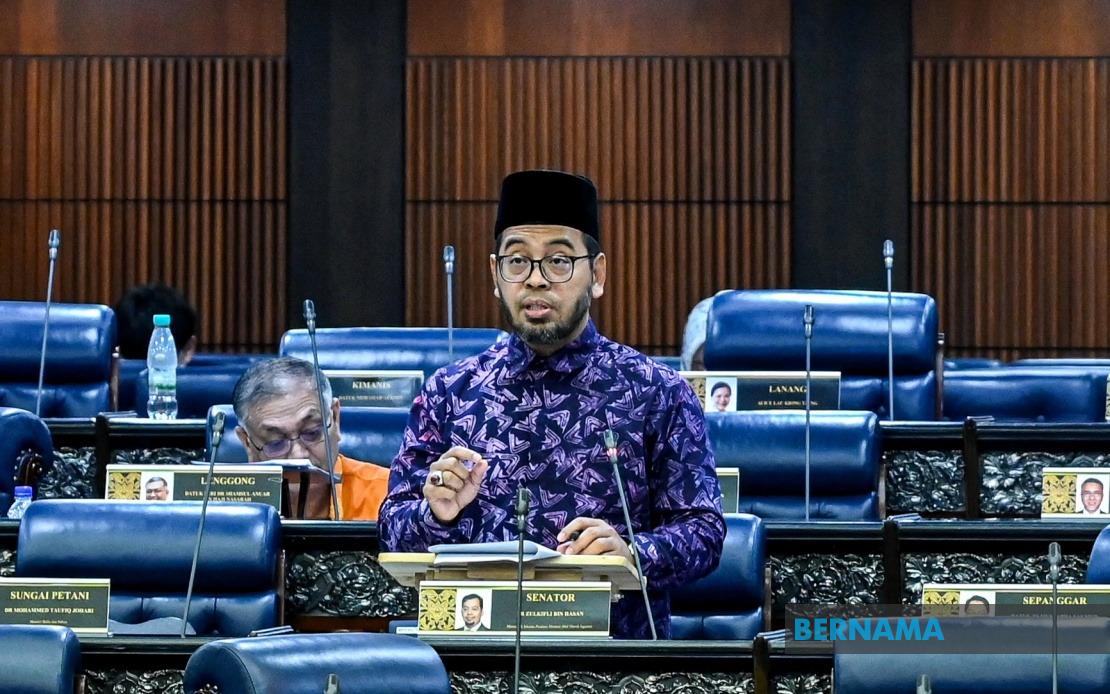
Malaysia's government is mobilising a comprehensive, multi-agency strategy to counter the proliferation of Islamic teachings considered outside mainstream Sunni orthodoxy, which have increasingly migrated to digital spaces and cross-border messaging platforms. Minister in the Prime Minister's Department (Religious Affairs) Dr Zulkifli Hasan outlined the escalating challenge during parliamentary proceedings, emphasising that enforcement efforts now require coordination between JAKIM, state Islamic authorities, law enforcement, and communications regulators to address what authorities characterise as doctrinally deviant movements spreading through social media and encrypted messaging applications.
The shift in how these teachings circulate represents a fundamental enforcement challenge. Rather than operating through traditional underground gatherings, groups now camouflage their doctrines within ostensibly benign frameworks—positioning themselves as personal development workshops, humanitarian organisations, wellness centres, or informal Quranic study circles. This approach has proven effective at evading detection while reaching wider audiences. Authorities have identified deliberate use of motivational speakers, spiritual narratives, psychological frameworks, and conspiracy theories as recruitment and retention mechanisms, sometimes leveraging celebrity figures or charismatic leaders to amplify their messaging and exploit vulnerable demographics seeking spiritual guidance.
The enforcement response has already yielded significant operations. In May, authorities detained 288 followers of Ahmadiyya Qadiani in Sabah during a coordinated action, while a separate raid on a Syiah centre in Petaling Jaya resulted in the detention of 226 foreign nationals. These operations reflect not merely reactive law enforcement but part of a deliberate strategy to disrupt organisational networks before they expand. However, the rapid evolution of digital platforms—where teachings can be disseminated instantaneously across borders through private channels—means traditional enforcement methods often lag behind the pace of online activity.
The Malaysian Communications and Multimedia Commission, National Security Council, Immigration Department, and National Registration Department now form part of this enforcement ecosystem, recognising that countering online religious movements requires technical monitoring capabilities, border controls, and data-sharing protocols extending beyond Islamic affairs authorities alone. This whole-of-government approach reflects international best practices where governments treating religious movements as security concerns employ infrastructure typically reserved for counterterrorism and organised crime investigations. For Malaysia, where Islamic orthodoxy holds constitutional significance, these enforcement mechanisms carry particular weight and legal backing.
Beyond enforcement, the government has developed preventative frameworks centred on religious education and ideological inoculation, particularly targeting youth—a demographic simultaneously most engaged with digital platforms and most susceptible to alternative teachings. The National Steering Committee to Address Threats to Faith brings together representatives from education ministries, security agencies, and religious authorities, signalling institutional commitment to addressing root causes rather than merely suppressing symptoms. This committee structure enables policy coordination across traditionally siloed government functions.
Programmes implemented through this framework include IPHAM initiatives, the My Insaniah Programme, and the Rakan Masjid Programme, all designed to strengthen religious understanding within official parameters. Significantly, the government has prioritised curriculum enhancement, particularly through KAFA 2.0—the revised Quran and Fardu Ain (religious obligations) framework—to build what officials describe as religious resilience among young people. The underlying theory assumes that individuals possessing robust grounding in orthodox Islamic teachings become less susceptible to alternative interpretations, thereby reducing recruitment vulnerability.
The collaboration between the Ministry of Youth and Sports and religious authorities reflects recognition that youth engagement with these movements often reflects broader disengagement from mainstream institutional Islam rather than theological conviction alone. By framing Islamic education as contemporary, relevant, and aligned with personal development aspirations, authorities aim to retain youth participation within official structures. This approach acknowledges that simply prohibiting alternative teachings proves insufficient without providing compelling alternatives addressing the same psychological and spiritual needs.
The interventions extend beyond prevention into rehabilitation. Syariah courts now order placement at faith rehabilitation centres for individuals identified as affected by non-mainstream teachings, with structured programmes supervised by Islamic authorities designed to reorient theological understanding. These facilities represent a middle ground between criminal incarceration and complete liberty, allowing authorities to apply corrective religious education while maintaining social reintegration pathways. Targeted counselling for group members and leaders attempts to identify individuals susceptible to deprogramming before they become deeply committed to alternative doctrines.
For Malaysia and the broader Southeast Asian region, this approach carries implications extending beyond religious policing. The strategy reflects how Islamic-majority nations navigate tensions between constitutional protections for Islamic practice and state authority to define religious orthodoxy. The digital dimension adds urgency: teachings spreading across borders challenge traditional jurisdiction-based enforcement and require international cooperation mechanisms still developing across Southeast Asia. Nations like Indonesia, Brunei, and Thailand face comparable challenges but with varying institutional capacity to respond.
The approach also highlights how technology complicates religious governance. Encryption, decentralised networks, and cross-border digital communication fundamentally alter how authorities can monitor, intercept, and suppress religious movements. Malaysian authorities acknowledge this by developing preventative education strategies alongside enforcement—recognising that surveillance alone cannot solve the underlying appeal of alternative teachings, particularly to individuals seeking spiritual authenticity or community belonging outside institutional structures. The government's investment in religious education curriculum and youth engagement suggests recognition that long-term effectiveness requires addressing demand factors, not merely supply interdiction.

