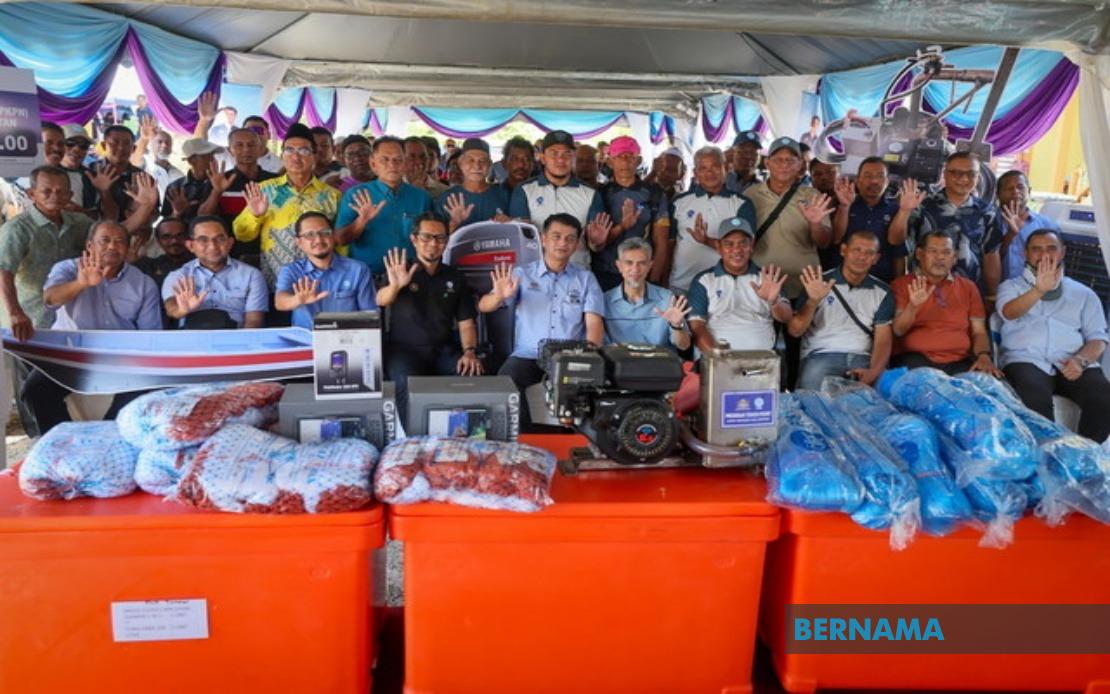
The government's investment in the fishing community extends beyond immediate relief, with a RM10 million allocation announced this year for the Special Fishermen Housing Project (PKPN) designed to uplift living conditions across the nation's maritime workforce. The initiative, administered by the Fisheries Development Authority of Malaysia (LKIM), represents a dual-track approach to addressing both immediate housing needs and longer-term economic sustainability within a sector facing mounting pressures from resource depletion and rising operational costs.
The RM10 million fund comprises two distinct operational streams that together form a comprehensive housing support framework. More than RM6.8 million targets repairs and renovations of 344 existing homes belonging to registered fishermen, while just over RM3.1 million funds the construction of 36 new residential units. This split allocation reflects an understanding that most beneficiaries require structural improvements rather than entirely new accommodation, addressing issues ranging from storm damage and deterioration to basic infrastructure upgrades that have accumulated over years of maritime labour.
According to LKIM chairman Muhammad Faiz Fadzil, the repair component of the programme has reached 80 per cent completion with expectations for full implementation by late August or September. The construction of new dwellings, however, faces a more protracted timeline that extends through the remainder of the year. These delays stem partly from complexities inherent in resolving land ownership claims, particularly cases involving inherited properties where multiple family members hold simultaneous claims or documentation remains unclear—a common issue in Malaysian fishing communities where intergenerational property disputes often impede development initiatives.
The financial support allocated per unit varies significantly across Malaysia's geography, reflecting genuine cost-of-living differences. The LKIM provides RM84,000 per unit for new construction in Peninsular Malaysia, compared with RM95,000 per unit in the more remote and expensive zones of Sabah and Sarawak. For home repairs, fishermen receive assistance reaching RM20,000 per unit. In Kelantan specifically, where this announcement was made during a LKIM engagement session in Tumpat, the state receives RM388,000 of the national allocation—demonstrating the concentration of fishing populations in certain coastal states.
The housing initiative must be understood within the context of a broader governmental strategy to fundamentally restructure Malaysia's fishing economy. Officials acknowledge that traditional capture fisheries face mounting existential pressures, with aquatic resource stocks declining across regional waters and operational expenses—particularly fuel costs despite ongoing subsidies—eroding profitability for individual operators and small crews. The government therefore views housing investment not merely as welfare provision but as part of a larger transition package intended to retain fishermen within an evolving industry rather than forcing them into unemployment or subsistence alternatives.
Parallel to housing support, the LKIM is actively promoting aquaculture as the primary avenue for sectoral modernisation. The authority has explicitly articulated a target whereby aquaculture contributes 40 per cent of national fish production by 2030, representing a fundamental shift from the wild-capture paradigm that has historically defined Malaysian fishing. This transition requires substantial capital investment, technical training, and supportive regulatory frameworks—elements the government recognises cannot be imposed upon fishing communities already burdened by economic constraints and limited access to credit.
Kelantan serves as a pilot jurisdiction for this aquaculture expansion, with LKIM allocating RM400,000 to the Kelantan State Fishermen's Association (PENEKA) for tank-based prawn farming initiatives. This funding demonstrates recognition that individual fishermen lack sufficient capital to undertake aquaculture development independently, necessitating state-facilitated collective action through fishermen's associations. Tank-based systems represent a relatively controlled alternative to pond-based farming, reducing water contamination risks and improving biosecurity—considerations particularly important in densely populated coastal areas where environmental degradation has already constrained traditional fishing grounds.
The interconnection between housing support and aquaculture promotion reveals a sophisticated policy approach grounded in social stability. By improving residential conditions while simultaneously offering viable economic alternatives, the government seeks to prevent rural-urban migration that would otherwise deplete coastal communities of their productive workforces. Housing investments signal commitment to the fishing sector's future, potentially encouraging younger generations to remain within communities rather than migrating to urban centres seeking alternative employment—a retention strategy critical for sustaining aquaculture operations that depend upon locally-rooted technical expertise and community cohesion.
For Malaysian readers and policymakers, this initiative illustrates how sectoral transformation necessarily encompasses simultaneous attention to social welfare and economic restructuring. The fishing communities of Kelantan, Terengganu, Perlis, and other maritime states represent some of Malaysia's most economically vulnerable populations, with limited educational attainment and restricted employment mobility. Housing improvements directly enhance quality of life whilst simultaneously maintaining workforce attachment during a period of dramatic industry change—a dual benefit that justifies the substantial public investment even as aquaculture profitability remains uncertain.
Regionally, Malaysia's approach carries significance for other Southeast Asian nations facing identical fisheries pressures. Thailand, Vietnam, Indonesia, and the Philippines all confront declining wild capture stocks and rising input costs, yet few have articulated comparable strategic frameworks combining social protection with systematic economic transition. The Malaysian model suggests that successful sectoral modernisation requires accepting immediate public expenditure to facilitate long-term structural adjustment—an insight increasingly relevant as aquaculture becomes the region's inevitable future across protein production systems.
The expansion of this programme beyond Kelantan, as officials indicated, will test whether the replicable template can function effectively across diverse coastal contexts with varying environmental conditions, governance capacity, and community characteristics. Initial outcomes from Kelantan's tank-based prawn farming partnership will substantially influence policy refinement and resource allocation decisions for subsequent phases. Success would validate the integrated approach; failure would necessitate rethinking whether housing investment and aquaculture promotion should be pursued as separate rather than interconnected policy objectives.

