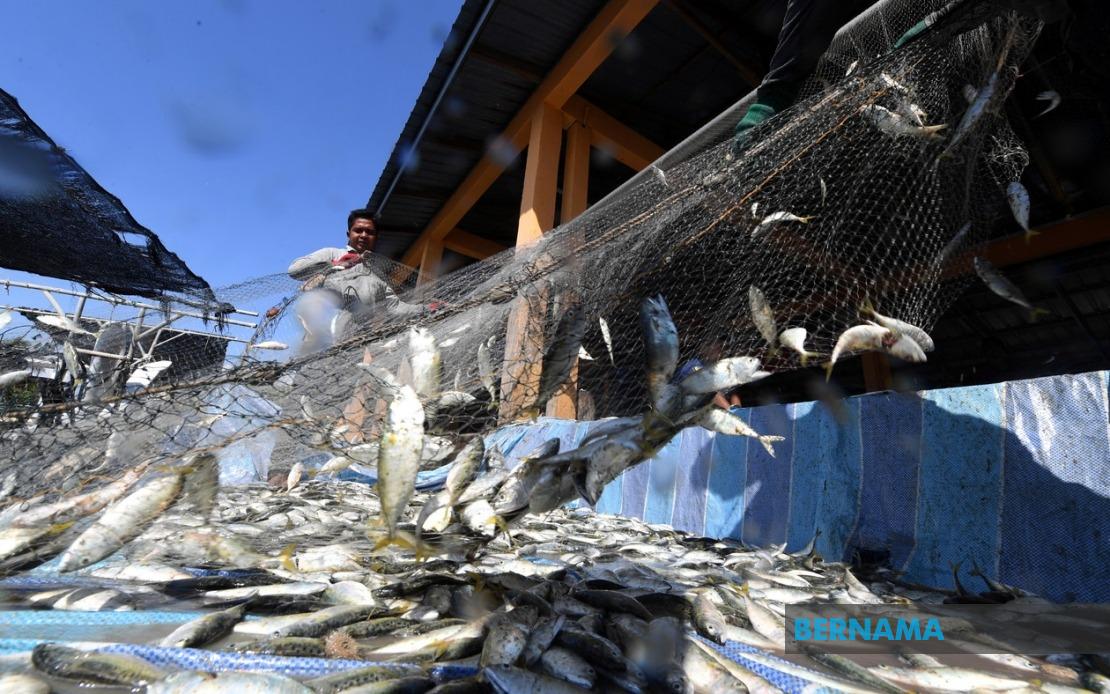
The Malaysian government is channelling RM10 million into the nationwide rollout of the Special Fishermen Housing Project (PKPN) during 2024, marking a significant commitment to improving living standards among the nation's fishing communities. According to the Fisheries Development Authority of Malaysia (LKIM), construction work on housing units across most states is progressing steadily and anticipated to be finalised by August, reflecting the government's resolve to address housing shortages among low-income fishermen.
At a handover ceremony in Kuala Perlis on July 20, LKIM director-general Datuk Dr Abdul Salim Tajudin emphasised that the PKPN represents a cornerstone initiative within the government's broader welfare framework for the fishing sector. The allocation mechanism is calibrated to ensure equitable distribution, with each state receiving funding proportional to its fisher population, thereby acknowledging regional disparities in community size and housing needs. This needs-based approach reflects an understanding that fishing communities differ substantially across Malaysia's coastal regions, from Perlis to Sabah and Sarawak.
The initiative addresses a persistent challenge within Malaysia's maritime economy: inadequate housing infrastructure for those engaged in traditional and artisanal fishing. Many low-income fishermen continue to reside in substandard dwellings that pose safety and health risks, particularly in coastal villages where structural vulnerabilities increase exposure to weather and environmental hazards. By providing new construction and renovation services, the PKPN directly tackles this vulnerability while simultaneously investing in human capital within the fishing sector.
Perlis exemplifies the programme's tangible impact at the state level. LKIM completed five separate housing projects in the northern state this year, comprising two newly constructed homes and three refurbished residential units, drawing on a combined allocation of RM228,000. The new constructions, located in Kampung Tanah Timbul and Kampung Padang Besar Selatan in the Kuala Perlis district, each required an investment of RM84,000, reflecting construction costs in the northern region. Simultaneously, three existing homes underwent comprehensive refurbishment, each receiving RM20,000 to address critical structural and amenities deficiencies.
The handover of these completed units to eligible fishing families signifies more than merely distributing housing assets; it represents the conclusion of a planning and execution cycle that involved community identification, site assessment, and construction oversight. Recipients from Kampung Tanah Timbul, Kuala Sanglang, and Kampung Padang Besar Selatan in Kuala Perlis received keys to their new residences, with Datuk Dr Abdul Salim confirming that all targeted deliverables for Perlis had been accomplished within the financial year.
The completion rate in Perlis demonstrates administrative capacity and project management effectiveness within LKIM. However, the nationwide scope of the PKPN presents considerably greater complexity, requiring coordination across multiple states with varying infrastructure conditions, local governance structures, and demographic patterns. The August target for project completion across all states suggests an aggressive but feasible timeline, provided that procurement, labour availability, and weather conditions align favourably.
For Malaysian readers in fishing-dependent regions, the PKPN carries direct relevance as a signal of government investment in marginalised economic sectors. Fishing communities, while foundational to Malaysia's maritime heritage and food security, have historically received disproportionately less development attention compared to urban centres or manufacturing hubs. This housing programme therefore represents a corrective policy intervention, acknowledging that social welfare extends beyond income support to encompass environmental quality and residential security.
The allocation methodology—distributing funds according to fisher populations—contains important implications for resource-dependent regions. States with larger artisanal and commercial fishing populations receive proportionally greater allocations, ensuring that regions with more acute housing deficits are not systematically underfunded. This principle aligns with equitable development doctrine, though implementation success ultimately depends on whether state-level LKIM offices possess sufficient technical capacity and local partnership networks to execute projects efficiently.
Beyond immediate housing provision, the PKPN generates indirect economic benefits. Construction employment, procurement of building materials from local suppliers, and the stimulus provided by new home ownership collectively contribute to fishing community economies. Fishermen inhabiting secure, safe housing experience improved health outcomes, reduced absenteeism from fishing activities, and enhanced family stability—factors that collectively support productivity within the sector.
Looking forward, the trajectory of the PKPN will merit monitoring. The RM10 million annual allocation, while meaningful, distributes across the entire nation among thousands of eligible households. Scaling this programme to address residual housing gaps will require sustained budget commitments and potentially revised funding mechanisms. Additionally, integrating complementary services—such as sanitation infrastructure, electricity reliability, and access to clean water—would enhance the holistic welfare impact of housing provision.
The programme also reflects sectoral policy alignment within Malaysia's fisheries framework. Complementary initiatives addressing fleet modernisation, aquaculture development, and market access gain reinforcement when coupled with tangible improvements in fisher living standards. Workers increasingly expect that economic participation delivers not merely income but also dignified housing and family security, particularly as younger generations evaluate career choices within the fishing sector.
Statewide completion targets and the demonstrated delivery of homes in Perlis should establish templates for scaling across other regions. Challenges inevitably arise in implementation—land acquisition complexities, municipal regulatory variation, and labour constraints—yet the Perlis example suggests these obstacles are surmountable when adequate coordination occurs between federal agencies, state governments, and local communities.
As Malaysia continues navigating economic diversification while sustaining traditional sectors, initiatives like the PKPN affirm that fishing communities remain integral to national development objectives. The government's willingness to allocate resources specifically for fisher welfare, rather than treating the sector as residual to manufacturing or services, signals a considered approach to inclusive growth that extends coastal prosperity beyond urban concentrations.

