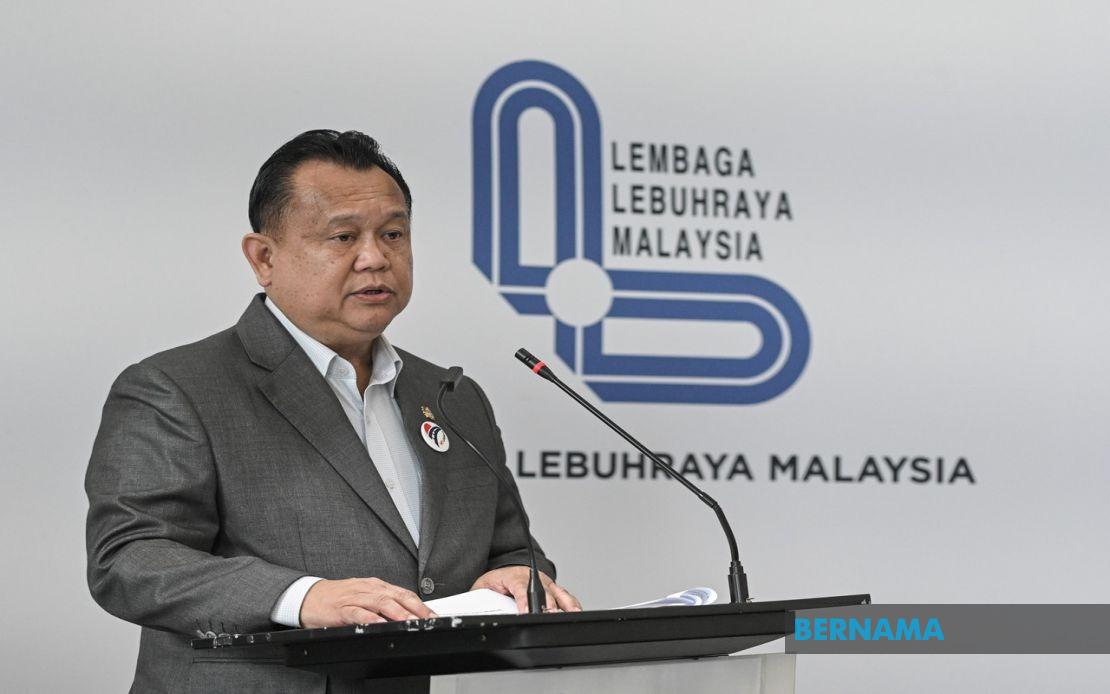
Malaysia's Works Ministry has unveiled an ambitious road safety initiative, committing RM25.2 million to transform lighting infrastructure at 32 dangerous stretches of highway across the country. The project marks a significant investment in preventive safety measures, targeting locations with documented histories of traffic incidents and collisions. Works Minister Datuk Seri Alexander Nanta Linggi announced that the initiative, executed under the MADANI Monitoring programme, represents the government's response to concerns raised about highway safety and the need for improved visibility in accident-prone areas.
The scope of this first phase involves deploying 3,000 light poles equipped with solar-powered LED technology along the identified highway segments. This substantial infrastructure undertaking reflects a collaborative approach involving three key agencies: the Works Ministry, the Finance Ministry, and the Malaysian Highway Authority (LLM). The decision to prioritise these specific locations stems from extensive data analysis identifying zones where poor lighting conditions may contribute to or exacerbate accident risks. By targeting areas where visibility is a documented factor in safety outcomes, the programme aims to address root causes rather than merely treating symptoms of road danger.
The financial commitment builds upon Prime Minister Datuk Seri Anwar Ibrahim's broader road safety agenda outlined during the 2026 Budget announcement in October last year. The original allocation of RM30 million has been strategically phased, with RM25.2 million deployed immediately for this initial stage. This staged approach allows the government to assess the effectiveness of installations and adjust requirements based on real-world performance data before committing the remaining funds. Such flexibility in budget deployment demonstrates a commitment to evidence-based infrastructure investment rather than a fixed, one-time expenditure.
The adoption of solar-powered LED technology carries multiple advantages beyond basic illumination. LED systems consume significantly less energy than conventional street lighting while delivering superior brightness and colour rendering properties that enhance road user visibility and driver alertness. Solar technology eliminates dependency on grid electricity, reducing operational costs and making installations feasible even in remote highway sections where grid extension would be prohibitively expensive. The combination addresses both sustainability concerns and long-term fiscal responsibility, aligning with Malaysia's broader environmental commitments while delivering practical safety benefits.
The project timeline reflects an accelerated implementation schedule. With the Letter of Acceptance (SST) formally handed to the selected contractor, physical construction work commenced immediately following the announcement. The government has set an ambitious completion target of November 2025, meaning the entire installation programme must proceed across all 32 locations within approximately five months. This compressed schedule underscores the urgency officials attach to addressing highway safety concerns and suggests that accident data from these locations may reflect particularly acute problems requiring swift intervention.
From a Malaysian road safety perspective, this initiative addresses a persistent national challenge. Highway accidents remain a leading cause of injury and mortality, imposing substantial costs on the healthcare system, insurance sector, and families affected by tragedy. Poor lighting conditions are well-documented contributing factors in nighttime and early morning collisions, particularly on expressways and trunk roads where traffic volumes are high and speeds are elevated. By targeting 32 specific locations, the programme acknowledges that safety risks are concentrated and measurable, allowing for targeted resource allocation rather than dispersed investments of diminishing impact.
The economic implications extend beyond immediate road safety improvements. Reduced accident rates translate into lower healthcare expenditures, decreased insurance claims, improved vehicle throughput on highways, and enhanced productivity when journeys are completed without incident-related delays. For commercial operators relying on highway networks—lorry drivers, delivery services, public transport operators—improved lighting conditions reduce operational risks and insurance premiums. Commuters benefit through enhanced security and reduced anxiety during night travel, particularly on less-populated routes where safety concerns influence travel behaviour.
Regionally, Malaysia's investment in highway safety infrastructure carries significance for Southeast Asian logistics and travel corridors. As a central node in regional trade networks and a transit point for goods moving between ports and inland destinations, efficient and safe highways remain critical economic infrastructure. The improvement of lighting at high-risk locations enhances the reliability and safety profile of Malaysia's road network, potentially influencing regional supply chain decisions and travel patterns. Neighbouring countries and regional economic partners may regard this initiative as a positive signal regarding Malaysia's commitment to transport safety standards.
The MADANI Monitoring programme framework within which this project operates suggests a broader government intention to leverage data-driven approaches for infrastructure improvement. Rather than generic applications of safety measures, targeting the 32 highest-risk locations reflects an analytical approach to identifying where interventions generate maximum impact. This methodology could establish a template for future infrastructure investments across other sectors, demonstrating that effective government spending requires identifying specific needs and concentrating resources accordingly rather than spreading limited budgets thinly across numerous projects of varying necessity.
Implementation challenges will inevitably emerge across such a geographically dispersed project. Coordinating work across multiple highway segments, managing traffic disruptions during installation, ensuring quality control across different contractors and locations, and maintaining timeline discipline over a five-month period all present execution risks. The Works Ministry's ability to navigate these challenges will significantly influence whether the November 2025 completion target is achieved and whether the full benefits of improved lighting materialise as intended. Close coordination between LLM, contractor teams, and regional highway authorities will prove essential.
The allocation of RM25.2 million, while substantial, represents a modest investment relative to the scale of national highway networks and the magnitude of accident-related losses Malaysia experiences annually. This observation, rather than diminishing the initiative's value, underscores how targeted, evidence-based spending on high-impact locations maximises return on public investment. The remaining RM4.8 million from the original RM30 million allocation provides flexibility to expand the programme if data supports extending lighting improvements to additional high-risk sections or if implementation costs necessitate adjustments. This structured approach to multi-year infrastructure investment offers a sustainable model for addressing Malaysia's road safety challenges through systematic, data-driven prioritisation of limited public resources.