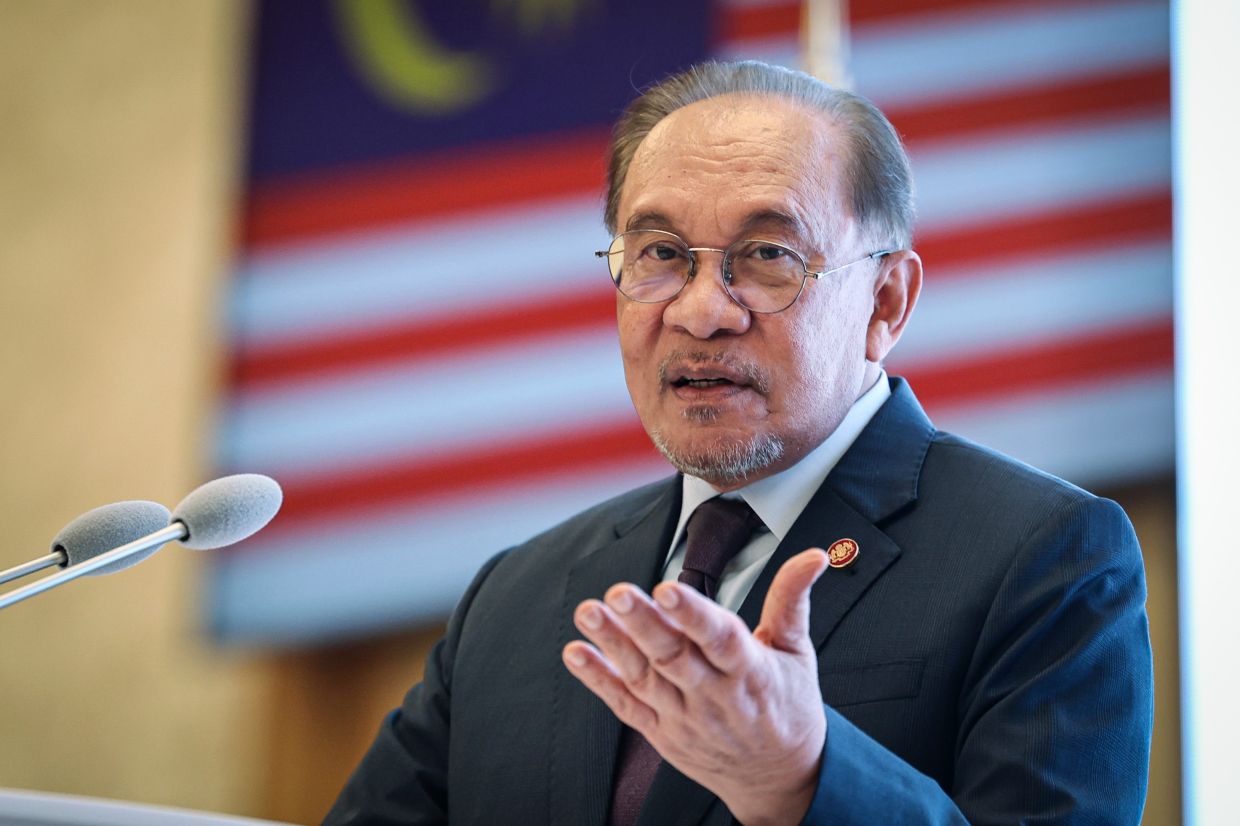
Malaysia's government is open to exploring a hybrid taxation model that would incorporate certain features of the Goods and Services Tax into the existing Sales and Service Tax framework, Prime Minister Datuk Seri Anwar Ibrahim announced during the closing of the Budget 2027 engagement session in Putrajaya. As both Prime Minister and Finance Minister, Anwar signalled that policymakers are willing to study proposals that could strengthen the country's tax system's progressivity, though any changes would operate within strict parameters designed to shield ordinary Malaysians from excessive fiscal burdens.
The core of Anwar's position centres on a fundamental philosophical distinction between the two taxation approaches. While acknowledging that certain GST mechanisms might offer administrative or efficiency advantages, he emphasised that the government would not abandon SST as Malaysia's foundational tax system. This stance reflects the administration's determination to maintain a taxation structure that avoids placing blanket levies across all income levels and consumer segments, a principle Anwar has consistently championed since his party took office.
The Prime Minister's resistance to broad-based taxation systems stems from his conviction that such approaches disproportionately affect vulnerable populations already struggling with rising living costs. He articulated this concern by pointing out that a consumption tax affecting all citizens—including those who have never previously paid income taxes—would represent a regressive policy step. In Malaysia's current economic climate, where inflation remains a persistent concern and household budgets face strain, introducing or expanding a universal consumption tax would contradict the government's stated commitment to protecting lower and middle-income earners.
Anwar drew a sharp distinction between tax efficiency and tax equity. While conceding that GST proponents argue their system operates more efficiently from an administrative standpoint, he contended that efficiency gains cannot justify imposing additional financial obligations on citizens already grappling with affordability challenges. This reflects a deliberate choice to prioritise social welfare considerations over streamlined tax collection mechanisms—a position that aligns with Malaysia MADANI, the government's broader development framework emphasising inclusive growth and rootedness in community welfare.
The discussion of taxation reform has gained prominence as Malaysia prepares to unveil Budget 2027, scheduled for parliamentary presentation on October 9. The budget's theme, "Malaysia MADANI: Menggapai di Langit, Mengakar di Bumi" (Malaysia MADANI: Reaching for the Sky, Rooted in the Earth), encapsulates the administration's commitment to combining ambitious development goals with practical attention to citizens' immediate needs. Within this context, deliberations about tax structure represent more than technical fiscal policy—they embody fundamental choices about which segments of society bear taxation responsibility.
The government's willingness to study selective GST elements suggests pragmatism rather than ideological rigidity. Rather than wholesale dismissal of the GST model, policymakers appear interested in extracting specific administrative or structural features that could enhance SST's effectiveness without compromising the system's progressive character. This exploratory approach acknowledges that no taxation framework is perfect, and that borrowing proven mechanisms from alternative systems—while maintaining core principles—could yield improvements.
Several high-ranking officials and economic stakeholders participated in the Budget 2027 engagement session, including Finance Minister II Datuk Seri Amir Hamzah Azizan, Deputy Finance Minister Liew Chin Tong, Treasury secretary-general Tan Sri Johan Mahmood Merican, and Bank Negara Malaysia Governor Datuk Seri Abdul Rasheed Ghaffour. This broad representation of government, central banking, and business interests underscores the multifaceted considerations involved in taxation policy. Representatives from industries, professional associations, non-governmental organisations, and academic institutions also attended, reflecting recognition that tax reform requires input from diverse stakeholder communities.
For Malaysian businesses and consumers, the government's taxation stance carries significant implications. A progressive tax system that relies primarily on SST while protecting mass consumption from universal levies creates a more predictable operating environment than would a shift toward GST-style mechanisms. Small and medium enterprises, which form the backbone of Malaysia's economy, would continue benefiting from a consumption-based system that allows targeted relief rather than uniform taxation across all transaction types.
The emphasis on progressivity also signals the government's awareness that tax policy intersects directly with wealth inequality and social cohesion. By refusing to implement broad-based taxation that would affect all citizens equally, policymakers acknowledge that not all segments of the population possess equal capacity to bear additional tax burdens. This approach recognises that someone earning RM3,000 monthly experiences a fundamentally different tax impact than someone earning RM30,000, and that equitable policy must account for such disparities.
Regionally, Malaysia's continued commitment to SST-centred taxation—even while studying potential enhancements—distinguishes its approach from several neighbouring countries that have adopted or considered GST frameworks. This path reflects both domestic political preferences and practical assessments of what taxation structures best serve the nation's development objectives without exacerbating cost-of-living pressures that affect both consumer spending and business investment.
The government's openness to examining GST-SST hybrids should not be interpreted as wavering commitment to progressive taxation. Rather, Anwar's statements indicate a determination to optimise the existing system while remaining firmly opposed to mechanisms that would broadly expand the tax base to encompass all citizens regardless of their economic capacity. This position establishes clear boundaries for any future taxation reforms, essentially declaring that any modifications must preserve SST's fundamental structure and protective intent toward Malaysia's majority population.

