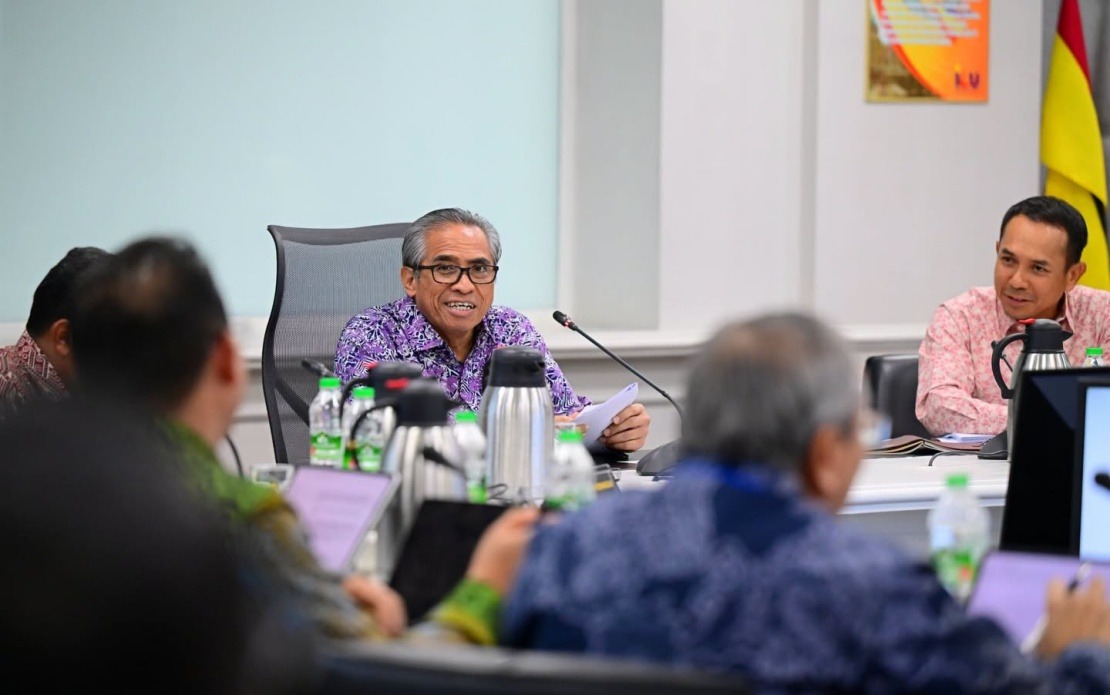
Malaysia's administrative machinery has been given fresh marching orders to accelerate delivery of tangible benefits to ordinary citizens through a nationwide push on small-scale infrastructure and maintenance projects. Tan Sri Shamsul Azri Abu Bakar, the Chief Secretary to the Government, issued directives on June 25 requiring all ministry secretaries-general to concentrate resources on identifying and expediting more than 40,000 such projects across the country. The announcement signals a deliberate strategic shift towards quick-impact initiatives that can demonstrate government effectiveness within compressed timeframes.
The directive emerged from discussions at the National Development Action Committee, which Shamsul Azri chairs. Rather than focusing exclusively on large-scale transformational projects that require extended implementation periods, the committee has determined that mobilising the vast portfolio of smaller initiatives represents a more pragmatic approach to improving citizens' immediate quality of life. This recognition reflects a broader understanding that developmental gains need not be grandiose to be meaningful—a nuanced appreciation of how marginal infrastructure improvements can accumulate into substantial public satisfaction.
The portfolio of projects encompasses work that touches nearly every aspect of daily civic life. Road maintenance and drainage system repairs address chronic urban and rural infrastructure deficits that affect mobility and public health. Refurbishment of government residential quarters improves conditions for public sector workers, many of whom occupy official housing. School classroom renovations directly enhance the learning environment for millions of students nationwide. Healthcare facility upgrades expand access to quality medical services, particularly crucial in underserved regions. Meanwhile, improvements to public markets and stalls revitalise economic activity in traditional trading spaces that remain vital to community commerce and social interaction.
A critical component of the implementation strategy involves intensive oversight and ground-level engagement. Shamsul Azri has instructed all KSUs to conduct regular site visits and maintain close monitoring of project progress. This hands-on directive suggests awareness that bureaucratic implementation chains frequently falter without senior leadership presence and accountability mechanisms. By requiring secretaries-general to visit sites personally, the government appears intent on reducing the administrative distance between policy decisions and their execution, potentially mitigating the delays and quality compromises that often plague infrastructure projects in Malaysia.
The timeline for project completion has been deliberately compressed to enhance political and practical dividends. Most initiatives are expected to reach completion within three to six months, a remarkably rapid delivery schedule compared to conventional government project timelines. This acceleration reflects calculated intent to demonstrate administrative competence and responsiveness. For citizens tired of infrastructure commitments that languish for years, visible completion of thousands of modest projects simultaneously would constitute tangible evidence of government effectiveness.
From a Malaysian governance perspective, this initiative addresses longstanding public frustration with infrastructure stagnation. While mega-projects capture headlines and political credit, the accumulation of minor maintenance backlogs and small-scale deficiencies generates continuous low-level dissatisfaction. Potholed roads, clogged drains, deteriorating schools, and neglected markets represent persistent irritants that erode public confidence incrementally. By systematically addressing this maintenance deficit, the government potentially converts a distributed source of discontent into numerous small victories.
The regional context matters substantially for understanding this pivot. Across Southeast Asia, governments have increasingly recognised that citizen satisfaction correlates strongly with visible, proximate improvements to shared infrastructure rather than abstract development metrics. Delivering completion on thousands of modest projects within six months would represent a departure from Malaysia's typical leisurely project cycles and could establish a template for faster governance delivery. Such a demonstration effect might influence how other ASEAN governments approach domestic infrastructure management.
Implementation challenges should not be underestimated despite the seeming straightforwardness of small projects. Coordinating 40,000 initiatives across multiple ministries, countless districts, and diverse terrain types presents extraordinary logistical complexity. Supply chain disruptions, labour availability, local coordination impediments, and funding bottlenecks could all impede progress. The emphasis on KSU site visits suggests awareness of these risks, reflecting determination to maintain momentum despite predictable obstacles.
Budgetary implications remain implicit in the announcement. Small-scale projects typically require less capital individually but collectively represent significant expenditure. The government's ability to fund 40,000 concurrent initiatives across education, health, public works, and commerce ministries without creating fiscal strain or crowding out other priorities will test budgetary discipline. Whether funding already exists within existing ministry allocations or requires supplementary appropriation fundamentally affects the initiative's sustainability.
The political calculus underlying this push warrants consideration. Successfully delivering thousands of completed projects generates numerous local ceremonies, ribbon-cutting opportunities, and community engagement points that provide electoral utility. Each completed initiative becomes a tangible marker of government performance in specific constituencies. Conversely, visible project stalling or delay creates multiple concentrated complaints rather than generalised dissatisfaction. The concentration on achievable timelines thus reflects shrewd understanding that promise-delivery credibility directly influences electoral prospects.
For Malaysian citizens and regional observers, this initiative represents a test of administrative modernisation. Malaysia possesses professional bureaucratic capacity superior to many developing nations, yet frequently appears paralysed by complex procedures and hierarchical approval chains. Whether the government can mobilise this capacity to genuinely complete 40,000 projects rapidly will reveal whether structural constraints or execution discipline represents the primary implementation impediment. Success would validate optimism about Malaysian governance potential; shortfall would reinforce scepticism about administrative reform.
The broader significance extends beyond infrastructure completion. This initiative implicitly acknowledges that effective governance encompasses both transformational ambition and attention to constituent welfare on granular scales. By directing institutional machinery toward both high-impact initiatives and thousands of modest improvements, the government charts a course between aspirational development narratives and prosaic service delivery. Whether this balancing act succeeds will substantially influence Malaysian public administration's credibility and capacity in coming years.

