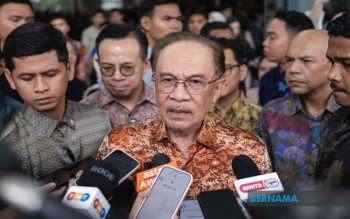
Prime Minister Datuk Seri Anwar Ibrahim has drawn a clear line on tax policy, declaring that his government will not entertain a return to the Goods and Services Tax despite ongoing discussions about reforming Malaysia's consumption tax framework. Speaking at the TikTok Shop Summit 2026 in Kuala Lumpur, Anwar, who concurrently holds the Finance Ministry portfolio, emphasised that the core principle underpinning GST—its broad-based nature affecting all citizens regardless of income level—remains fundamentally at odds with the MADANI government's commitment to protecting the poorest segments of society from additional tax burdens.
The distinction Anwar drew between rejecting GST's foundational architecture and remaining flexible on other tax adjustments reveals the government's nuanced approach to balancing fiscal needs with social equity concerns. While categorical in his refusal to consider the GST framework, the Prime Minister signalled receptiveness to targeted modifications of the existing Sales and Service Tax regime, suggesting that policymakers are exploring incremental refinements rather than wholesale overhauls. This positioning reflects the delicate political calculus required to maintain public confidence while addressing revenue constraints facing the federal government.
Context around this announcement matters considerably for understanding Malaysia's tax policy trajectory. The country abandoned the GST in 2018 following sustained public pressure over inflationary pressures and rising cost-of-living concerns that had dominated political discourse during the previous administration's final years. That transition to the SST regime represented a symbolic shift toward perceived pro-consumer governance, becoming a cornerstone of electoral messaging. Any attempt to resurrect GST principles would therefore carry significant political liability, potentially eroding public trust despite potential fiscal advantages such a system might offer through broader revenue collection and reduced administrative complexity.
The government's consideration of reform options extends beyond traditional consumption tax structures. Officials have previously examined proposals including levies on electronic payment transactions as mechanisms to broaden the tax base and improve revenue generation without raising headline tax rates. Such alternatives reflect an attempt to modernise Malaysia's tax system in ways that distribute the burden more equitably and capture economic activity that traditional frameworks might overlook. These discussions signal recognition that the SST, while politically sustainable, may face inherent limitations in addressing medium-to-long-term fiscal sustainability challenges.
Anwar's remarks underscore the MADANI framework's foundational principle regarding tax progressivity and poverty alleviation. By repeatedly emphasising that increased taxation on lower-income populations cannot be reconciled with the government's stated priorities, the Prime Minister appears intent on establishing clear boundaries for future policy discussions. This rhetorical positioning not only reassures voters concerned about regressive taxation but also constrains the space for technical experts and economists who might advocate for GST reintroduction based on efficiency arguments. The tension between fiscal necessity and social protection commitments remains a defining feature of contemporary Malaysian economic governance.
For Malaysian businesses and investors, this clarity offers both reassurance and limitation. The absence of GST eliminates concerns about potential cascading tax liabilities that would complicate supply chain management and pricing strategies. Simultaneously, however, businesses continue operating within an SST framework that some argue creates distortions and administrative burden, particularly for exporters and multinational enterprises accustomed to GST systems in other jurisdictions. The government's willingness to refine SST implementation suggests recognition of these concerns, even as it forecloses the option of systemic replacement.
Regional context amplifies the significance of Malaysia's tax policy stance. Several Southeast Asian nations have adopted or operate GST-equivalent systems, including Singapore, Thailand, and Vietnam, which have generally found such mechanisms effective for revenue generation and economic efficiency. Malaysia's distinctive position—rejecting GST while neighbouring economies implement broad-based consumption taxes—reflects specific political and social circumstances unique to the country. This divergence has implications for cross-border investment flows, comparative business competitiveness, and the harmonisation of regional trading arrangements as ASEAN economies continue integrating economically.
The timing of Anwar's statements assumes added importance given Malaysia's ongoing fiscal consolidation efforts and the government's medium-term revenue targets. With public expenditure commitments—including healthcare, education, and infrastructure development—requiring sustained funding, policymakers face mounting pressure to identify revenue sources that do not substantially alter the existing tax structure. The exploration of alternative mechanisms like e-payment levies or selective consumption tax adjustments represents an attempt to resolve this tension through incremental rather than transformative approaches. Whether such measures ultimately prove sufficient to address structural budget challenges remains an open question.
Social equity considerations fundamentally shape Malaysia's tax policy debate in ways that distinguish it from purely technocratic discussion. The historical experience of the GST's implementation created political scars that subsequent governments have proven reluctant to revisit, regardless of economic arguments favouring its adoption. Anwar's unequivocal rejection of GST principles reflects understanding that tax policy in Malaysia remains inseparable from broader narratives about government responsiveness to ordinary citizens' economic anxieties. This political reality constrains the range of feasible policy options available to technocrats, even when economic logic might suggest alternative approaches.
Moving forward, the government's stated openness to SST adjustments will likely become the focal point for tax policy evolution. These refinements could potentially include narrowing SST exemptions, adjusting rate structures, or improving compliance mechanisms rather than introducing fundamentally new tax bases. Such incremental modifications may lack the structural elegance of broad-based consumption taxation but offer the advantage of political sustainability and proven implementation within existing administrative frameworks. For Malaysia's fiscal trajectory and long-term economic competitiveness, success will depend on whether such refinements adequately address revenue needs while preserving the government's fundamental commitment to protecting the economically vulnerable.

