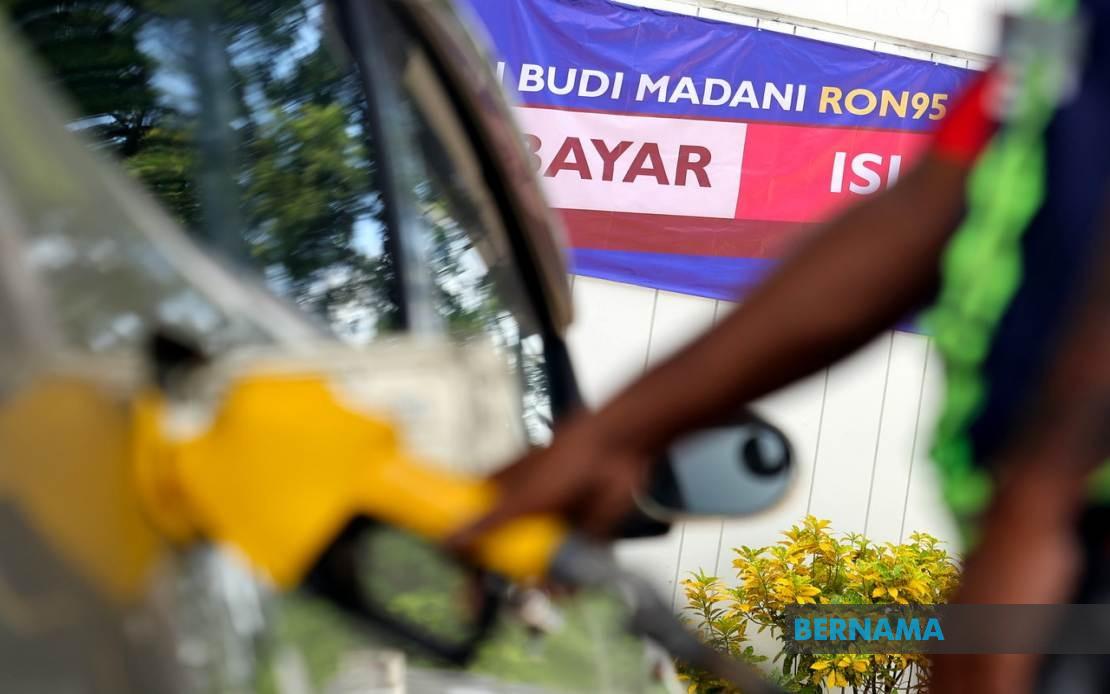
Malaysia's government has reversed a fuel quota reduction by restoring the BUDI95 programme's basic monthly allocation to 300 litres per user, Prime Minister Datuk Seri Anwar Ibrahim announced during his National Day address at the Putrajaya International Convention Centre. The decision marks a significant policy turnaround that addresses widespread concerns among millions of Malaysian motorists who had faced tighter fuel restrictions.
The restoration directly impacts more than 16 million users currently enrolled in the subsidised RON95 scheme, which maintains the pump price at RM1.99 per litre. This substantial user base represents a considerable portion of Malaysia's driving population, making fuel accessibility a politically sensitive and economically consequential issue for household budgets across the country. The announcement underscores the government's commitment to protecting consumer purchasing power during a period of global energy volatility.
In addition to the RON95 restoration, the government has extended enhanced support to rural and agricultural communities through the diesel subsidy component. More than half a million eligible owners of diesel-powered pick-up trucks and jeeps will now receive up to 400 litres of subsidised Budi Diesel monthly, providing critical relief for farmers, small business operators, and those dependent on commercial vehicles for their livelihoods. This targeted approach acknowledges the disproportionate impact fuel costs exert on agricultural sectors and rural economic activities.
The timing of this reversal carries particular significance given the geopolitical context that prompted the original quota reduction. In late March, the government had announced plans to trim the BUDI95 allowance from 300 to 200 litres starting April 1, 2026, citing tensions in West Asia as justification for the austerity measure. That decision reflected concerns about potential disruptions to global oil supply chains and regional instability affecting energy markets across Southeast Asia.
The decision to reverse course suggests shifting official assessments regarding the sustainability of Malaysia's fuel subsidy programme and the trajectory of global energy prices. Policymakers have evidently concluded that maintaining current quota levels remains fiscally manageable and strategically preferable to the economic and social friction generated by rationing cuts. This recalibration demonstrates the government's willingness to reassess policy positions based on evolving circumstances, though it also raises questions about long-term subsidy sustainability.
Fuel subsidy programmes represent a substantial fiscal commitment for any nation, and Malaysia's BUDI95 scheme requires careful balancing between consumer welfare and government budget constraints. The restoration indicates confidence that international oil markets and Malaysia's financial position can support maintaining these allowances without triggering broader economic distortions. The pricing mechanism—keeping RON95 fixed at RM1.99 per litre regardless of global benchmarks—essentially absorbs market fluctuations through government expenditure rather than consumer pricing.
For Malaysian consumers, the announcement provides welcome relief from the prospect of reduced fuel access and its cascading effects on transportation costs, business operations, and general living expenses. Middle and lower-income households particularly benefit from subsidised fuel programmes, which effectively function as a cost-of-living support mechanism. The maintenance of adequate fuel quotas helps stabilize inflation pressures that would otherwise ripple through the economy via higher logistics and transport fees.
Regionally, Malaysia's fuel subsidy approach contrasts with other Southeast Asian nations' responses to energy price volatility. While some countries have pursued subsidy reductions or targeted programmes, Malaysia's strategy emphasizes universal access to affordable fuel for broad population segments. This approach reflects particular policy priorities regarding social safety nets and household economic security, though it comes with considerable budgetary implications that merit scrutiny.
The diesel component of the expanded support deserves particular attention given rural Malaysia's economic structure. Agricultural communities, transportation operators, and small enterprises heavily depend on diesel-powered vehicles for productivity and income generation. The 400-litre monthly allowance for eligible truck and jeep owners recognizes this economic reality and attempts to prevent fuel cost burdens from undermining rural competitiveness and agricultural sector viability.
Looking forward, policymakers will face ongoing questions about the long-term viability and optimal design of targeted fuel subsidies in an increasingly unpredictable global energy environment. The restoration announced today signals commitment to current beneficiaries, but sustainability concerns remain relevant to Malaysia's fiscal planning horizon. Balancing support for current consumers against future budgetary flexibility and economic stability will require continued refinement of these programmes.

