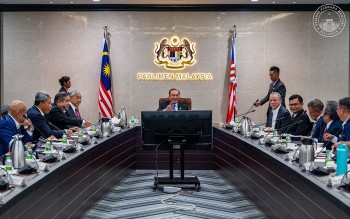
Prime Minister Datuk Seri Anwar Ibrahim has instructed Malaysia's Ministry of Investment, Trade and Industry (MITI) and Ministry of Economy to initiate dialogue with manufacturing companies grappling with intensifying cost burdens stemming from disruptions in global supply networks. The directive came following a session of the National Economic Action Council (MTEN) chaired by Anwar, who concurrently serves as finance minister, on Monday. The premier's intervention signals growing concern within government about the vulnerability of Malaysia's manufacturing base to external economic shocks and underscores the administration's commitment to safeguarding industrial competitiveness amid volatile international conditions.
The manufacturing sector faces compounding challenges as supply chain constraints ripple through interconnected industries. Malaysia's economic planners have zeroed in on the plastics industry as a critical pressure point requiring urgent attention and targeted policy responses. This focus reflects the sector's strategic importance as a foundational supplier to numerous downstream industries that form the backbone of Malaysia's export economy and employment base. The government's recognition of these vulnerabilities through formal council deliberations suggests policymakers are calibrating their approach to balance immediate relief measures with longer-term structural resilience.
Economy Minister Akmal Nasrullah Mohd Nasir provided detailed context on the plastics industry's financial trajectory and market composition during a briefing streamed on the ministry's Facebook platform. The sector recorded sales valued at RM62.69 billion in 2025, representing a decline from RM64.78 billion in 2024. This contraction, though modest in percentage terms, reflects underlying strain that manufacturers attribute partly to supply-side disruptions driving up input costs and logistics expenses. The year-on-year decline warrants close monitoring as further deterioration could signal weakening demand or accelerating margin compression among producers.
The plastics sector's market structure reveals its deep integration across Malaysia's manufacturing ecosystem. Packaging applications represent the largest segment, accounting for 45 per cent of total market value, followed by the electrical and electronics sector at 29 per cent. This concentration underscores how cost pressures in plastics manufacturing inevitably transmit to food packaging producers, consumer electronics manufacturers, and component suppliers serving multinational corporations. The downstream effects extend further into automotive production, medical device manufacturing, and construction materials, meaning that challenges in plastics ripple across multiple industries employing hundreds of thousands of Malaysians.
The global supply crisis affecting plastics manufacturing reflects broader post-pandemic structural shifts in international commerce. Raw material availability, energy costs, shipping expenses, and port congestion continue constraining manufacturers worldwide, with emerging market suppliers like Malaysia facing particular exposure due to reliance on imported feedstock and international markets for finished goods. These external pressures have compressed profit margins across the supply chain, forcing manufacturers to absorb costs or pass increases to customers—a choice that carries different competitive implications depending on market dynamics and customer concentration.
Government engagement with affected manufacturers aims to identify feasible interventions that do not undermine longer-term fiscal sustainability. Potential measures under consideration likely encompass targeted trade financing facilities, temporary tariff adjustments, streamlined regulatory compliance pathways, and investment incentives for production efficiency upgrades. Addressing cost pressures requires balancing multiple objectives: protecting manufacturers' viability, maintaining consumer affordability, preserving Malaysia's international competitiveness, and avoiding precedent-setting subsidy commitments that could strain public finances or invite trade disputes.
The timing of this initiative reflects Malaysia's position within complex global value chains where supply disruptions originating in distant markets rapidly cascade into local production disruptions. Unlike fully domestically-oriented industries, export-focused manufacturers operating within international supply networks face dual pressure: external cost shocks and demand volatility from global customers potentially reducing orders or demanding price concessions to offset their own cost increases. This structural vulnerability explains why even temporary supply disruptions generate ripple effects lasting months beyond their initial occurrence.
The directive carries implications for Malaysia's broader economic management strategy heading into the latter half of 2025. Policymakers signal they will pursue active coordination between investment, trade, and economic agencies rather than allowing market forces alone to determine outcomes. This interventionist approach reflects confidence that targeted dialogue and calibrated support can preserve manufacturing capacity and employment while supply conditions normalize. However, the government faces a risk-reward calculation: timely support for struggling firms preserves capabilities and jobs, but overly generous assistance could perpetuate inefficiency or create moral hazard among manufacturers.
The plastics industry challenge must be understood within Southeast Asia's competitive manufacturing landscape. Thailand, Indonesia, and Vietnam possess competing plastics sectors and downstream manufacturing capabilities, meaning Malaysian manufacturers cannot indefinitely sustain cost disadvantages without losing market share. Regional competitors face similar supply chain pressures but may benefit from different policy responses or comparative advantages in logistics or feedstock sourcing. This regional competitive context sharpens the urgency for Malaysia's government action, as delayed response risks permanent market share losses to better-positioned rivals.
The National Economic Action Council's explicit focus on manufacturing resilience signals that policymakers view supply chain vulnerability as a systemic risk rather than temporary cyclical turbulence. This perspective justifies proactive government engagement beyond conventional approaches. By directing MITI and the Economy Ministry to formulate collaborative solutions with industry stakeholders, Prime Minister Anwar positions the government as an active partner in navigating external economic challenges rather than a passive observer of market outcomes. Such engagement can facilitate information sharing about emerging bottlenecks and unlock creative solutions that individual manufacturers might not identify in isolation.

