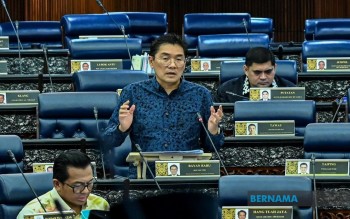
Malaysia's government has committed to a measured approach toward data centre expansion, approving projects only after confirming that power and water resources remain adequate for households and manufacturing sectors. Deputy Minister of Investment, Trade and Industry Sim Tze Tzin made this assurance during parliamentary proceedings, signalling that regulators will not sacrifice essential utilities for commercial gain in the rush to position the country as a regional technology hub.
The establishment of a Data Centre Task Force represents the government's effort to systematically evaluate each proposal against measurable infrastructure constraints. Rather than adopting a blanket approval stance toward data centre applications, the task force conducts thorough assessments of power consumption and water usage patterns specific to each project before making decisions. This institutional approach aims to prevent the kind of infrastructure crises that have affected other nations pursuing aggressive data centre growth without adequate planning.
Water supply represents a particular area of concern for policymakers, with the government explicitly prioritising residential and agricultural usage over commercial data centre demands. Sim clarified that only when surplus water capacity exists beyond household requirements will authorities consider approving additional data centre operations. This hierarchy reflects growing recognition across Southeast Asia that digital infrastructure expansion cannot compromise fundamental needs in countries facing seasonal water stress and competing agricultural demands.
The government intends to shield consumers from escalating electricity costs that frequently accompany data centre proliferation. By conditioning approval on demonstrated excess generation capacity, regulators hope to prevent scenarios where energy-intensive computing facilities drive up power tariffs for residential users and small-to-medium enterprises. This consumer protection angle distinguishes Malaysia's regulatory stance from more permissive jurisdictions that have allowed energy costs to rise sharply alongside data centre investment.
Significantly, Sim noted that Malaysia currently possesses sufficient excess capacity to accommodate applications already under DCTF review, suggesting that the government views the infrastructure question as manageable rather than prohibitively constrained. This assessment provides some reassurance to technology companies eyeing Malaysia as an investment destination, while maintaining that future growth will be calibrated against resource availability rather than proceeding unconditionally.
The data centre initiative exists alongside the broader National Semiconductor Strategy, which has generated substantial momentum in attracting manufacturing investment to Malaysia. From January 2024 through March 2026, approved semiconductor sector investments reached RM91.9 billion, with foreign direct investment contributing RM82.9 billion and domestic capital adding RM8.9 billion. These figures demonstrate Malaysia's success in competing with regional competitors for high-value technology manufacturing.
The semiconductor push extends beyond capital attraction to workforce development, a critical bottleneck in Asia's technology sector. The government has targeted training 60,000 workers in semiconductor-related skills, with 18,062 positions filled by December 2025. This pace suggests the initiative remains on track to meet medium-term labour requirements, though scaling further may require expanded partnerships with educational institutions and industry training providers. The focus on local talent addresses long-standing concerns about foreign skill-dependent operations that generate limited technology transfer to the domestic workforce.
Data centres and semiconductor manufacturing represent complementary rather than competing priorities within Malaysia's technology strategy. While semiconductors require skilled labour and stable manufacturing infrastructure, data centres demand reliable power and water alongside sophisticated cooling systems and network connectivity. Both sectors position Malaysia within global digital supply chains, though with different geographic and temporal advantages. The semiconductor strategy builds upon established expertise from decades of electronics manufacturing, whereas data centre competitiveness depends largely on geography, utility costs, and regulatory stability.
For regional context, Malaysia's conditional approval framework contrasts with approaches in neighbouring countries. Singapore has pursued data centre development with fewer infrastructure restrictions, leveraging its tiny land area and advanced utilities, while Thailand and Indonesia have promoted data centre investment with varying degrees of environmental scrutiny. Malaysia's middle-ground approach attempts to capture investment while maintaining environmental and social safeguards, potentially offering a model other Southeast Asian nations might consider as they balance digital economy ambitions against resource constraints.
The task force model also addresses legitimate public concern about data centre environmental impact. Beyond water and electricity consumption, facilities generate heat, require cooling water discharge, and can concentrate industrial infrastructure in ways affecting local communities. By subjecting each proposal to systematic review, Malaysia signals commitment to transparent decision-making rather than opaque approvals that might later provoke backlash from affected residents or environmental advocates.
Looking forward, the government's dual focus on semiconductors and data centres reflects recognition that Malaysia cannot rely solely on any single technology sector. Semiconductor manufacturing provides stable employment and technology capability-building, while data centre investment attracts service revenues and positions Malaysia as Southeast Asia's digital infrastructure hub. Success in both domains would diversify Malaysia's technology economy while spreading investment geographically and sectionally.

