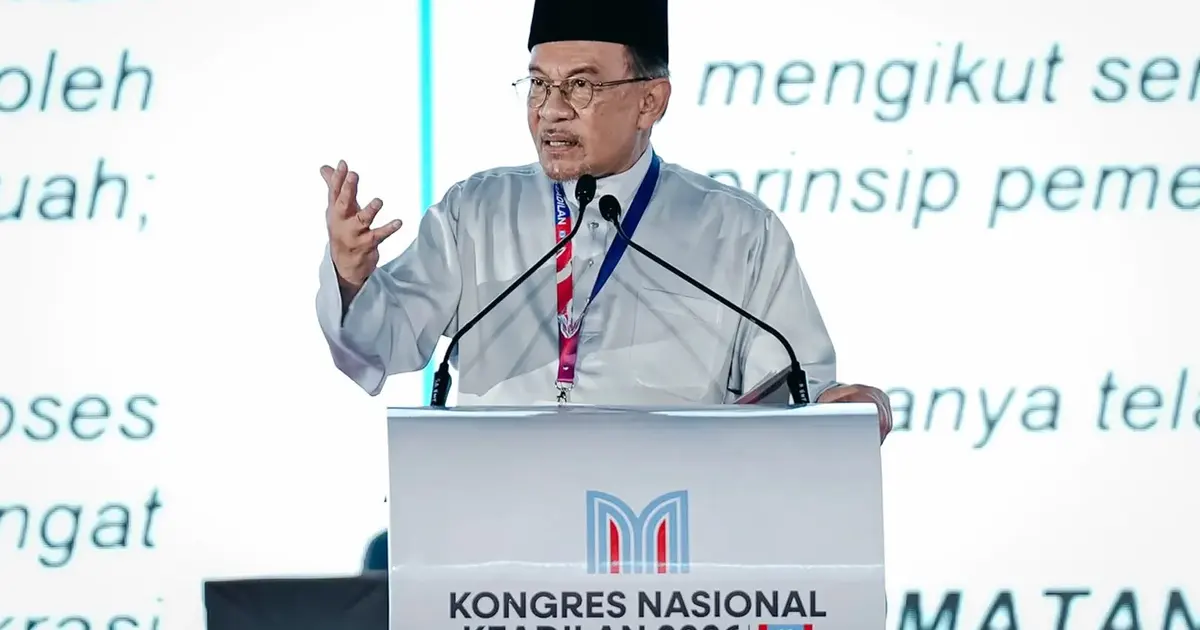
Prime Minister Anwar Ibrahim has confirmed that the government intends to broaden its examination of administrative and governance failures within federal statutory bodies, moving beyond the high-profile Tabung Haji inquiry to scrutinise the long-standing operational challenges at Felda. The decision reflects guidance from the Yang di-Pertuan Agong that accountability mechanisms should not conclude with a single organisation, signalling a more ambitious clean-up agenda that may reshape how these institutions operate.
The announcement comes as Tabung Haji continues to face intensifying pressure over its management and investment practices. The pilgrims' fund has long been central to Malaysia's hajj ecosystem, administering savings and finances for millions of Muslims preparing for their religious pilgrimage. Recent developments have exposed governance gaps and financial irregularities that triggered the initial probe, which the Prime Minister now frames as merely the opening phase of a wider institutional audit.
Felda, the Federal Land Development Authority, represents a parallel case of institutional drift. Established in 1956 to resettle impoverished smallholder farmers and manage agricultural development schemes, Felda has become synonymous with bureaucratic bloat, inefficient land management, and financial underperformance. The organisation oversees vast tracts of agricultural land and employs tens of thousands of settlers and workers, making it structurally significant to rural Malaysia's economic and social fabric. Yet its operational effectiveness has deteriorated markedly over recent decades, with widespread complaints about inadequate settler support, poor infrastructure maintenance, and opaque financial accounting.
The Prime Minister's commitment to expand investigative scope reflects growing recognition within government that Malaysia's statutory bodies operate with insufficient oversight and accountability. These institutions wield enormous budgets, control critical infrastructure, and affect millions of citizens directly, yet frequently escape the scrutiny applied to private corporations. Tabung Haji's troubles may have triggered the review, but they have exposed a systemic vulnerability: when government-linked entities fall into mismanagement, oversight mechanisms often prove inadequate to arrest decline quickly enough.
For Malaysian stakeholders, this signals potential upheaval in how statutory bodies report to government and how leadership is appointed and monitored. The Felda case particularly resonates in rural communities, where settlers and their families depend directly on the authority's decisions regarding land allocation, crop support, and dividend distributions. Families who settled land through Felda schemes decades ago now worry about the sustainability of their holdings and the security of income streams they have relied upon for generations.
The Yang di-Pertuan Agong's intervention in directing that scrutiny extend beyond Tabung Haji underscores the importance the constitutional monarchy places on institutional governance. This royal guidance carries considerable weight within Malaysia's political culture and suggests that comprehensive reform enjoys high-level endorsement. It also positions the Crown as guardian of institutional integrity, a role that resonates strongly with public expectations of the Yang di-Pertuan Agong as custodian of national institutions.
For Southeast Asia's broader governance context, Malaysia's willingness to investigate flagship statutory bodies sends a message about accountability standards in the region. Many neighbouring countries grapple with similar challenges: state-owned enterprises and statutory bodies that operate with minimal transparency, resist external audits, and accumulate unsustainable deficits. Malaysia's approach—however imperfect its implementation may prove—suggests that even well-established institutional arrangements can be reconsidered when public confidence erodes sufficiently.
The expansion of investigations also raises practical questions about scope and timeline. Will the government examine only Felda, or will scrutiny extend to other troubled bodies such as Petronas subsidiary companies, Mara, or various statutory authorities managing ports, utilities, or infrastructure? The breadth of the inquiry could determine whether it achieves meaningful systemic reform or becomes another exhaustive but ultimately inconsequential review that generates reports without compelling institutional change.
Implementing recommendations will prove equally crucial. Previous inquiries into Malaysian institutions have produced detailed findings that were shelved without action, partly due to political constraints and partly because correcting structural problems requires sustained commitment and difficult trade-offs. Felda's case will test whether the government possesses the political will to impose genuine operational reforms that might disrupt established power networks or require painful downsizing.
The timing of Anwar Ibrahim's announcement also reflects his broader anti-corruption agenda, which has become a defining element of his premiership. By positioning himself as willing to subject large, entrenched institutions to scrutiny, he reinforces his reformist credentials and attempts to distinguish his administration from predecessors criticised for tolerance of institutional dysfunction. Whether this momentum translates into substantive change will depend on the rigour with which investigations are conducted and the government's readiness to implement unpopular recommendations that challenge vested interests within the civil service and among politically connected constituencies benefiting from the status quo.

