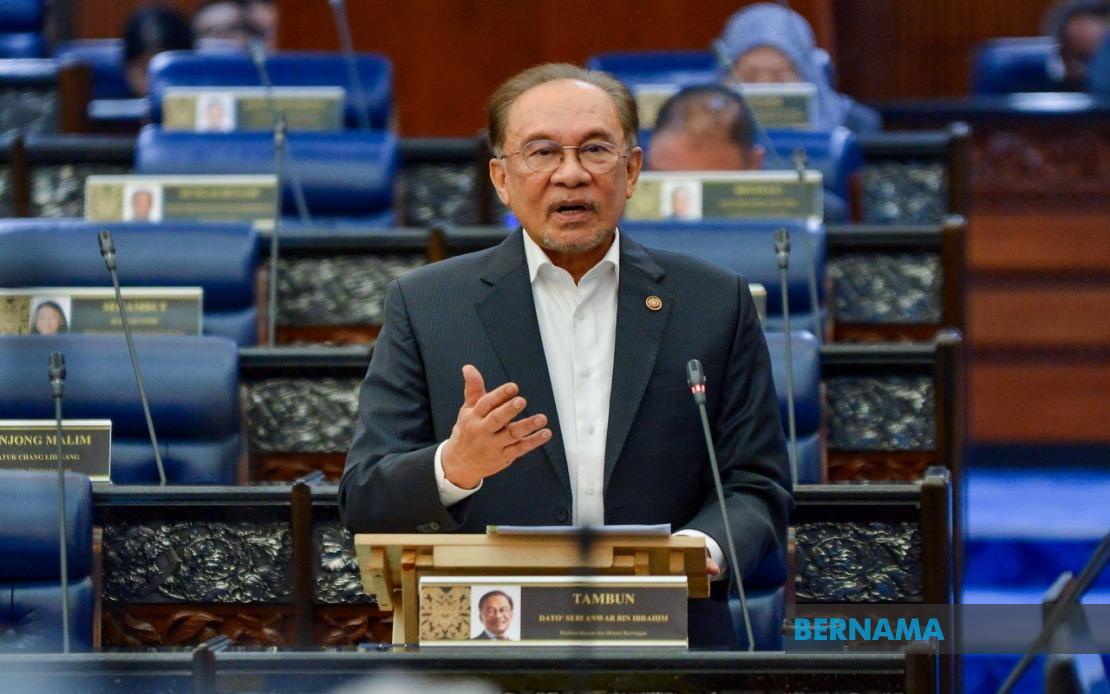
Prime Minister Datuk Seri Anwar Ibrahim has declared that the government will continue to evaluate the necessity of hiring foreign workers through proper legal channels while ensuring Malaysians receive priority for available positions. Speaking in Parliament on July 14, Anwar acknowledged that while certain sectors genuinely require overseas labour, any recruitment process must first exhaust existing foreign workers already lawfully residing in the country before considering fresh imports.
The Prime Minister's statement addresses mounting pressure from small and medium enterprises struggling with labour shortages, whilst simultaneously responding to concerns about youth employment opportunities in Malaysia. The government recognises a fundamental tension in the labour market: some industries face genuine skill gaps that domestic workers cannot immediately fill, yet the nation is home to millions of foreign workers whose existing legal status should be leveraged before new permits are issued. This approach reflects an attempt to balance economic pragmatism with nationalist employment priorities.
Anwar specifically highlighted the proliferation of foreign worker syndicates as a systemic problem requiring urgent attention. He characterised these networks as entrenched criminal enterprises that have enriched middlemen and facilitators for decades whilst distorting the labour market. By placing this issue alongside broader employment policy, the Prime Minister signals that tackling organised exploitation of foreign labour is integral to the government's broader worker protection agenda. The government intends to strengthen coordination between the Ministry of Human Resources and Ministry of Home Affairs to ensure any approvals account for security considerations and genuine sectoral needs.
A critical element of the government's approach involves tightening approval mechanisms for foreign professional workers. Anwar revealed that employers have attempted to circumvent restrictions by importing workers under false pretences—applying for artificial intelligence or digital expertise specialists whilst deploying them in unrelated roles. This regulatory loophole has enabled businesses to bypass intended safeguards designed to reserve professional opportunities for qualified Malaysians. The Prime Minister made clear that such abuse will no longer be tolerated, with authorities verifying that imported specialists actually perform the approved specialist functions.
The enforcement dimension of this policy represents a significant hardening of immigration controls. Anwar committed to intensifying crackdowns against foreign workers who breach regulations regardless of their nationality or ethnicity, explicitly mentioning the Rohingya population. This universalised enforcement approach aims to counter perceptions of discriminatory application whilst maintaining strict compliance standards. However, workers and employers who observe legal requirements will receive appropriate protections and recognition.
For Malaysia's young workforce seeking employment, this policy carries mixed implications. By restricting unnecessary foreign worker recruitment and tightening professional worker approvals, the government aims to create more entry-level and mid-career opportunities for Malaysian citizens. Yet the continued acknowledgement that certain sectors require overseas labour suggests that some positions will remain inaccessible to locals. The government's strategy appears to prioritise developing local skills in emerging fields like digital technology and artificial intelligence rather than relying on imported expertise.
The SME sector, which raised the original concerns about labour shortages, now faces a more complex regulatory environment. Small businesses will need to demonstrate genuine inability to fill vacancies with local or existing foreign workers before obtaining new foreign worker permits. This requirement may impose administrative burdens on already stretched businesses, though the government hopes that prioritising existing foreign workers will provide practical relief without requiring entirely new hires.
The policy reflects broader demographic and economic realities in Southeast Asia's largest economy. Malaysia faces an ageing population and must ensure young citizens benefit from employment opportunities created by economic growth. Simultaneously, specific sectors—particularly construction, agriculture, hospitality, and domestic services—rely heavily on migrant labour because Malaysians increasingly eschew these roles. The government's task involves managing this mismatch without resorting to wholesale foreign labour expansion that could displace opportunities for citizens.
From a regional perspective, Malaysia's approach differs notably from some neighbours' more permissive labour immigration policies. Thailand and Singapore maintain larger guest worker populations relative to their populations, whilst the Philippines manages significant emigrant remittance flows. Malaysia's attempt to restrict foreign worker growth whilst strengthening local employment prospects aligns with nationalist sentiment increasingly visible across Southeast Asia, reflecting concern that labour migration has created parallel economies that disadvantage citizens.
The security dimension highlighted by Anwar underscores how foreign worker policy intersects with broader national concerns. Unregulated or poorly monitored migrant populations create vulnerabilities that criminal networks and irregular smuggling operations exploit. By insisting that the Home Affairs Ministry maintain oversight of labour approvals, the government emphasises that employment policy cannot be separated from border management and security considerations.
Implementation challenges remain substantial. Distinguishing between genuine skill shortages and employer preference for cheaper foreign labour requires sophisticated labour market analysis. The Ministry of Human Resources will need enhanced capacity to assess sectoral needs credibly. Simultaneously, existing foreign worker communities must be effectively mobilised—a task complicated by documentation issues, language barriers, and sector-specific training gaps.
Anwar's parliamentary statement represents a calibrated political response attempting to satisfy multiple constituencies: nationalist voters demanding employment protection for Malaysians; businesses requiring labour flexibility; and security-conscious officials concerned about irregular migration. Whether this balancing act can be implemented effectively will determine the policy's impact on Malaysia's labour market and young workers' employment prospects over coming years.

