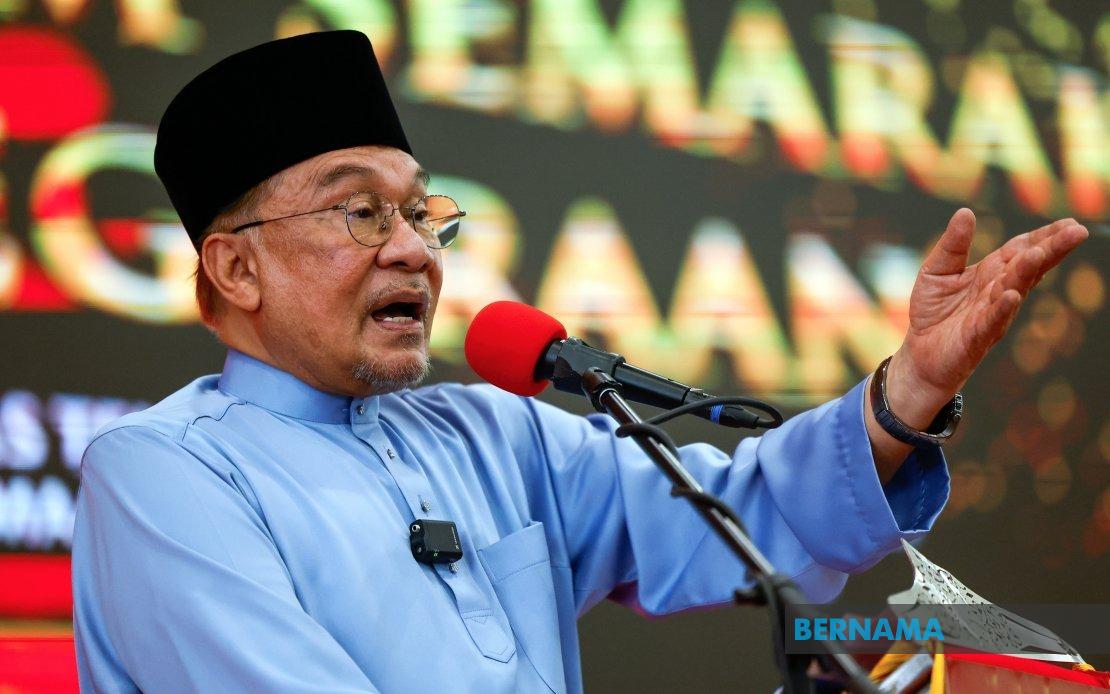
Prime Minister Datuk Seri Anwar Ibrahim has committed the government to fully repealing the Universities and University Colleges Act (AUKU) 1971, a landmark shift in policy aimed at granting Malaysian students substantially greater democratic freedoms and expanded space for political participation on university campuses. The announcement was made during his keynote address at the 2026 PKR National Congress held at the Melaka International Trade Centre in Ayer Keroh, signalling a decisive break from decades of restrictive student governance frameworks.
The decision emerged directly from sustained pressure by student leaders who submitted formal memoranda and feedback advocating for sweeping legislative reforms. Rather than pursuing incremental amendments—the approach adopted by previous administrations—the government has opted for wholesale legislative replacement. Anwar acknowledged that while past modifications to AUKU had progressively loosened certain restrictions, they fell short of meeting evolving expectations within Malaysia's student community regarding their role in public discourse and institutional decision-making.
AUKU, enacted in 1971, has long been criticised by civil society groups and education advocates as overly restrictive, imposing considerable limitations on student activism, political involvement, and freedom of expression within campus environments. The legislation was initially designed to maintain institutional order but has been widely perceived as suppressing legitimate student voice and democratic participation. Over the decades, incremental amendments have relaxed certain provisions, yet the fundamental architecture of the law remained largely intact, continuing to constrain student organising and political engagement in ways seen as incompatible with modern democratic norms.
Anwar framed the repeal within Malaysia's broader education reform agenda, positioning enhanced student freedoms as integral to developing more vibrant intellectual communities and strengthening democratic culture among young citizens. This positioning reflects recognition that university campuses function not merely as venues for credential accumulation but as crucial spaces where future leaders learn democratic participation, critical thinking, and civic responsibility. By widening democratic space, the government seeks to foster more engaged citizenry while simultaneously addressing longstanding grievances within the student movement.
The Prime Minister's statement underscores the receptiveness of the current administration to youth activism and student advocacy. By responding directly to memoranda and organised pressure from student leaders, the government has demonstrated that institutional channels for democratic participation remain viable and potentially consequential. This approach contrasts sharply with dismissive postures toward student organising that characterised certain earlier periods, potentially reshaping the relationship between the state and student movements in Malaysian higher education.
The implications for Malaysian universities are substantial. Students would gain considerably expanded scope for organising political discussions, establishing advocacy groups focused on social and national issues, and participating more directly in university governance structures. Such freedoms could energise campus intellectual life, deepen engagement with pressing national and regional challenges, and create more authentic space for students to develop their political consciousness and civic identities.
However, the full implications depend heavily on implementation and what legislative framework replaces AUKU following its repeal. The government must craft successor legislation—or potentially operate without specific student governance restrictions—in ways that balance expanded freedoms with legitimate institutional interests in campus safety, academic integrity, and orderly operations. Student groups and institutional leaders will likely need to engage in detailed discussions regarding appropriate guardrails and procedures. Additionally, clarification is needed regarding how university administrations will adapt their governance practices and what formal mechanisms will facilitate enhanced student representation in decision-making processes.
For the broader regional context, Malaysia's move could influence conversations about student activism and democratic space within universities across Southeast Asia, many of which operate under similarly restrictive legal frameworks. As Malaysia experiments with widened student freedoms, neighbouring countries may reassess their own approaches to balancing institutional stability with democratic participation rights. The Malaysian experience could provide valuable regional lessons regarding implementation challenges and benefits.
The timing reflects the PKR-led coalition government's broader emphasis on democratic renewal and institutional reform following its return to power. By advancing student freedoms, Anwar's administration reinforces messaging that distinguishes its governance from previous regimes perceived as more authoritarian. This positions the government favourably with younger voters and urban constituencies that prioritise democratic rights and institutional transparency.
Student organisations have welcomed the announcement, viewing it as validation of sustained advocacy efforts and growing recognition that contemporary Malaysian society increasingly expects universities to function as more open democratic spaces. The practical rollout will be critical, as actual freedom on campuses will depend not merely on legislative change but on cultural shifts within university administrations and broader acceptance of expanded student voice.
The coming months will prove consequential as the government develops legislative replacement frameworks and consults stakeholders including student representatives, university administrators, and civil society organisations. Success requires careful attention to legitimate institutional needs alongside genuine expansion of student democratic rights—a balance that will test the government's commitment to both higher education quality and democratic principles.

