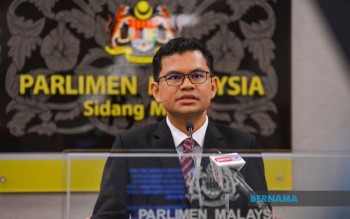
Malaysia's government is moving forward with a formal review of proposals submitted by the Malaysian Plastics Manufacturers Association, signalling renewed attention to an industry facing mounting pressures from volatile global supply chains and escalating raw material expenses. The National Economic Action Council has directed both the Ministry of Investment, Trade and Industry and the Economy Ministry to conduct a comprehensive examination of the industry's concerns, according to Economy Minister Akmal Nasrullah Mohd Nasir.
During a recent NEAC gathering, representatives from the plastics sector presented detailed submissions outlining the specific competitiveness obstacles confronting downstream manufacturers. A central grievance involves the disparity in raw material procurement costs when compared with rival nations, a structural disadvantage that undermines Malaysia's ability to compete internationally in this critical sector. The government's commitment to studying these proposals reflects acknowledgment that the plastics industry serves as a foundational supplier across multiple economic segments, from consumer goods to advanced manufacturing.
The sector represents a substantial component of Malaysia's industrial base, with combined sales valued at RM62.69 billion in 2025, though this represents a decline from RM64.78 billion in the preceding year. Within this ecosystem, packaging applications dominate, commanding approximately 45 per cent of total market demand. The electrical and electronics segment constitutes the second-largest application area at 29 per cent, underscoring the industry's interdependency with Malaysia's world-leading semiconductor and electronics manufacturing clusters. This interconnection means that addressing plastics sector challenges carries implications extending well beyond a single industry.
A particularly significant element under government consideration involves the proposed adoption of Extended Producer Responsibility schemes on a voluntary framework. Rather than implementing mandatory environmental regulations that could impose abrupt compliance burdens, policymakers are evaluating a gradual, industry-cooperative approach. The assessment will examine cost implications across the supply chain, the capacity of smaller enterprises to absorb additional expenses, and the current state of Malaysia's recycling infrastructure. This measured strategy acknowledges that premature or poorly calibrated environmental mandates could further strain an already pressured sector.
Akmal Nasrullah framed the government's analytical work within a broader strategic context, noting that effective circular economy development could substantially strengthen Malaysia's industrial resilience. By increasing reliance on recycled material streams rather than virgin raw materials, the sector could reduce its exposure to international price volatility and geopolitical supply disruptions. Simultaneously, building domestic recycling capacity would create new economic value and employment opportunities while addressing environmental concerns, creating a potential win-win outcome if executed strategically.
The timing of this review occurs against a backdrop of generally favourable economic conditions in Malaysia, providing some policy space for forward-looking structural reforms. First-quarter 2026 economic data revealed growth of 5.4 per cent, driven by robust domestic consumption, expanding services and manufacturing output, and continued strength in electrical and electronics exports. These indicators suggest the broader economy possesses sufficient momentum to absorb targeted adjustments within specific sectors without compromising overall performance.
Inflationary pressures remain contained, with May 2026 consumer prices rising just 2.0 per cent year-on-year, barely above April's 1.9 per cent reading. This relatively moderate price environment provides manufacturers some breathing room to absorb cost adjustments or implement operational changes without immediately passing expenses to end consumers. However, Malaysia's external trade performance demonstrates the economy's continued dependence on export-driven growth, with international shipments expanding 24.3 per cent to reach RM793.8 billion during the first five months of 2026, while imports grew at a slower 11.8 per cent pace.
For Malaysian readers and policymakers, the government's pledge to thoroughly examine plastics industry proposals carries broader significance. The sector supplies critical inputs to high-technology manufacturing clusters that anchor Malaysia's middle-income economy and provide pathways for upgrading into more sophisticated value chains. Raw material cost disadvantages, if left unaddressed, could gradually erode competitiveness and create incentives for manufacturing investment to relocate to regions with better input supply conditions.
The government's measured approach—commissioning detailed analysis rather than rushing to subsidise or regulate—reflects sophisticated economic thinking. Officials understand that sustainable solutions must address underlying structural impediments rather than applying temporary fixes. The concurrent exploration of circular economy opportunities suggests recognition that environmental sustainability and economic competitiveness need not remain in tension if policies are thoughtfully designed.
Second-quarter GDP estimates, due for preliminary release on July 17, will provide crucial updated information about economic momentum heading into the latter half of 2026. These figures will help shape the urgency and scope of measures ultimately implemented to support the plastics sector. Meanwhile, sustained trade surplus performance—Malaysia recorded a RM132.8 billion surplus during the first five months of 2026—indicates the economy retains flexibility to invest in industrial transformation and supply chain strengthening.

