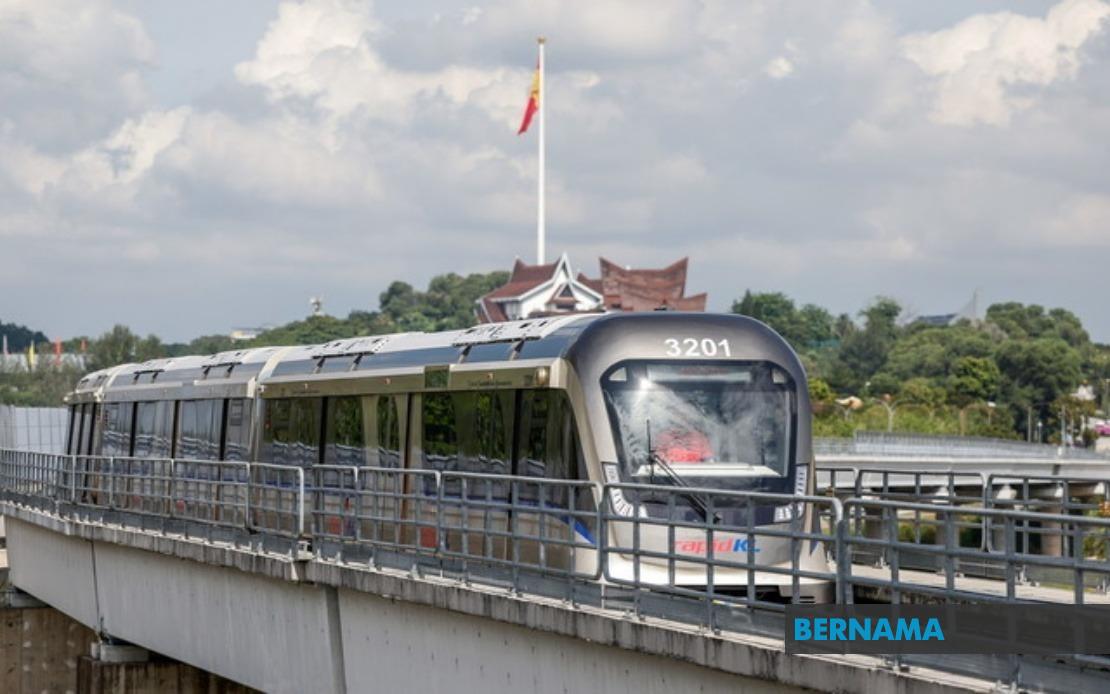
The government has committed to meeting with Sultan Sharafuddin Idris Shah to discuss mounting concerns about the LRT3 Shah Alam Line, following the Ruler's public comments on the infrastructure project's troubled implementation and rising costs. Transport Minister Anthony Loke announced the planned audience during a charity event here, signalling the administration's responsiveness to the royal remarks made the previous day about the controversial mass transit initiative.
The Sultan's intervention underscores the growing scrutiny surrounding a project that has become emblematic of infrastructure delays and budget pressures facing Malaysia's public transportation ambitions. His Royal Highness highlighted a cascade of setbacks that have fundamentally altered the project's scope and timeline. When the Federal Government changed hands in 2018, the LRT3 initiative was shelved for 18 months, representing a significant pause in planning and execution. Subsequently, the COVID-19 pandemic introduced another 19-month delay extending into 2021, compounding the project's struggles and eroding public confidence in its delivery.
These interruptions prompted substantial compromises to the original vision. The station designs were scaled back, reducing their proposed footprint and capacity. The number of train carriages allocated to the line was cut, a move that will constrain passenger throughput once the service begins operations. Most significantly, five stations originally planned along the alignment were shelved entirely, fragmenting the network's intended coverage across the Selangor region. These modifications reflect budget constraints and shifting priorities within government, though they diminish the project's utility for commuters outside the remaining corridor.
Loke acknowledged the legitimacy of the Sultan's observations, framing the government's audience-seeking as an opportunity for detailed dialogue rather than dismissal. The Minister's measured response suggests an understanding that royal institutions in Malaysia command significant moral authority and that addressing their concerns seriously is essential for maintaining institutional goodwill. This approach is particularly important given that Sultan Sharafuddin's remarks were not casual observations but pointed critiques of project management and cost discipline.
The Sultan's own statements reveal deeper frustrations about governance and public spending. He reframed the LRT3 initiative not as a prestige-driven mega-project but as a pragmatic service intended to improve daily life for ordinary Malaysians. This characterisation carries implicit criticism of any suggestion that the project has been pursued for political glory or administrative vanity. Instead, His Royal Highness positioned it as a fundamental utility for the people of Selangor, making delays and reductions in scope matters of direct consequence for the region's residents and economic development.
The planned ministerial audience reflects broader patterns of consultation between the MADANI administration and Malaysia's constitutional monarchs. While governments exercise executive authority over transport infrastructure, the sensitivity demonstrated toward royal perspectives indicates recognition that public projects ultimately serve the rakyat, who are represented through both electoral and institutional channels. The Sultan's position as custodian of Selangor's interests gives his remarks considerable weight, particularly regarding initiatives that directly affect the state's inhabitants and competitiveness.
Beyond the LRT3 controversy, Loke also addressed voter logistics for the 16th Johor State Election scheduled for July 11, demonstrating the Ministry's focus on concurrent governance challenges. The government has coordinated with Keretapi Tanah Melayu Berhad (KTMB) to expand Electric Train Service (ETS) frequencies between Kuala Lumpur and Johor Bahru, facilitating return journeys for outstation voters. This service extension benefits not only Johor residents commuting from the capital but also travellers originating from Singapore who can now access intermediate stops such as Segamat and Labis more conveniently.
The enhanced transport capacity reflects a deliberate policy choice to remove barriers to electoral participation. By increasing public transport frequency, the government aims to encourage voters to return home rather than abstain due to travel friction. This logistical approach has implications beyond the immediate election cycle, as it signals investment in inter-state connectivity that may have commercial and social benefits beyond the electoral context. Northern voters similarly benefit from improved ETS service to reach Johor during the polling period.
The election itself encompasses 56 state seats contested by 172 candidates, with advance voting scheduled for July 7. The scale of mobilisation required to administer the election while managing voter travel demands underscores the coordination challenges facing Malaysia's electoral and transport systems. The government's transport ministry initiative demonstrates how executive functions can be aligned with democratic processes to enhance citizen engagement.
The conjunction of these two issues—the LRT3 accountability and election logistics—reveals the MADANI Government's navigation of multiple pressures simultaneously. The need to address the Sultan's substantive concerns about infrastructure delivery while simultaneously managing electoral operations highlights the complexity of governance in a federal system with strong state-level institutions and constitutional monarchy structures. Both challenges require careful institutional management and transparent communication with stakeholders ranging from royal households to ordinary voters.
Looking forward, the government's willingness to engage directly with the Sultan on the LRT3 matter may set a precedent for more intensive dialogue between the executive and constitutional rulers on major infrastructure initiatives. Such consultation could strengthen both project outcomes and institutional relationships, though it may also slow decision-making if consensus-building becomes a prerequisite for progress. The ultimate test will be whether the planned audience yields concrete commitments to accelerate LRT3 delivery and restore public confidence in the project's viability and management.

