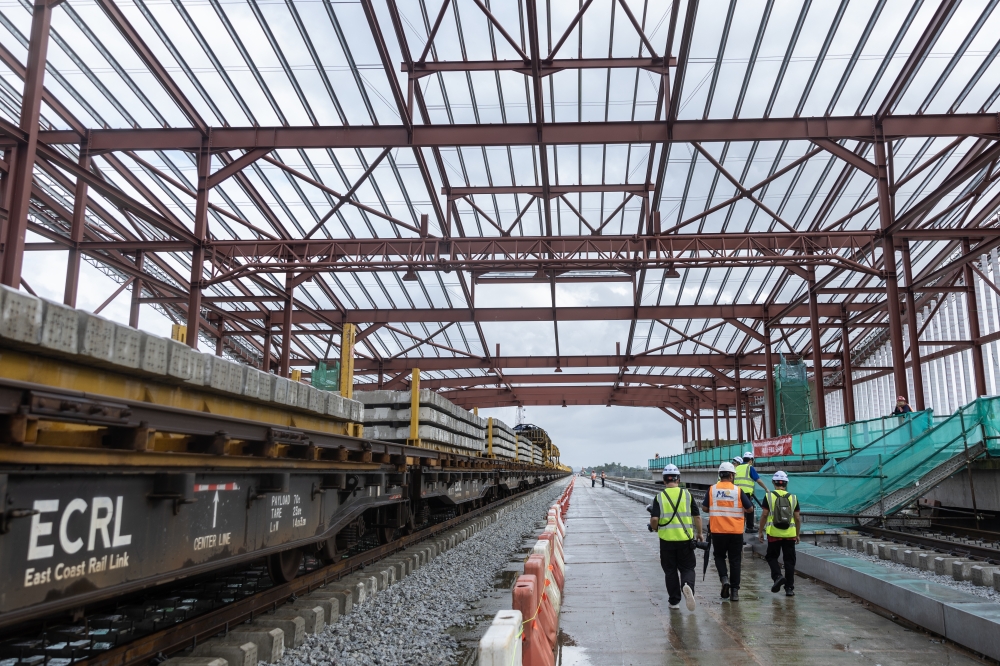
Putrajaya has endorsed an ambitious RM207 million portfolio of 46 development initiatives targeting Pasir Puteh parliamentary constituency, signalling a concerted effort to leverage the East Coast Rail Link (ECRL) corridor as a catalyst for broader regional prosperity. The initiative reflects strategic thinking about how major infrastructure projects can unlock growth potential in constituencies that have historically lagged behind more developed areas, particularly in peninsular Malaysia's less urbanized eastern regions.
The Pasir Puteh constituency, located in Terengganu, sits within the broader geography served by the ECRL, which has fundamentally altered connectivity patterns across the east coast since beginning operations. This geographical positioning provides an opportunity for planners to coordinate complementary projects that can extract maximum value from the railway's presence. Government officials view the constellation of 46 projects as a carefully calibrated response to diverse constituency needs, spanning economic development, social infrastructure, and quality-of-life improvements.
Breaking down the investment portfolio reveals a multi-sectoral approach rather than concentration in any single domain. The projects encompass categories typically essential for constituency development: transportation upgrades beyond the rail network, education facility enhancements, healthcare infrastructure improvements, local economic initiatives, and community amenities. This diversification suggests policymakers recognize that sustainable growth requires simultaneous advancement across multiple fronts rather than betting heavily on isolated prestige projects.
The ECRL connectivity factor deserves particular attention for Malaysian and Southeast Asian readers. The railway represents a transformational infrastructure asset that dramatically reduces travel time between the east coast and major economic centres, potentially reshaping settlement and investment patterns. Projects approved for Pasir Puteh appear designed to maximize this advantage through coordinated investments that make the constituency increasingly attractive for businesses and residents seeking alternatives to saturated urban markets. Secondary cities and towns along major transport corridors increasingly compete for similar roles across Southeast Asia, making Pasir Puteh's positioning instructive for regional development patterns.
Economic diversification emerges as a central theme within the project suite. Rather than relying traditionally on agriculture, fishing, and light manufacturing that have characterized many east coast constituencies, the investment suggests aspirations toward higher-value activities. Projects supporting commerce, small business development, and service sector expansion indicate an attempt to broaden the economic base and reduce vulnerability to sector-specific downturns. This aligns with Malaysia's longer-term ambitions to develop secondary economic clusters beyond the Klang Valley and Penang corridors.
Social infrastructure investments within the portfolio address persistent concerns about service delivery disparities between urban and less-developed areas. Educational facility upgrades can improve school conditions and expand access to quality instruction, addressing brain drain patterns where capable students migrate to urban centres. Healthcare infrastructure improvements reduce dependency on seeking specialized medical services in distant cities, a practical concern for residents managing chronic conditions or requiring routine care. These investments carry tangible quality-of-life implications that extend beyond statistical economic growth measures.
The timing and scale of this announcement merit consideration within broader political economy contexts. RM207 million represents substantial commitment toward a single constituency, reflecting both the actual needs of the area and positioning within national development priorities. The fact that 46 distinct projects populate the portfolio rather than fewer, larger initiatives suggests an approach balancing headline impact with granular responsiveness to local concerns. Scrutinizing implementation capacity becomes important—Malaysia's history demonstrates that project approval and actual completion often diverge significantly, influenced by bureaucratic challenges, changing political circumstances, and competing budget priorities.
For Malaysian policymakers, the Pasir Puteh initiative offers a case study in coordinating transportation infrastructure with broader development planning. The ECRL alone cannot generate prosperity; complementary investments in local economies, human capital, and services must accompany improved connectivity. This integrated approach contrasts with instances where Malaysian infrastructure projects have been implemented without sufficient attention to generating authentic economic activity in surrounding areas. Whether Pasir Puteh's project suite achieves this integration successfully remains to be demonstrated through monitoring frameworks and transparent progress reporting.
The constituency's specific context within Terengganu politics adds another dimension. Pasir Puteh has experienced competitive electoral contests, making development investments politically significant for maintaining constituency engagement. Government parties have strong incentive to demonstrate tangible benefits reaching constituents. Simultaneously, opposition parties will scrutinize whether projects address genuine needs or primarily serve political positioning. Residents and observer organizations should demand clear accountability mechanisms detailing project timelines, budget allocations, and performance metrics that permit independent verification of claimed benefits.
Regionally, Pasir Puteh's development trajectory could influence patterns in comparable constituencies across the east coast and beyond. If the coordinated approach successfully catalyzes sustainable growth, other constituencies may advocate for similar portfolios. Alternatively, if implementation falters or benefits concentrate narrowly, skepticism about such initiatives may increase. The Malaysian experience with major development projects has demonstrated both impressive successes and disappointing underperformance, making robust implementation crucial for project credibility.
Looking forward, integration between these approved projects and ECRL operations will determine whether the investment achieves its strategic potential. Transportation corridors generate maximum value when surrounding economic activity capitalizes on improved connectivity. The government's challenge extends beyond project approval to ensuring that projects launch efficiently, that local businesses and entrepreneurs can access resulting opportunities, and that benefits distribute sufficiently broadly to justify the public investment. Transparent progress tracking and stakeholder engagement throughout implementation will be essential for validating the initiative's impact on Pasir Puteh's development trajectory.

