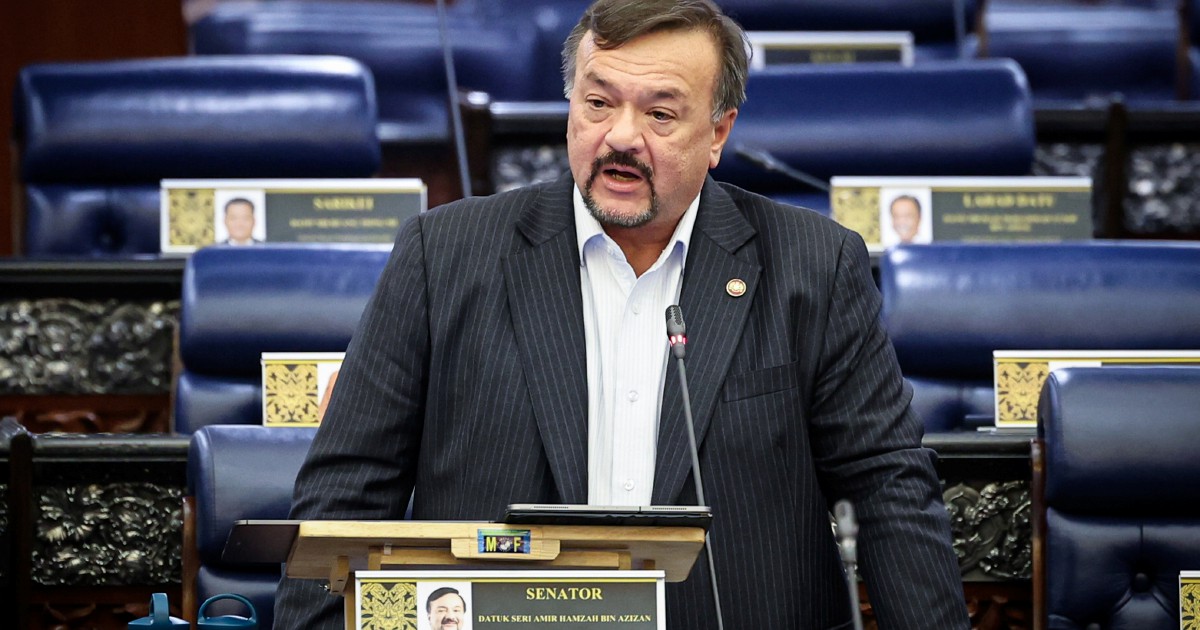
The Malaysian government is exploring whether a multi-agency task force might effectively coordinate investigations into alleged misconduct linked to Tabung Haji, a revelation that signals heightened scrutiny of the hajj savings institution. Finance Minister II Datuk Seri Amir Hamzah Azizan disclosed the deliberations on the matter, suggesting that officials recognise the complexity and sensitivity surrounding inquiries into the fund's operations.
Tabung Haji holds profound significance within Malaysia's Muslim-majority society, serving as the primary savings vehicle enabling ordinary citizens to fulfil the Islamic pilgrimage obligation. With millions of account holders depending on the institution to preserve and grow their contributions over decades, any impropriety carries substantial reputational and financial ramifications. The scale and interconnected nature of potential investigations—spanning regulatory, financial, and governance dimensions—have apparently prompted officials to contemplate a consolidated investigative apparatus rather than allowing separate agencies to pursue parallel inquiries independently.
The consideration of a task force framework reflects international best practices in tackling complex institutional investigations. Malaysia has previously employed multi-agency collaboration models in major financial crime investigations, recognising that fragmented approaches risk duplication, inconsistency, and investigative gaps. By pooling expertise across enforcement bodies, financial regulators, auditors, and prosecutors, authorities could develop comprehensive timelines, coordinate witness interviews, and ensure consistent evidentiary standards across different aspects of the investigation.
Amir Hamzah's acknowledgment that the government is actively weighing this option suggests discussions are already underway among relevant ministries and agencies. The deliberate pacing—considering rather than immediately announcing the task force—indicates officials are likely scrutinising what specific mandates, powers, and resource allocations would be necessary. Such groundwork typically involves legal review to ensure the task force operates within established statutory frameworks and possesses adequate authority to compel cooperation from all relevant parties.
For Malaysian investors and account holders, the government's apparent commitment to thorough investigation offers qualified reassurance. A well-coordinated probe might establish the factual basis for any alleged wrongdoing more credibly than disjointed agency investigations could achieve. Simultaneously, the extended consideration period raises questions about urgency and whether allegations have been sufficiently serious to warrant immediate action, or whether authorities are carefully positioning themselves to avoid premature conclusions.
The Tabung Haji situation occurs within a broader regional context of heightened scrutiny on financial institutions managing public assets. Across Southeast Asia, regulators have intensified oversight of investment vehicles and savings schemes following high-profile failures and misconduct cases. Malaysia's approach will likely influence regional standards and expectations regarding institutional accountability, particularly for faith-based financial entities that occupy unique positions of public trust.
Regulatory bodies under the Finance Ministry's purview, including Bank Negara Malaysia and the Securities Commission, would presumably form the investigative core. Their combined capabilities span financial auditing, market conduct oversight, and anti-corruption enforcement. Engagement of the Malaysian Anti-Corruption Commission would signal willingness to pursue potential criminal conduct, while involvement of the Attorney-General's Chambers would coordinate potential prosecutions. This institutional constellation reflects recognition that alleged misconduct may implicate multiple legal violations and regulatory breaches.
The timing of these considerations remains pivotal. Economic conditions affecting investment returns on Tabung Haji's portfolio have attracted attention in recent years, with account holders increasingly questioning whether management decisions adequately safeguarded fund performance. If governance or investment allocation decisions are under examination, investigators will need to reconstruct decision-making processes, assess whether conflicts of interest influenced outcomes, and determine whether management acted within authorised parameters. Such forensic work demands sustained focus and adequate resourcing.
Public disclosure of task force contemplation also serves a signalling function to stakeholders. It indicates that the government takes allegations seriously and intends comprehensive rather than cursory examination. Conversely, it may reflect pressure from account holders, political constituencies, or international observers to demonstrate institutional accountability. The gap between announcement of intention and formal establishment of the task force will reveal how quickly the government can translate deliberation into action.
For Malaysian account holders whose retirement security depends on Tabung Haji's integrity, these developments carry both promise and unresolved tension. A credible, thorough investigation might restore confidence in institutional governance and clarify whether management decisions served fund interests appropriately. Yet investigative processes consume time, and protracted uncertainty itself carries costs for investor confidence and fund operations. Officials must balance investigative thoroughness with stakeholder expectations for prompt resolution.
The emergence of multi-agency investigation as a serious option underscores that Malaysian regulators and policymakers have abandoned assumptions that Tabung Haji's institutional arrangements guaranteed sound management. Establishing such a task force, once formalised, would represent the government's most comprehensive response to date regarding alleged irregularities. Observers will watch whether the deliberation phase yields swift action or extends further as officials negotiate jurisdictional boundaries, funding arrangements, and operational protocols among participating agencies.

