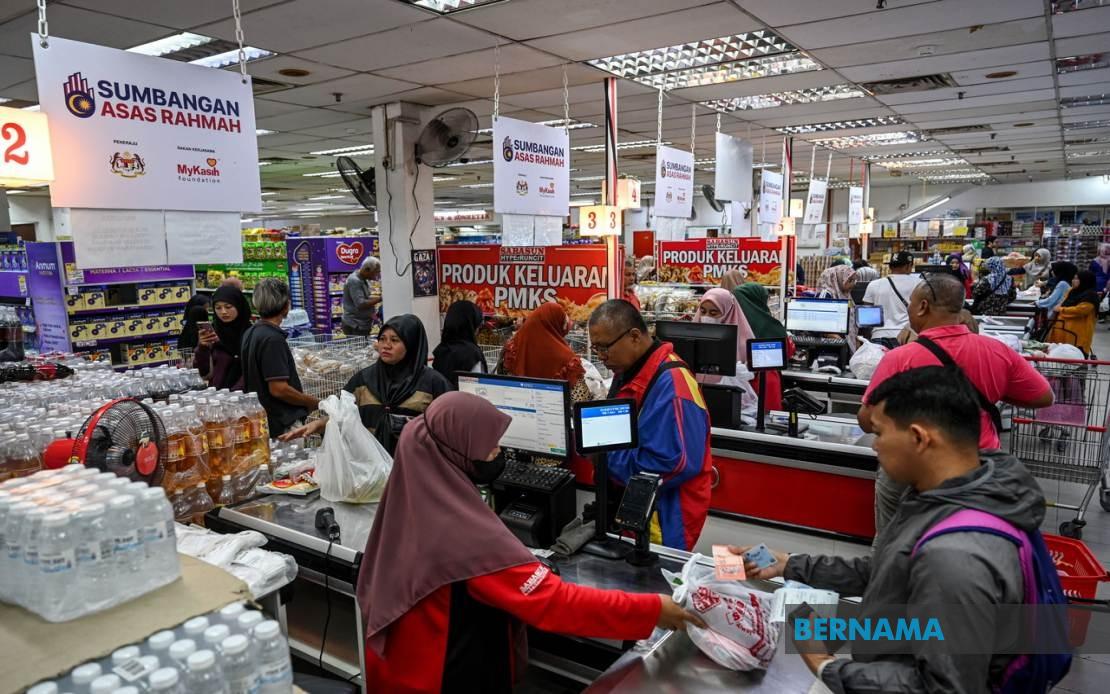
Prime Minister Datuk Seri Anwar Ibrahim has opened the door to enhancing financial support under two major welfare schemes that have become cornerstones of the government's social safety net, contingent on Malaysia's economic performance. Speaking at an event in Ipoh on July 19, Anwar confirmed discussions with Treasury secretary-general Tan Sri Johan Mahmood Merican regarding potential increases to the Sumbangan Tunai Rahmah (STR) and Sumbangan Asas Rahmah (SARA) programmes, with any decisions to be incorporated into the upcoming federal Budget. The dual cash assistance schemes have provided critical relief to millions of Malaysian households since their introduction, and any expansion would represent a significant commitment to sustained welfare provision during an economically uncertain period.
The Prime Minister's remarks reflect ongoing deliberation within government circles about balancing fiscal responsibility with social obligations. Anwar, who simultaneously holds the Finance portfolio, underscored that increases would only materialise if Malaysia's economic fundamentals support such expenditure, suggesting a measured approach rather than immediate across-the-board enhancements. This conditional framing acknowledges both the genuine pressure on household budgets amid persistent cost-of-living concerns and the Treasury's finite capacity to fund additional programmes. The tension between these competing demands has dominated policy discussions throughout Southeast Asia, where governments struggle to maintain welfare commitments whilst managing inflation and foreign exchange pressures.
For ordinary Malaysians already receiving STR and SARA assistance, Anwar's statement provides some encouragement that their circumstances remain under ministerial consideration. The STR scheme, designed to provide targeted cash transfers to low-income households, and SARA, which offers baseline assistance to vulnerable populations, have distributed substantial sums since inception. However, beneficiaries have repeatedly raised concerns about whether payment amounts adequately reflect rising living costs, particularly regarding food, utilities, and transport. The government's willingness to revisit these quantum levels suggests receptiveness to such feedback, though Anwar's emphasis on economic conditionality means no guarantees exist regarding the timing or scale of any increases.
The Budget process will serve as the critical juncture for translating these considerations into actual policy. Treasury officials must weigh potential STR and SARA enhancements against competing departmental priorities, infrastructure investments, debt servicing obligations, and other social programmes. Malaysia's fiscal position, whilst improved from earlier pandemic-era deficits, remains constrained by structural revenue challenges and demographic pressures on healthcare and pension systems. Economic growth forecasts therefore carry outsized importance; should Malaysia's growth trajectory weaken beyond current projections, the luxury of expanding welfare payments would likely evaporate, pushing priorities toward consolidation instead.
Beyond cash assistance schemes, Anwar also signalled heightened attention to the welfare of security and emergency personnel, particularly volunteers serving under the Malaysian Volunteer Corps Department (RELA). These frontline workers face unique occupational hazards and often operate with limited resources in responding to security threats and natural disasters. The government's existing RM3 million annual allocation for RELA member welfare, now committed for continuation, acknowledges their sacrifices but Anwar himself appeared to concede its insufficiency. The commitment to maintain this funding level, without announced increases, nonetheless demonstrates government recognition that volunteer emergency responders merit dedicated support distinct from broader civil service welfare provisions.
The event hosting Anwar's remarks, held at an Ipoh community gathering organised by RELA in partnership with the Malaysian Volunteer Corps Department, reflected the government's emphasis on connecting with grassroots constituencies whilst showcasing security apparatus contributions to national resilience. Such engagements serve dual purposes: they allow ministers direct exposure to community concerns and priorities, whilst simultaneously providing platforms for announcing or clarifying policy intentions. The presence of Home Ministry and RELA leadership underscored the integrated nature of welfare, security, and community development within the MADANI framework.
For Malaysian policymakers, the broader challenge extends beyond individual scheme adjustments to encompassing coherent long-term welfare architecture. Multiple, sometimes overlapping assistance programmes have accumulated through successive administrations, creating both safety net redundancies and coverage gaps. Future budgetary planning must grapple with whether enhancing existing schemes offers better value than structural reforms consolidating multiple programmes into streamlined mechanisms. International experience suggests that means-tested, regularly indexed cash transfers often deliver superior poverty reduction outcomes compared to static payment levels subject to periodic political revisiting.
Regionally, Malaysia's willingness to contemplate welfare expansion amid mixed economic signals reflects broader Southeast Asian trends toward prioritising social spending. Thailand, Indonesia, and the Philippines have similarly wrestled with balancing fiscal constraints against mounting pressure to shield vulnerable populations from inflationary pressures. The MADANI Government's approach, emphasising economic conditionality whilst signalling receptiveness to enhancement, mirrors pragmatic positioning adopted across the region, where welfare becomes both political necessity and economic stimulus mechanism.
Looking forward, the upcoming Budget presentation will clarify whether Anwar's Ipoh comments translate into tangible allocation increases or remain aspirational framing contingent on optimistic economic scenarios. Treasury revenue performance during the current fiscal year, coupled with revised growth forecasts, will largely determine bandwidth available for welfare expansion. Malaysian households reliant on STR and SARA assistance will scrutinise the Budget closely for concrete evidence that government rhetoric translates into improved support, whilst economists and fiscal watchdogs will monitor whether any enhancements align with sustainability principles and long-term budgetary health.

