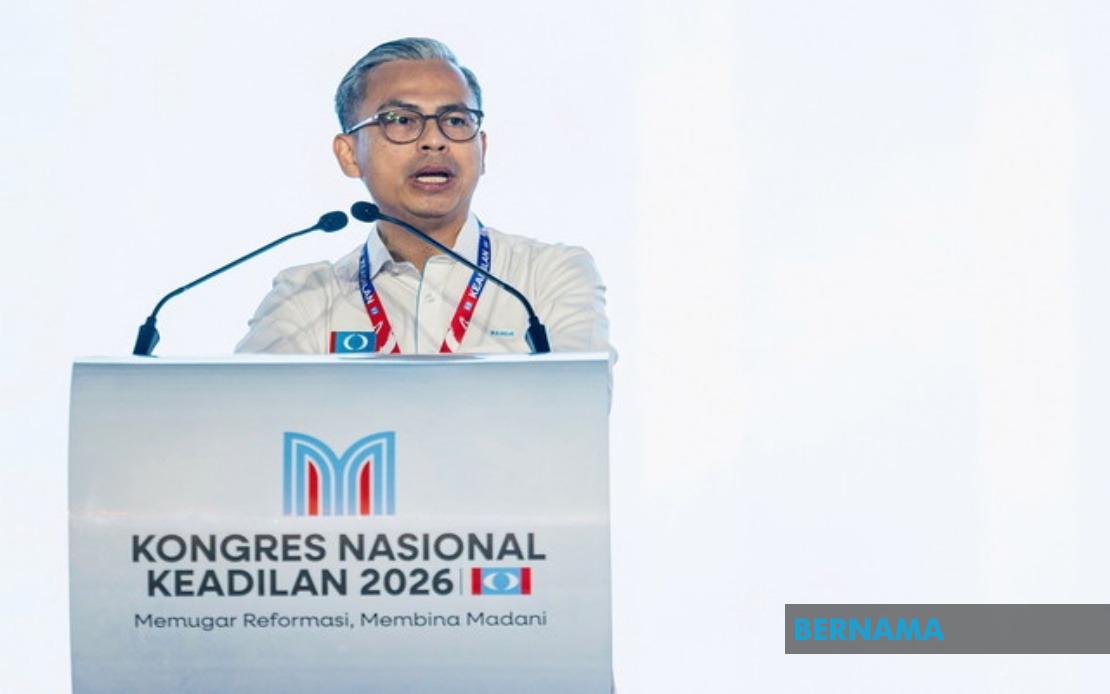
The Malaysian government has acknowledged a communication gap between its policy achievements and public perception, committing to substantial improvements in how it conveys economic progress and government initiatives to citizens. Speaking at the 2026 PKR National Congress in Melaka, Communications Minister Datuk Seri Fahmi Fadzil highlighted the disconnect many Malaysians experience when considering whether government accomplishments under the leadership of PKR president Datuk Seri Anwar Ibrahim have genuinely translated into tangible benefits in their daily lives. This admission represents a candid assessment of challenges the administration faces in convincing the electorate that macroeconomic gains at the national level are reaching ordinary Malaysians in meaningful ways.
Fahmi identified the core problem: successful government policies are being introduced but are failing to resonate emotionally with citizens or gain sufficient understanding among the general population. He characterised economic success in terms of what he called the "pot economy," suggesting that while the overall size of the economic pie may be growing, Malaysians are not yet convinced they are receiving their fair share or witnessing improvements in their personal circumstances. This perception gap poses a significant political challenge, as electoral support often depends less on aggregate economic indicators and more on citizens' lived experiences and sense that government efforts directly benefit them.
The government's response focuses on restructuring how information flows from policymakers to the public. Rather than relying solely on formal announcements or mass media channels, PKR intends to strengthen cooperation with grassroots leaders, particularly division chiefs who maintain direct contact with community members. This decentralised approach recognises that information delivery through local intermediaries often carries greater credibility and can be adapted to address specific community concerns and priorities.
A key strategic element involves expanding smaller-scale community discussions and town halls. Fahmi emphasised that intimate, informal settings allow government representatives to explain complex policies in accessible language while creating space for genuine two-way dialogue. Unlike large public forums or broadcast media, these interactions permit Malaysians to voice concerns, ask clarifying questions, and develop deeper understanding of government rationale and objectives. The government evidently believes this personalised approach will prove more effective at translating abstract policy achievements into emotionally resonant narratives that citizens can connect to their own lives.
The emotional dimension of policy communication represents a conceptual shift in how the administration views its messaging responsibilities. Fahmi explicitly stated that government achievements must be not merely known about intellectually but actually felt by citizens—implying that successful communication requires appealing to human experience and sentiment rather than relying on statistics or technical explanations alone. This suggests the government recognises that Malaysians' political behaviour is shaped as much by whether they feel the government cares about their wellbeing as by objective measures of economic performance.
Simultaneously, the government is tackling what it identifies as malicious misinformation campaigns that exploit sensitive issues involving religion, race, and the monarchy. The Malaysian Communications and Multimedia Commission has identified over 8,410 fake accounts promoting divisive content on these so-called 3R issues since the recent Johor state election. Fahmi framed countering false information as essential to preventing emotionally charged narratives from poisoning public understanding of genuine government achievements. By attempting to reduce hostile misinformation, the administration hopes to create a clearer information environment where positive messaging about policies and economic progress can reach citizens without competing against coordinated disinformation.
The strengthened partnership between the government information machinery and the MCMC reflects broader regional concerns about managing information integrity in democratic systems. Malaysia has experienced episodes of viral misinformation campaigns, particularly during election cycles, which destabilise public discourse and often undermine citizen confidence in institutions and government competence. By working to suppress fake accounts and false narratives, authorities argue they are protecting the integrity of public debate rather than suppressing legitimate criticism or controlling media freedom.
Fahmi addressed the sensitive relationship between government and media, stating explicitly that the administration does not seek to control news organisations. Instead, he framed corrections and fact-checking as matters handled through "proper and respectful channels," implying structured dialogue rather than pressure or intimidation. This framing attempts to distinguish between managing misinformation and infringing press freedom—a distinction observers within Malaysia and across Southeast Asia will monitor closely as the government implements these communication strategies.
The Wanita PKR wing, the party's women's organisation, will receive enhanced responsibility for disseminating information about government policies and achievements. This decision reflects recognition that women often serve as information hubs within families and communities, translating government announcements into household-level discussion and decision-making. By empowering women leaders to communicate directly with constituents, the government may reach segments of the population less engaged with formal political processes.
For Malaysian voters and regional observers, these developments illustrate the political pressures facing the Anwar Ibrahim administration as it approaches future electoral cycles. Despite claiming economic improvements and policy successes, the government recognises that public sentiment remains uncertain about whether these achievements benefit ordinary Malaysians. The communication strategy adjustments suggest the administration intends to invest significantly in persuasion and narrative-building, moving beyond passive dissemination of official information toward active engagement aimed at shifting public perception and emotional connection to government initiatives.
The timing of these commitments—made at a major party congress—signals that PKR leadership views communication challenges as central to electoral prospects. As regional economies across Southeast Asia navigate post-pandemic recovery and inflationary pressures, Malaysian voters increasingly compare their circumstances across borders, making subjective assessments of government performance more volatile. The government's decision to prioritise emotional resonance alongside factual accuracy in its communications reflects sophisticated understanding that political sustainability depends on citizens feeling that government policies meaningfully improve their lives, not merely that national economic aggregates are rising.

