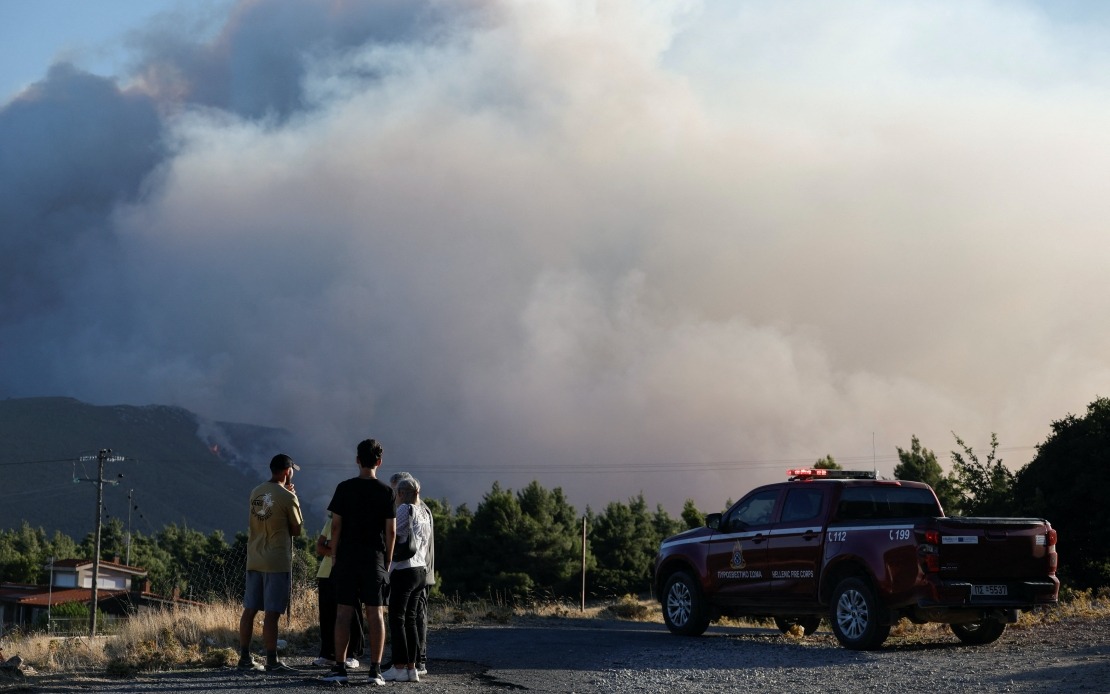
Greece faced an escalating natural disaster on Sunday as a massive wildfire raged across the Kithairon Mountains region, prompting one of the country's largest emergency response efforts in recent memory. The conflagration, which ignited west of the capital Athens, has forced authorities to deploy hundreds of emergency personnel working through the night under challenging conditions, with the situation remaining volatile as wind patterns continued to drive the flames eastward toward populated areas.
The scale of the firefighting operation underscores the severity of the crisis gripping the country. More than 500 firefighters have been mobilized to contain the spreading flames, a workforce augmented by military vehicles, specialized equipment, and volunteer brigades. Notably, the response has become a multinational effort, with firefighting crews from Romania and France joining Greek personnel to combat the blaze. This international cooperation reflects how critical the situation had become, with local resources stretched to their limit as the fire advanced across multiple fronts.
As dawn broke across the affected region, airborne operations resumed with firefighting planes and helicopters deployed to target the flames from above, according to reports from state broadcaster ERT. These aerial assets provide crucial support that ground crews cannot deliver alone, allowing firefighters to attack the fire from multiple angles and slow its progression. However, the unpredictable nature of the disaster complicated containment efforts, with strong winds repeatedly causing the flames to spread with startling rapidity, creating new fire fronts that diverted resources and attention.
The geographical progression of the wildfire posed particular concern for Athens residents and officials. The flames, driven by prevailing winds, advanced steadily eastward from the Kithairon Mountains toward inhabited areas. By Sunday, the fire had approached within just a few kilometres of Megara, a city situated approximately 50 kilometres west of Athens. This proximity to a populated center raised alarm about potential evacuations and the threat to civilian infrastructure and residences in the region.
The devastation already wrought by the wildfire reached staggering proportions according to preliminary assessments. A meteorologist's analysis published by Greek news portal Protothema estimated that approximately 10,000 hectares of forest and land have been consumed by the current fire in the northwest and western zones surrounding Athens. This destruction represents a significant loss of natural resources and agricultural land, with environmental implications that will persist long after firefighters have extinguished the last embers.
The areas of Veniza and Psatha experienced particularly severe impacts from the advancing flames. These communities, situated directly in the path of the wildfire, bore the brunt of the fire's intensity as it swept across the landscape. The vulnerability of these smaller settlements to natural disasters, combined with limited evacuation routes in mountainous terrain, heightened the urgency of firefighting efforts and emergency management operations throughout the region.
Authorities have launched a criminal investigation into the cause of the disaster, reflecting growing concerns about fire prevention and accountability. According to fire department officials, 13 people have been arrested nationwide on charges of negligent arson, suggesting that human carelessness or intent may have contributed to the outbreak. This revelation adds a troubling dimension to the crisis, raising questions about safety practices and enforcement of fire prevention measures across Greece during the summer fire season.
The wildfire emergency was not confined to the Athens region, as Greece grappled with multiple simultaneous conflagrations across different parts of the country. Another major wildfire emerged on the island of Cephalonia, though state broadcaster ERT reported that inhabited towns there were not facing immediate peril from the flames. Additionally, wildfires that had ravaged Crete appeared to have been largely suppressed by Sunday, though not before inflicting considerable damage on local communities and ecosystems.
The situation on Crete provided a sobering preview of potential consequences for other threatened areas. Local media outlets reported that approximately 200 homes had been destroyed on the island, though official confirmation of this figure remained pending. Several towns on Crete had been evacuated as a precautionary measure during the height of the wildfire threat, demonstrating the level of disruption that such disasters impose on civilian populations beyond the immediate danger of flames.
For Malaysia and Southeast Asian nations, the unfolding crisis in Greece serves as a stark reminder of climate change impacts on fire risk and disaster management challenges affecting diverse regions globally. Greece's increasingly severe wildfire seasons, attributed by experts to rising temperatures and changing precipitation patterns, mirror concerns facing Southeast Asia regarding enhanced fire risk during drought periods. The international cooperation evident in Greece's response—with Romanian and French crews supporting Greek efforts—demonstrates a model of regional collaboration that Southeast Asian nations might consider as climate-related disasters become more frequent and intense across the region.
The ongoing battle against Greece's wildfires also highlights critical infrastructure needs for disaster response. The deployment of firefighting aircraft, military support systems, and specialized equipment reflects substantial investments required to combat such emergencies effectively. Southeast Asian countries, many with comparable or greater vulnerability to seasonal wildfires, face similar pressures to develop comprehensive firefighting capabilities and disaster response networks capable of operating across multiple simultaneous incidents.
As Greek authorities continued their struggle against the spreading flames, the economic and social dimensions of the disaster extended beyond the immediate fire zones. The destruction of approximately 10,000 hectares represents loss of timber resources, wildlife habitat, and agricultural productivity that will require years of recovery and reforestation efforts. Such long-term consequences underscore why fire prevention, early detection systems, and rapid response capabilities remain essential investments for any nation vulnerable to wildfire risks.

