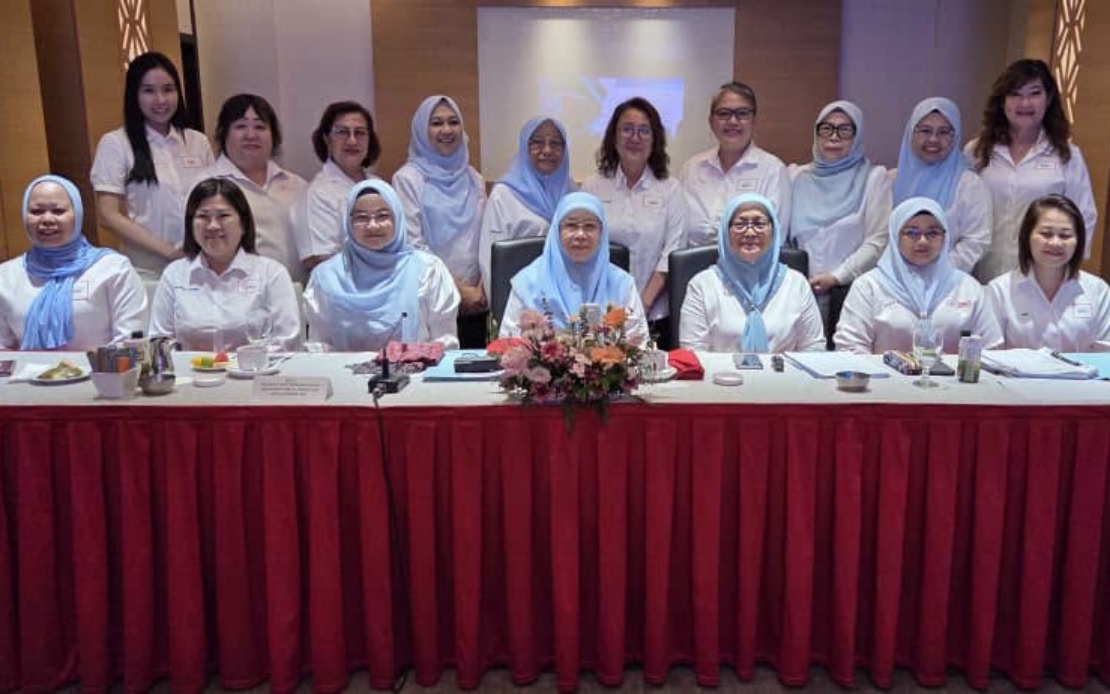
The Gabungan Rakyat Sabah (GRS) Women's wing has rolled out an organizational restructuring designed to fortify the coalition's election readiness, establishing five dedicated strategic units that will serve as operational pillars for the party machinery across Sabah. The announcement was made by the wing's chief, Datuk Seri Azizah Mohd Dun, following a gathering of senior women leaders in Kota Kinabalu on July 22, signalling a deliberate move to move beyond traditional campaign methods and embrace a more compartmentalized, purpose-driven approach to political mobilization.
The restructuring reflects a strategic recognition within GRS that electoral competitiveness increasingly depends on specialized capacity rather than generalized activism. The five units—Policy and Strategy, Economic, Health, Information, and Welfare—divide the party's outreach responsibilities along thematic lines, allowing each division to develop deep expertise in its designated area. This architectural shift suggests that GRS leadership believes a fragmented approach to constituency work and community engagement will yield better results than conventional, undifferentiated political organizing. By concentrating effort and resources, the coalition aims to demonstrate to voters that it possesses concrete solutions to real problems facing Sabah's electorate.
Azizah will personally oversee the Policy and Strategy Unit, positioning herself as the intellectual driver of the coalition's broader vision and messaging framework. Datuk Surinam Sadikun has been assigned to lead the Economic Unit, a particularly significant role given that bread-and-butter issues remain central to voter preferences across Malaysia. The Health Unit will be directed by Simi Linggom, tapping into growing public concern about healthcare accessibility and quality in East Malaysia. Datin Atin Belynda Buntot will manage the Information Unit, a critical function in an era when communication warfare and narrative control heavily influence electoral outcomes. Datin Wong Siow Lee @ Mary Wong rounds out the leadership team by heading the Welfare Unit, which will coordinate assistance programmes designed to build grassroots loyalty and demonstrate the coalition's responsiveness to social needs.
The organizational restructuring arrives at a moment of considerable uncertainty regarding the timing of Malaysia's next general election. With the current parliamentary term extending beyond 2023, speculation about potential snap elections has mounted, particularly given political shifts in other states and the gradual recalibration of federal coalition dynamics. By establishing these units now, GRS Women's wing is essentially signalling that the organization will maintain campaign-level readiness throughout the political cycle, rather than allowing activism to ebb and flow with electoral calendars. This sustained preparedness reflects lessons learned from previous campaigns, where organizational inertia during off-election periods left parties vulnerable to unexpected polling dates.
Azizah's public remarks emphasize that complacency represents the coalition's greatest internal threat, a warning that resonates particularly in Sabah politics where electoral volatility has repeatedly upended established hierarchies. She underscored that the political landscape has become increasingly dynamic, with voter preferences shifting rapidly in response to economic conditions, policy announcements, and social movements. The GRS Women's wing, in her assessment, cannot afford to operate on assumption or precedent; instead, it must cultivate organizational agility and maintain continuous readiness to adjust tactics and messaging in response to emerging political developments. This framing positions the new units not merely as administrative conveniences but as essential infrastructure for navigating unpredictable electoral terrain.
The emphasis on structured coordination and regular meetings signals an attempt to professionalize what has traditionally been a less systematized sector of party organization. Women's wings across Malaysian political parties have historically functioned as important mobilization forces, particularly in community-level campaigning and social programme delivery, yet they have sometimes lacked the institutional recognition and resources accorded to other party structures. By formally establishing these units with designated leaders and clearly articulated portfolios, GRS is essentially upgrading the status and visibility of women's participation within the broader coalition framework. This move carries symbolic importance beyond mere organizational efficiency, suggesting that GRS recognizes women's political leadership as central rather than supplementary to electoral success.
The Economic Unit's creation holds particular relevance for the region, as Sabah continues grappling with questions of economic diversification, employment generation, and equitable distribution of development benefits. A dedicated unit focused on economic messaging and programme development allows GRS to present voters with a coherent economic vision differentiated from competing coalitions. Similarly, the Health Unit's establishment acknowledges that healthcare delivery remains a flashpoint for political discontent in Sabah, where certain rural constituencies face significant gaps in medical service provision. By concentrating organizational attention on health-related advocacy and programme design, GRS signals its intention to contest the field of health policy seriously rather than treating it as a secondary campaign issue.
The Information Unit's leadership warrants particular attention given the contemporary political environment's reliance on rapid-response communications and sophisticated information management. Datin Atin Belynda Buntot's appointment to this position suggests GRS recognizes that traditional mass media channels must be complemented by digital strategy, social media engagement, and rapid fact-checking capabilities. In an era when misinformation spreads quickly and political narratives can shift overnight, possessing a dedicated unit tasked with managing party communications provides significant competitive advantage. This unit will likely manage not only positive message amplification but also rapid-response mechanisms to counter criticism or false narratives that might damage the coalition's electoral prospects.
The Welfare Unit's positioning within this organizational structure reflects a broader strategic calculation that electoral politics increasingly turns on demonstration of tangible government responsiveness to citizen needs. Social assistance programmes, community development initiatives, and individual welfare interventions have become crucial tools for building and maintaining voter loyalty, particularly among lower-income constituencies that form a significant portion of Sabah's electorate. By formalizing welfare-related activities into a dedicated organizational unit with designated leadership, GRS creates both accountability structures and opportunities for systematic programme delivery that extends beyond sporadic campaign-season distribution of assistance.
The timing of this organizational restructuring suggests that GRS is preparing for a potentially protracted political cycle punctuated by unexpected electoral contests. Rather than organizing for a single anticipated election date, the coalition is essentially building institutional capacity that enables continuous political mobilization. This approach reflects a strategic maturation in how Malaysian political coalitions approach the business of electoral competition. Rather than treating elections as discrete events requiring intensive but temporary mobilization, contemporary coalition strategy increasingly emphasizes permanent organizational readiness and the systematic cultivation of grassroots loyalty through ongoing community engagement.
For observers of Malaysian politics, the GRS Women's wing restructuring offers instructive insights into how regional coalitions adapt to increasingly competitive electoral environments. By professionalizing women's wing operations and disaggregating its functions into specialized units, GRS is adopting organizational practices previously associated primarily with Peninsular political parties with greater resources and institutional maturity. The question now becomes whether this structural innovation translates into tangible electoral advantage and whether other regional coalitions will respond with similar organizational improvements. The Sabah political context, characterized by considerable fluidity and frequent realignments, provides an ideal testing ground for assessing whether organizational sophistication can provide meaningful electoral advantages in environments where personal relationships and localized factional dynamics remain potent forces.

