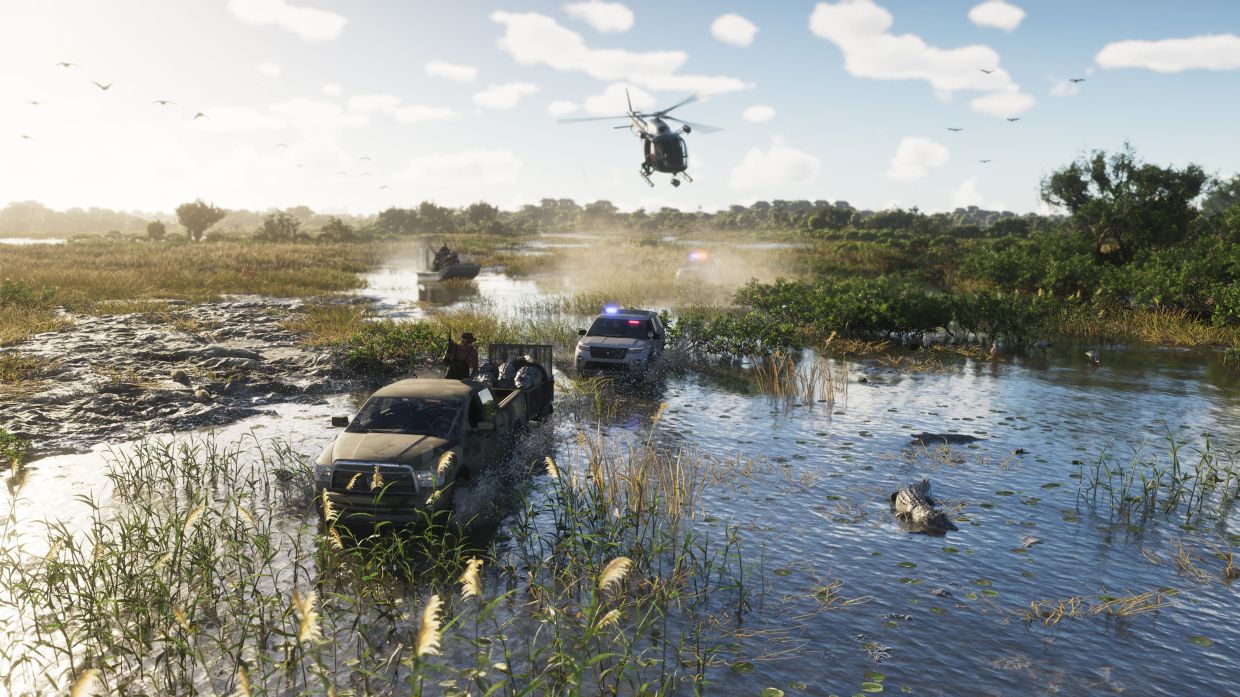
Rockstar Games has finally unveiled an official preview of Grand Theft Auto VI on Netflix, introducing players to Jason and Lucia, the game's protagonists locked in a Bonnie and Clyde narrative that frames them as modern-day outlaws. The preview opens dramatically with Jason fleeing a drug bust, a crimson duffel bag clutched against his torso as Lucia joins him in what developers have positioned as a partnership centred on crime and survival. This calculated reveal comes after weeks of frustration for the studio, which has watched unauthorised footage circulate across the internet since mid-August, fundamentally altering the rollout strategy for one of the gaming industry's most anticipated titles.
The official preview showcases the gameplay and storytelling elements that have made the Grand Theft Auto franchise a cultural phenomenon across Southeast Asia and globally. Viewers encounter high-speed car chases weaving through urban environments, violent confrontations punctuated by gunfire, and atmospheric scenes set in strip clubs and rooftop locations. Significantly, the preview includes interactive prompts suggesting that players will have agency over character relationships, including the ability to have Jason and Lucia hold hands, a detail that underscores the narrative weight Rockstar has invested in their partnership. These cinematic sequences and gameplay mechanics paint a picture of a substantially larger and more ambitious title than its predecessors, though the premature leak has robbed the company of controlling the narrative introduction.
The decision to premiere on Netflix reflects broader industry trends about how major gaming franchises now treat their multimedia presence. Rather than confining the preview to gaming platforms or YouTube alone, Rockstar leveraged Netflix's global reach to present GTA VI to mainstream audiences who may not traditionally engage with gaming media. The preview subsequently appeared on YouTube later the same day, ensuring maximum visibility. However, the Netflix release encountered technical difficulties when the platform experienced outages across multiple regions on August 27, an irony not lost on fans already frustrated by the chaotic launch surrounding the game's announcement.
Rockstar's frustration with the leak situation has morphed into legal action. The company's parent entity, Take-Two Interactive, obtained court orders in New York requiring both Microsoft and Discord to surrender user data related to the leaks. Two federal judges approved subpoena requests filed on August 21, documents reviewed by AFP confirm, targeting platforms where the unauthorised footage likely circulated before spreading to mainstream social media. This aggressive legal strategy represents the company's determination to trace the leak's origin and hold responsible parties accountable, though cybersecurity experts generally acknowledge that such efforts rarely succeed in the age of distributed digital sharing.
The leaks themselves originated from an account operating under the pseudonym Cyberleek, whose operator or operators have claimed to be acting as whistleblowers exposing industry practices. This framing transforms what might otherwise be dismissed as mere corporate sabotage into something with greater ideological dimensions, positioning the leaker as someone motivated by exposing what they view as problematic business practices rather than financial gain or simple mischief. Rockstar responded to the initial leaked footage with a statement characterising the situation as "heartbreaking," acknowledging that the company had invested considerable effort into crafting a specific reveal experience that the leaks had now undermined irreparably.
The GTA VI controversy unfolds against a backdrop of escalating tension between Rockstar and its fanbase over commercial practices. Take-Two's decision to forgo physical copies of the game entirely angered long-time players who prefer owning tangible media, a complaint that has particular resonance in regions like Malaysia where digital infrastructure and payment systems remain inconsistently developed. The publisher has further rankled consumers by offering a premium edition containing additional content at a significantly elevated price point, a tiered pricing strategy now commonplace in AAA gaming but increasingly controversial among communities that view it as predatory.
Military recruitment has emerged as an unexpected frontier in GTA VI's marketing strategy. The United States Army, reportedly seeking to boost soldier retention, offered four days of leave in exchange for reenlisting commitments of at least two years, with the newly released game serving as the stated incentive. According to military news outlet Task & Purpose, approximately 20 of 130 eligible soldiers at a particular installation accepted this arrangement, suggesting that even official institutions recognise the franchise's pulling power among younger demographics. This arrangement, while unusual, underscores GTA's position within global popular culture and its capacity to motivate behaviour beyond the gaming sphere.
For Malaysian and Southeast Asian audiences, the GTA VI launch carries particular significance given the region's booming mobile and console gaming market. The franchise has historically resonated strongly across Malaysia, Singapore, and neighbouring countries, where metropolitan settings and crime narratives explore themes relevant to rapidly urbanising societies. Previous entries in the series, including their spinoffs, have generated substantial retail revenue and cultural discussion throughout the region, making any disruption to the traditional launch sequence noteworthy for local industry observers and retailers anticipating the title's release.
The leak crisis and subsequent Netflix premiere represent a microcosm of broader challenges facing entertainment corporations in the digital age. Despite unprecedented spending on cybersecurity and legal infrastructure, major studios continue to find their unreleased content circulating online, forcing them to adapt strategies on the fly and occasionally benefiting from the viral momentum that leaks generate. For Rockstar, the situation required transforming setback into momentum by controlling the narrative through an official preview that acknowledged rather than denied the leaked footage's existence. Whether this tactical pivot ultimately strengthens or weakens GTA VI's commercial performance remains uncertain, though pre-order figures and industry anticipation suggest that no amount of leaking will substantially diminish consumer appetite when the game launches.

