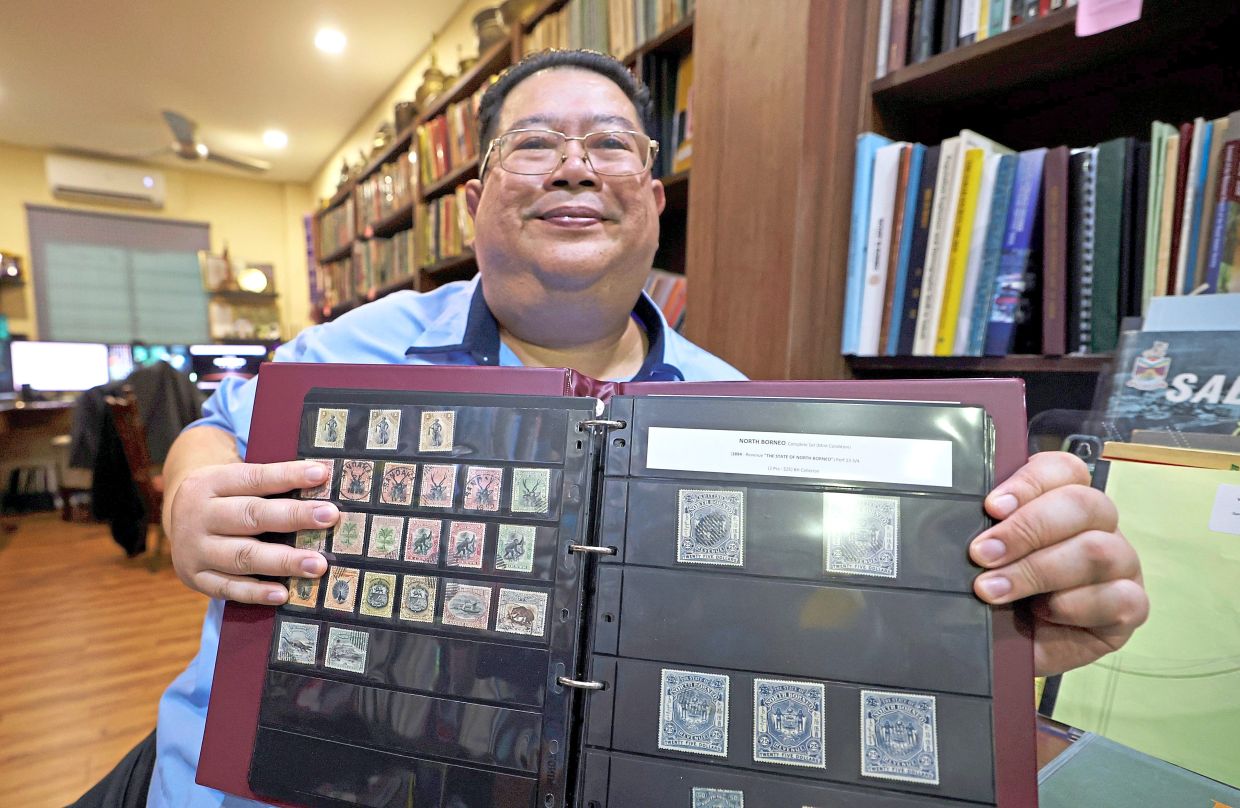
The colourful postage stamps that once connected North Borneo to the wider world are now becoming artifacts of historical significance, with their scarcity intensifying concerns among preservationists about losing tangible records of Sabah's development during the colonial era. As antique dealers across Kota Kinabalu report dwindling stocks of these century-old stamps, a small but dedicated community of enthusiasts is working against time to safeguard what they describe as irreplaceable windows into the territory's past, even as interest in traditional stamp collecting wanes among younger generations.
Dr Shari Jeffri, the 56-year-old founder and president of the Borneo History Association, has emerged as a leading voice in efforts to protect this philatelic heritage. He characterizes the North Borneo stamps produced between 1883 and 1963 not merely as collectible items but as a "living archive" containing encoded information about the region's transformation across multiple generations. For Jeffri, preservation transcends hobby enthusiasm—it represents a fundamental responsibility to ensure that future Sabahans can study tangible evidence of their own history rather than relying solely on written records or photographs.
The challenge facing conservationists is deeply concerning: the contemporary collecting community has contracted substantially, with fewer young people engaging in stamp collecting compared to previous decades. Jeffri laments that today's generation has minimal exposure to the hobby, and those with genuine passion represent an ever-shrinking minority. This demographic shift poses a genuine threat to institutional memory, as the knowledge embedded within private collections risks dispersal or loss when collectors pass away or abandon their pursuits.
A systematic survey of Kota Kinabalu's antique shops revealed the severity of the scarcity problem. North Borneo stamps now command prices that fluctuate dramatically based on age, physical condition, and rarity—with certain issues virtually impossible to locate. Among the notable specimens discovered during this survey were pieces from the 1954-1961 period, including a six-cent denomination featuring Queen Elizabeth II positioned alongside a Dusun woman, and a ten-cent stamp documenting logging operations. These designs offer visual testimony to Sabah's economic activities and multicultural character during the mid-twentieth century.
Jeffri's own connection to philately illustrates how collections become family legacies and historical documents simultaneously. His passion originated with stamps inherited from his grandfather, who worked at the Recreation Club Jesselton during the 1920s and adopted the hobby after observing British colonial officers pursuing it with dedication. Though Jeffri encountered stamps at age seven, he only developed into an active collector during secondary school, subsequently devoting decades to preserving and studying his inherited collection alongside newly acquired specimens. This personal trajectory demonstrates how individual curiosity can transform into scholarly pursuit and institutional responsibility.
Among Jeffri's most treasured possessions are two two-cent stamps from the first-ever North Borneo issue of 1883, each displaying a distinctive brown sailing boat design and bearing complete postmarks. For serious philatelists, securing examples from this inaugural series represents an essential milestone—these stamps function as historical anchors, establishing baseline understanding of design evolution and production standards. Jeffri emphasizes that stamps transcend their original function as proof of postage; instead, each denomination and design tells specific stories about particular historical moments and the authorities' intentions in representing their territory to international audiences.
As a philatelist with nearly four decades of experience, Jeffri has documented how North Borneo's postal system evolved under British North Borneo Chartered Company administration, which initiated stamp production in 1883 and maintained this practice for approximately fifty-two years. The visual designs underwent significant transformation over this period, becoming progressively more distinctive and representative of Sabah's identity. The 1935 series, in particular, achieved what Jeffri considers authentic regional characterization, appearing in denominations spanning from two cents to one dollar and featuring imagery specifically chosen to reflect local circumstances.
The earliest stamps incorporated symbols—lions, sailing boats, and tigers—accompanied by the Latin motto Pergo et Perago, meaning "I undertake and I achieve." These design choices reflected deliberate efforts by the Chartered Company to introduce the territory to international audiences and establish visual markers of colonial authority and commercial ambition. From 1894 onwards, designers shifted emphasis toward Borneo's botanical and zoological characteristics, featuring indigenous flora, fauna, and wildlife that emphasized the region's natural wealth and exotic appeal. This progression from symbolic authority markers toward environmental representation marks a distinct historical transition in colonial communication strategies.
Conservation of these stamps presents specialized technical challenges that demand expertise and resources. Jeffri identifies acid-free album storage as critical for preventing deterioration, fading, and chemical degradation—improper preservation can render historically valuable specimens worthless within years. Additionally, stamps bearing complete postal cancellations carry elevated significance because they preserve comprehensive postal records, including precise mailing dates, originating post offices, and temporal information. The quality of paper and adhesive constitute essential authenticity indicators, requiring trained assessment to distinguish genuine specimens from modern reproductions.
Jeffri expanded his expertise through mentorship under renowned Singaporean philatelic scholars Voon Kyam Foh and Tan Chun Lim, while also consulting specialized reference works including the Commonwealth & British Empire Stamps catalogue. This scholarly approach distinguishes serious preservation efforts from casual collecting, establishing evidential standards and contextual frameworks that enhance understanding beyond individual aesthetic appreciation. His investments in professional training and systematic research demonstrate how heritage preservation demands genuine expertise and sustained commitment.
The digital revolution has fundamentally transformed communication practices, rendering postal stamps functionally obsolete in daily commerce. Yet paradoxically, this obsolescence amplifies the historical and cultural significance of surviving specimens. North Borneo's antique stamps now function exclusively as historical documents and cultural artifacts, their rarity and fragility increasing proportionally as fewer examples survive environmental degradation and careless storage. For Malaysian historians and Sabahans seeking tangible connections to their region's colonial and early post-colonial periods, these stamps represent irreplaceable primary sources that transcend monetary valuation. The preservation efforts undertaken by Jeffri and his colleagues constitute essential guardianship of material culture that contemporary and future generations deserve access to, ensuring that Sabah's distinctive history remains documented in physical form rather than existing solely in text.

