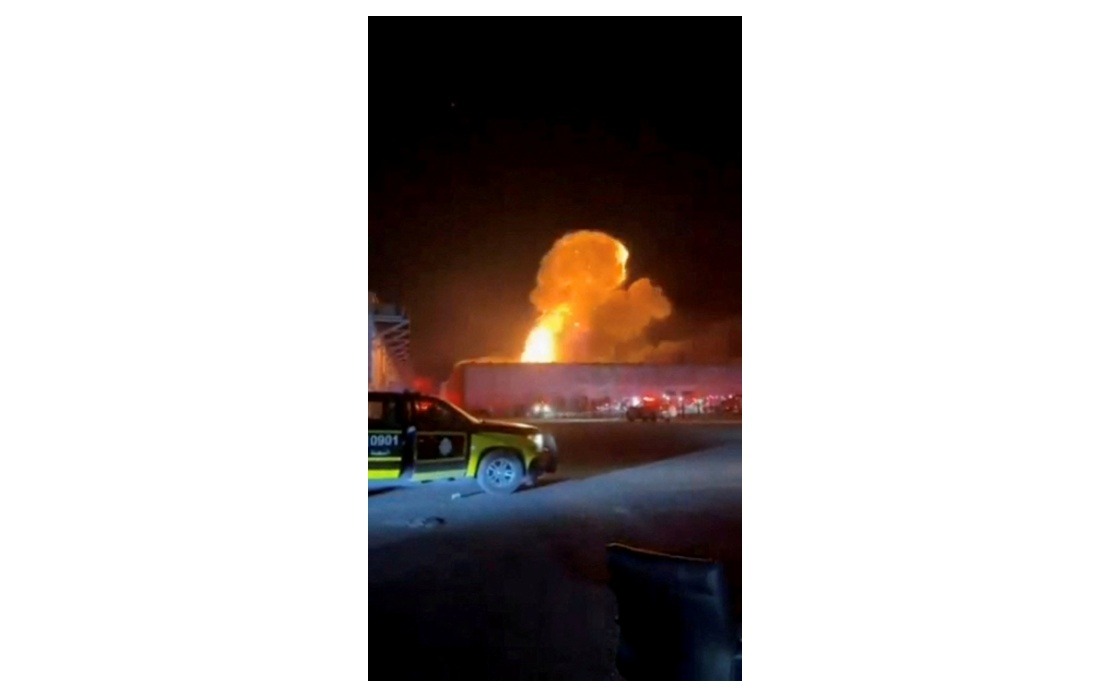
The Arabian Gulf slipped further into a state of heightened alert on Friday as three key regional states activated emergency security protocols in response to reports of missile and drone strikes. Bahrain and Qatar both issued urgent public warnings urging residents to seek shelter, whilst Kuwait's air defense systems engaged what the military described as hostile projectiles and unmanned aircraft. The simultaneous activation of warning systems across multiple countries underscored the severity of the escalation and the ripple effects of ongoing military confrontation between Iran and the United States.
Bahrain's Interior Ministry was among the first to respond, triggering warning sirens throughout the island nation and directing the public to move immediately to the nearest designated safe locations. The move reflected official concerns that the country faced an imminent or actual security threat. In neighbouring Qatar, authorities adopted a similar protective stance, with the Interior Ministry instructing residents to remain indoors and maintain positions within secure premises. Officials in Doha assessed the security threat level as elevated, signalling that decision-makers believed the danger warranted sustained vigilance rather than a temporary precaution.
Kuwait, positioned strategically along the western coastline of the Persian Gulf, experienced the most direct military engagement. The country's air defense systems activated to counter what the Kuwaiti army characterized as hostile missile and drone attacks, though military officials declined to elaborate on the scope or origin of the strikes. The decision to mobilize air defenses suggested that radar systems had detected inbound threats, prompting an active rather than purely passive response. This marked a shift from earlier periods of tension when warning systems served primarily as civilian alert mechanisms.
The immediate trigger for Friday's escalation traced to statements by the Iranian military indicating that drone strikes had been launched against a United States military installation based in Bahrain. Iran's Imam Khomeini Naval Base, home to American naval forces in the region, has long served as a focal point for tensions between Tehran and Washington. The Iranian operation appeared designed as a direct response to perceived American aggression, fitting a pattern of tit-for-tat military posturing that has characterized recent weeks.
Understanding the current crisis requires context extending back several months. In late February, the United States and Israel coordinated a joint military offensive against Iran, a coordinated action that represented a significant escalation in hostilities. Tehran responded with its own barrage of missiles and drones targeting Gulf states that host American military assets, bringing the conflict into the territorial waters and airspace of regional allies. This cycle of retaliation established a dangerous precedent whereby each side's military actions triggered predictable counter-responses from the other.
Recent diplomatic efforts had offered a glimmer of hope for de-escalation. Last month, Iran and the United States reached a framework agreement mediated by Pakistan, with both sides publicly committing to ending their conflict and pursuing a comprehensive peace settlement. The agreement was viewed by regional observers and international analysts as potentially marking a turning point in a relationship characterized by hostility since Iran's 1979 revolution. However, the framework remained fragile and its implementation remained unclear.
The resurgence of military tensions centred on control and influence along the Strait of Hormuz, one of the world's most critical maritime chokepoints. Through this narrow waterway flows roughly one-fifth of global seaborne oil trade, making it of immense importance to Asian economies including Malaysia. Both Iran and the United States have conducted military operations in recent days near or within the strait, with each side accusing the other of provocative behaviour. The trading of attacks has created an unpredictable security environment that threatens regional stability and could disrupt energy supplies to countries worldwide.
For Malaysia and the broader Southeast Asian region, the deterioration of security conditions in the Gulf carries several concerning implications. Beyond the direct risk of energy supply disruptions, the escalation threatens the safety of Malaysian maritime commerce and the thousands of Malaysian workers employed throughout the Arabian Peninsula. Malaysian companies operating in the region face heightened operational risks, and any further deterioration could prompt reassessment of commercial relationships and investment positions. The region's instability also has potential implications for global shipping insurance premiums and logistics costs that ultimately reach Malaysian consumers.
The simultaneous activation of warning systems across three Gulf states reflected the geographic spread of the conflict's impact. What began as a bilateral dispute between Iran and the United States has created secondary effects across allied nations, suggesting that any further escalation could rapidly draw additional countries into active military confrontation. The reliance on civilian warning systems and evacuation protocols indicates that regional planners now view civilian casualties as an accepted possibility rather than an unlikely scenario.
The fragility of the recent Pakistani-mediated framework agreement became apparent with Friday's escalation. Despite both sides' public commitments to peace, underlying disagreements over specific implementation terms, confidence-building measures, and verification mechanisms appear to have prevented substantive progress toward conflict resolution. The resumption of active military operations suggests that hardline factions within both governments may be working to undermine diplomatic progress by demonstrating that the other side cannot be trusted to honour agreements.
Regional states including Malaysia, which depend on stable Gulf conditions for energy security and commercial interests, face an uncomfortable reality that de-escalation remains elusive despite formal diplomatic frameworks. The security alerts issued Friday serve as reminders that military escalation can resume rapidly even when formal peace discussions are ongoing. Continued vigilance regarding developments in the Strait of Hormuz remains essential for countries with significant economic stakes in the region's stability.

