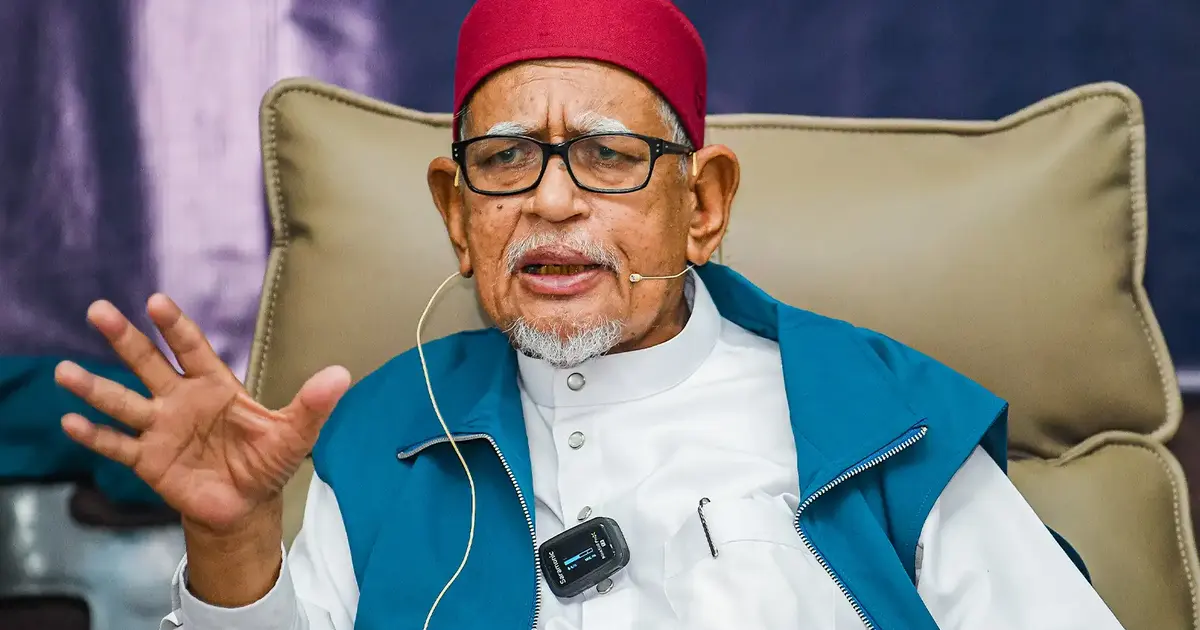
PAS president Hadi Awang has doubled down on his controversial statements concerning the Democratic Action Party, refusing to back away from comments that have drawn legal attention from authorities. In a defiant stance, the Islamist party leader insisted he stands by his remarks and is prepared to answer for them through the court system if charges materialize.
Currently, Hadi has not faced formal charges related to the statements in question. His involvement with the legal process has been limited to police questioning, during which he was summoned to provide his account of events. This distinction between police investigation and formal prosecution is significant in Malaysia's legal framework, where the investigation phase can extend considerably before charges are laid.
The PAS leader's willingness to confront potential legal consequences reflects a broader dynamic within Malaysian politics, where statements about rival coalitions often walk a fine line between legitimate political criticism and alleged defamation or seditious content. Hadi's refusal to retract his remarks suggests either confidence in his legal position or a political calculation that standing firm serves his party's interests better than any attempt at reconciliation.
For Malaysian politics, particularly the complex relationship between PAS and DAP, Hadi's stance underscores the deepening divisions within the political landscape. These two parties occupy opposing ends of the ideological spectrum—PAS anchoring the conservative Islamic right while DAP represents progressive, multiethnic politics. Their relationship has oscillated between cooperation and confrontation depending on the broader coalition dynamics, but personal remarks from senior leaders often signal genuine ruptures in party relations.
The timing of Hadi's comments and subsequent police investigation occurs against a backdrop of shifting coalition alignments in Malaysian politics. Both federal and state governments remain in flux, with various blocs attempting to consolidate power or expand influence. In this environment, inflammatory rhetoric can serve strategic purposes, allowing leaders to shore up their base support and signal unbending commitment to their ideological principles.
The legal route that may lie ahead presents interesting implications for freedom of speech in Malaysian politics. The country's laws around defamation and sedition have long been subjects of debate among civil society groups and legal experts, with concerns raised about their potential to stifle legitimate political discourse. Hadi's case, should it proceed to formal charges, would test these boundaries and potentially set precedent for what constitutes protected political speech versus actionable statements.
From a Southeast Asian perspective, Malaysia's political climate reflects broader regional trends where religious and ideological polarization increasingly shapes party positioning and coalition formation. PAS, as a significant Islamic party with influence beyond peninsular Malaysia, particularly in Sabah and Sarawak, carries weight that extends across the region. Statements from its leadership therefore resonate not only domestically but also among diaspora communities and observers of Southeast Asian politics internationally.
The fact that Hadi has been summoned by police but not yet charged also highlights how Malaysia's investigative procedures can take considerable time before formal legal action ensues. This interim period allows for media attention, political positioning, and public debate about the merits of the statements themselves. For Hadi and PAS, maintaining their narrative during this phase is strategically important, as public opinion can influence subsequent legal and political outcomes.
DAP's response to Hadi's continued defiance will likely shape the trajectory of this dispute. The party must balance the desire to pursue legal accountability with concerns about appearing overly litigious or thin-skinned. Opposition parties often face the challenge of responding proportionately to criticism from ruling or larger bloc partners without triggering backlash that undermines their political standing.
Looking forward, several scenarios could unfold. Authorities may ultimately decide insufficient grounds exist for prosecution, allowing Hadi to claim vindication. Alternatively, formal charges could be brought, initiating a lengthy court process that could stretch across years and potentially become a rallying point for PAS supporters who view the legal action as politically motivated. A third possibility involves behind-the-scenes negotiations resulting in a withdrawal of complaints or cases in exchange for retractions or apologies, though Hadi's current posture suggests such resolution is unlikely without significant face-saving mechanisms.
The broader implication for Malaysian politics is that senior party leaders increasingly feel emboldened to make strong statements about rivals, suggesting either weakening norms around civility in political discourse or shifting calculations about the costs and benefits of inflammatory rhetoric. Hadi's willingness to face court over his remarks may embolden others to adopt similarly combative stances, potentially further degrading the tone of national political dialogue.
Ultimately, whether through the courts or through political processes, the resolution of this dispute between Hadi and DAP will reflect where Malaysian society draws the line between robust political competition and conduct that crosses into genuinely harmful territory. For now, Hadi has made clear he will not retreat from his position, setting the stage for a showdown that could take months or years to resolve.

