Sabah's leadership demonstrated its commitment to political cooperation across party lines by attending the 2026 PKR National Congress in Melaka this week, a gesture that underscores the growing alignment between the state administration and the federal MADANI Government. Sabah Chief Minister Datuk Seri Hajiji Noor, who doubles as Gabungan Rakyat Sabah chairman, joined other GRS leaders at the gathering, which was officially opened by Prime Minister Datuk Seri Anwar Ibrahim. The Congress, themed 'Memugar Reformasi, Membina MADANI', took place at the Melaka International Trade Centre and served as a platform to reinforce shared objectives between Sabah and Putrajaya.
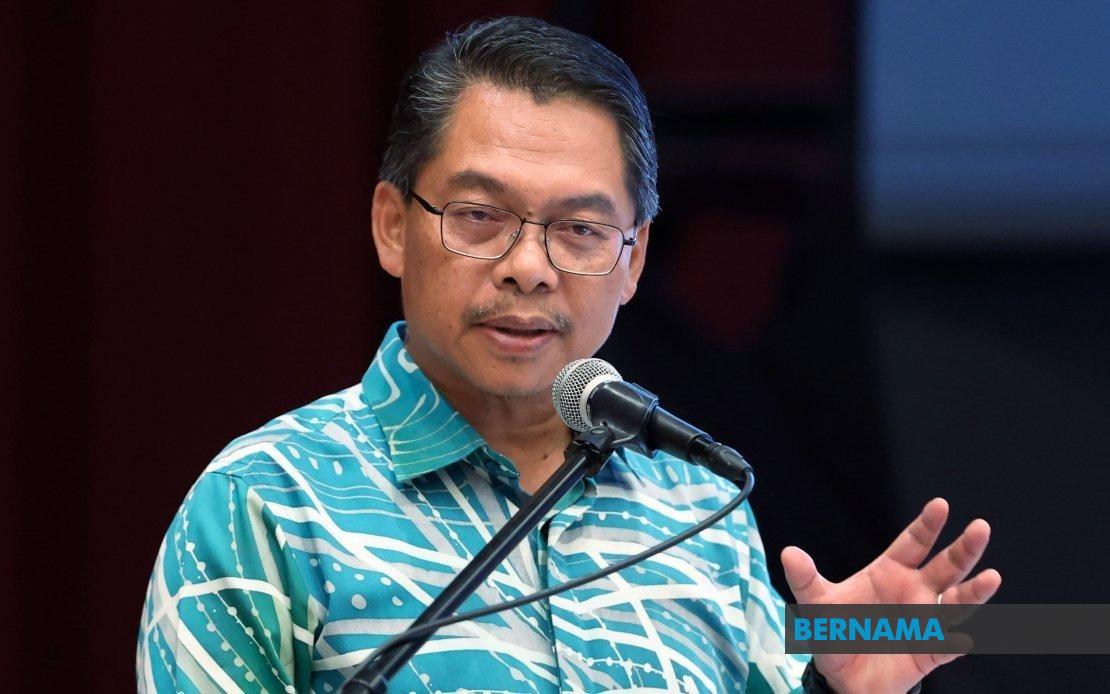
The substantive message from this high-profile attendance extends beyond ceremonial courtesy. Datuk Mustapha Sakmud, chairman of Sabah PKR's Leadership Council and Minister in the Prime Minister's Department handling Sabah and Sarawak Affairs, interpreted the gathering as evidence of robust institutional cooperation between Kota Kinabalu and the federal administration. Rather than limiting partnership to political formalities, Mustapha emphasised that collaboration encompasses the full spectrum of governance—from economic policy to infrastructure development and public service delivery. This comprehensive approach reflects a strategic understanding that regional stability depends on coordinated action across multiple policy domains.
For Sabah residents, the practical implications of this cooperation centre on translating political goodwill into tangible improvements in living standards. Mustapha articulated this priority explicitly, noting that the administration's fundamental objective involves channelling stability into measurable development gains, job creation, and enhanced basic services. The emphasis on addressing issues directly affecting daily life in Sabah—whether employment, healthcare, education, or infrastructure—suggests that the state government views federal partnership as instrumental to delivering on its core mandate. In a state where economic diversification remains a work in progress and infrastructure gaps persist in remote areas, such coordinated federal-state effort carries genuine significance.
The Malaysia Agreement 1963, which defines Sabah's constitutional position within Malaysia, featured prominently in Mustapha's remarks. He stressed that PKR remains committed to championing Sabah's rights under MA63, emphasizing that any implementation must occur within a framework respecting the state's unique constitutional status and historical agreements. This assertion addresses longstanding sensitivities within Sabah regarding federal overreach and the preservation of state autonomy. The inclusion of this commitment in statements about the Congress attendance signals that Sabah's participation in broader federal initiatives does not constitute a subordination of constitutional protections—an important reassurance for a state with particular historical consciousness about its relationship with the federal centre.
The list of GRS figures attending included Deputy Chief Minister Datuk Seri Dr Joachim Gunsalam and several state ministers managing critical portfolios: Rural Development Minister Datuk Rubin Balang, Youth and Sports Development Minister Datuk Nizam Abu Bakar Titingan, and Education, Science and Technology Minister Datuk James Ratib. The representation of ministers spanning rural development, youth engagement, and educational advancement indicates that attendance reflected substantive policy interests rather than token participation. These portfolio holders face direct responsibility for implementing programs that require federal coordination and resource allocation, making their presence at a federal-level Congress more than symbolic.
Mustapha's framing of political differences as secondary to collective advancement of Sabah's interests offers a refreshing perspective in Malaysia's often polarised political landscape. His statement that the GRS delegation's presence sends a message that partisan distinctions need not obstruct cooperation on matters of genuine public concern touches on a fundamental challenge in Malaysian federalism—balancing healthy democratic competition with the collaborative governance necessary for national development. In Sabah's context, where state and federal governments operate under different political umbrellas, this principle takes on particular importance for demonstrating that constitutional governance and shared responsibility can coexist.
The attendance also carries broader implications for Southeast Asia's understanding of Malaysian federalism. Sabah and Sarawak occupy distinctive constitutional positions, with MA63 guaranteeing them specific rights and arrangements that differ from peninsular states. The willingness of Sabah's leadership to engage constructively with the federal government while maintaining vigilance over constitutional safeguards provides a model for managing asymmetrical federal arrangements. In a region where several countries grapple with centre-state relations and resource distribution, Malaysia's experience—particularly in accommodating Sabah's particular status—merits examination as a case study in flexible federalism.
Economic dimension underpin much of this cooperation. Sabah faces persistent challenges in diversifying beyond traditional sectors like agriculture and palm oil production. Federal support through infrastructure investment, industrial policy coordination, and knowledge transfer becomes essential for the state to develop new growth engines. The connectivity demonstrated at the PKR Congress suggests that the federal administration recognises Sabah's development needs as integral to national prosperity. For Malaysian readers, this reflects a shift toward treating state development not as charity or obligation, but as mutual interest—a healthier foundation for federal-state relations.
The Congress itself, themed around MADANI principles, emphasises inclusive development and social cohesion. Sabah's leadership embraced this framework while bringing the state's particular concerns to the table. This dynamic—federal thematic direction combined with state particularism—represents functional federalism operating as intended. Rather than imposing uniform solutions, the arrangement allows states to contextualise national programs within local realities. For Sabah, with its diverse population, geographical challenges, and distinctive constitutional position, this flexibility proves essential.
Looking ahead, the momentum established through this Congress attendance may translate into accelerated implementation of development initiatives that Sabah has prioritised. The visible commitment of multiple state ministers to the federal platform suggests internal alignment on cooperative strategies. However, sustaining this cooperation requires consistent follow-through on resource commitments and genuine responsiveness to Sabah-specific concerns. The MA63 emphasis in Mustapha's remarks indicates this remains a potential friction point if federal initiatives are perceived as eroding state prerogatives. Going forward, the real test of this demonstrated cooperation will be whether it translates into concrete improvements in economic opportunity, infrastructure, and service delivery that reach ordinary Sabahans.
The attendance at the PKR Congress represents more than political theatre; it embodies a practical recognition that Sabah's progress and Malaysia's national development are inextricably linked. The GRS leadership's presence signalled that partisan loyalty need not preclude productive engagement with the federal government when pursuing genuinely shared objectives. As Malaysia navigates complex challenges spanning economic transformation, regional inequality, and social stability, the cooperative model on display in Melaka offers a template for how states and the federal centre might collaborate while respecting constitutional boundaries and regional distinctiveness.

