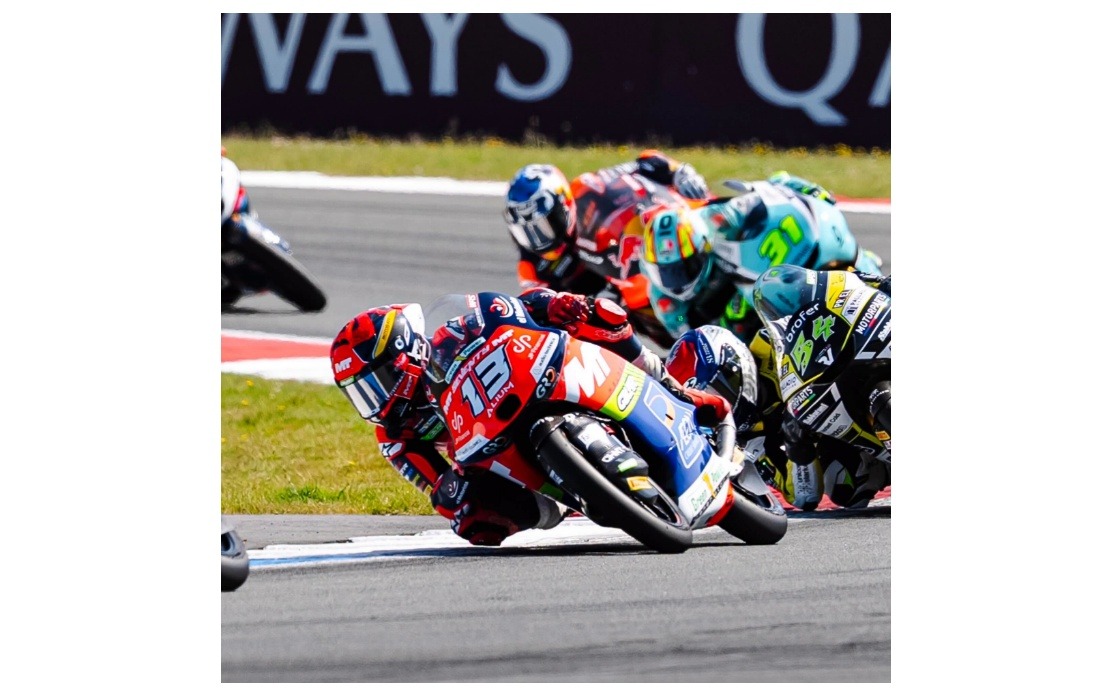
Malaysian motorcycling talent Muhammad Hakim Danish Ramli has expressed satisfaction with his seventh-place result at the Moto3 Dutch Grand Prix held at TT Circuit Assen, though the outcome came after he grappled with tyre grip complications during Sunday's race. The 18-year-old's performance, which netted him nine additional championship points, underscores the improving fortunes of Malaysian motorsport in continental European competition, where podium finishes have traditionally been rare for Asian riders competing at the highest junior levels.
Starting from 16th position on the grid, Hakim Danish executed a measured tactical drive that saw him steadily work his way into contention during the opening stages of the 25-lap encounter. Rather than pushing aggressively early and risking mechanical failure or a crash, the young rider demonstrated the kind of racecraft that suggests he possesses the foundational skills necessary for progression through the professional motorcycle racing hierarchy. His decision to build momentum incrementally from the rear of the field proved prescient, as he had joined the leading group well before the race reached its midpoint, positioning himself credibly among the top three runners for a significant portion of the distance.
The turning point came with roughly five laps remaining on the circuit. Hakim Danish's grip concerns with his tyres—a persistent challenge throughout the afternoon—began to undermine his competitiveness precisely when maintaining position became critical. As fresh challengers swept through the pack in the race's final stages, he found himself unable to match their pace, and successive passes relegated him from genuine podium contention to seventh at the chequered flag. His final time of 33 minutes 56.275 seconds reflected a respectable but ultimately middling outcome, disappointing perhaps when one considers how close he had come to a significantly stronger finish.
In reflecting on his performance through a social media post, Hakim Danish struck a philosophical tone, acknowledging both the difficulty of the conditions and his own role in navigating them effectively. His assessment that he "managed the race well" suggests a perspective focused on the learning process rather than dwelling excessively on what might have been, an attitude that often characterizes mentally resilient young athletes capable of sustaining careers at elite levels. The mentality of viewing seventh position as satisfactory progress, given the starting grid disadvantage, indicates maturity in understanding that championship success accumulates across multiple races rather than depending on singular dominant performances.
The nine points secured at Assen prove significant for Hakim Danish's championship campaign, elevating him to sixth position overall in the Moto3 standings with a cumulative total of 82 points. For Malaysian context, this represents meaningful representation in what remains one of the most competitive junior motorcycle racing series globally, where participants hail from Europe, Asia, and beyond, fighting for limited seats in the prestigious intermediate Moto2 category and ultimately MotoGP itself. His position sits him within realistic striking distance of the top five, suggesting that with stronger performances and more favourable circumstances, podium finishes and higher championship placements remain attainable within the remainder of the season.
The specific challenges Hakim Danish faced with tyre performance merit deeper consideration, as tyre management represents one of the defining variables distinguishing elite junior riders from the field. Modern Moto3 machinery operate with identical technical specifications across the field, meaning that tyre strategy—how riders warm, deploy, and manage their rubber across race distance—becomes a crucial competitive differentiator. The fact that Hakim Danish struggled with grip while other competitors apparently managed better suggests either that his setup did not suit his riding style as effectively as alternatives, or that his tactical approach to tyre preservation differed from what proved optimal under Sunday's specific atmospheric and track temperature conditions.
For Malaysian motorsport enthusiasts, Hakim Danish represents a valuable high-level presence in international competition at an age when many riders are still establishing themselves. The pathway through Moto3 into Moto2 and potentially MotoGP has become increasingly challenging as motorcycle racing professionalization has intensified, with limited opportunities and fierce international competition meaning that sustained success requires consistent points accumulation rather than occasional flashes of brilliance. His current trajectory suggests he possesses sufficient talent and temperament to remain competitive at this level, though the coming races will prove critical in determining whether he can convert his championship position into the kind of dominant performances that separate championship contenders from consistent midfield performers.
The broader implications of Hakim Danish's performances extend beyond individual statistics. Malaysian motorcycle racing has historically struggled to produce world-championship-calibre riders, with most national efforts concentrated in domestic championships and regional competitions. Having a Malaysian flag represented in the FIM Moto3 World Championship standings—and competitively so, in the upper reaches of the field—signals that the nation's racing infrastructure and rider development pathways may be producing athletes capable of competing internationally at serious levels. This visibility also serves an inspirational function for younger Malaysian riders, demonstrating that continental-level careers remain achievable for those possessing adequate talent and support structures.
Looking ahead, Hakim Danish's challenge involves translating the promise shown through breakthrough performances into consistency that sustains his sixth-place championship position and potentially improves upon it. The races remaining in the Moto3 season will test whether the Dutchman's circuit yielded a temporary peak or represented genuine progression, and whether his handling of pressure situations improves as the championship intensifies. For Malaysian racing followers, the journey remains compelling precisely because it remains unresolved.

