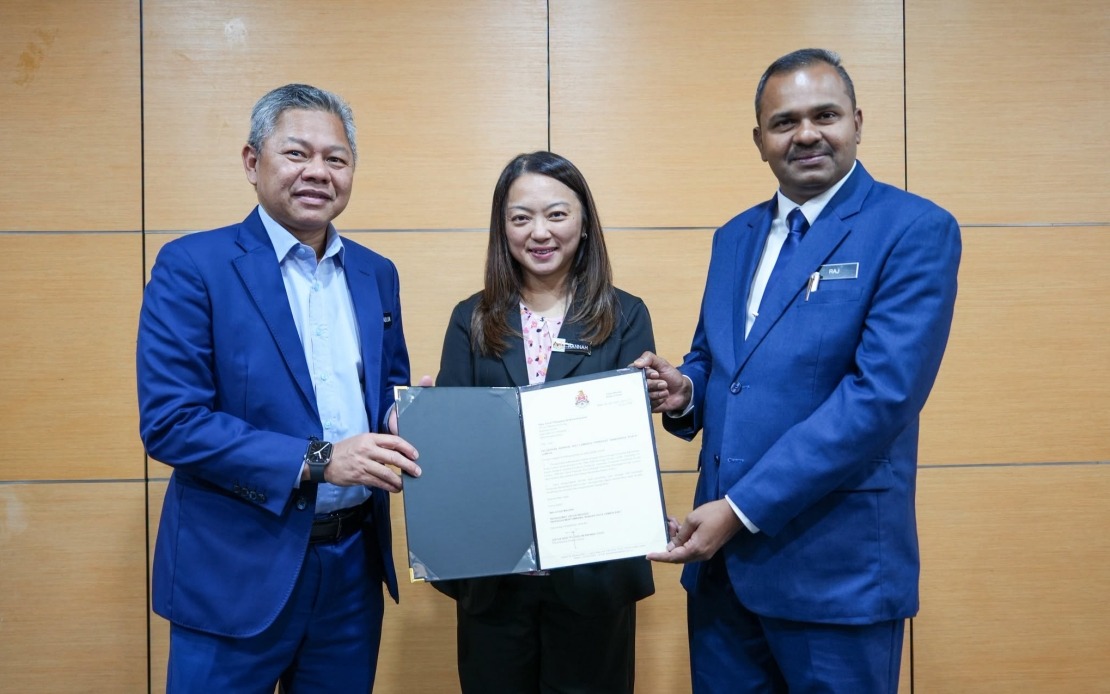
Federal Territories Minister Hannah Yeoh has warmly received the appointment of S. Thiyagaraj to the Kuala Lumpur City Advisory Board, underscoring the significance of the role in steering the capital's administrative and developmental agenda. The congratulations came as Kuala Lumpur Mayor Datuk Seri Fadlun Mak Ujud formally presented Thiyagaraj with his appointment letter in a ceremony witnessed by the minister.
Thiyagaraj, who brings extensive experience from nearly two decades in the public service sector, transitions to his new civic leadership position following a distinguished 18-year career with the Prisons Department spanning 2005 to 2023. During his tenure in corrections management, he rose to the rank of Assistant Superintendent of Prisons while heading the Technical Intelligence and Investigation Unit, a specialised department tasked with handling complex institutional security matters and forensic investigations.
In her statement, Hannah expressed confidence in Thiyagaraj's capacity to fulfil the board's mandate with the professionalism and integrity expected of such public appointments. She called upon him to discharge his responsibilities with unwavering commitment to the welfare and interests of those residing in the Federal Territory of Kuala Lumpur, setting a tone that emphasises public service orientation over administrative formality.
The minister's remarks drew attention to the advisory board's critical function within Kuala Lumpur's governance architecture. Rather than serving as a symbolic entity, the board operates as a substantive consultative mechanism through which members furnish the mayor with informed perspectives, recommendations, and strategic counsel on matters spanning municipal administration, urban planning, infrastructure development, and service delivery. This advisory capacity positions board members as intermediaries between civic administration and community interests.
Hannah framed individual board appointments as carrying considerable weight in the broader project of institutional reform. She suggested that members bear collective responsibility for elevating the standard of city governance by introducing greater operational efficiency, institutional transparency, and administrative responsiveness to citizen concerns and expectations. This emphasis reflects broader governance trends across Malaysian municipal authorities, where public engagement and stakeholder consultation have become increasingly important metrics of institutional legitimacy.
Thiyagaraj's career trajectory indicates a shift toward civilian governance roles following his exit from the corrections sector. His background in investigation and intelligence work within a structured, security-focused environment potentially positions him to contribute distinctive perspectives to urban policy discussions, particularly regarding public safety, institutional management, and investigative procedures that may intersect with municipal administration.
The appointment exemplifies the Malaysian government's practice of drawing experienced professionals from various public service domains to populate advisory and governance bodies at the city level. By recruiting individuals with established track records in government service, authorities seek to ensure that boards comprise members with substantive understanding of bureaucratic operations, policy implementation, and institutional accountability.
Kuala Lumpur's advisory board operates within a tiered governance framework unique to the Federal Territories, where the federal government exercises direct administrative authority rather than devolving powers to state-level officials. This centralised structure means that advisory boards play a particularly pronounced role in channelling local perspectives upward to federal oversight, making board composition a matter of strategic importance to city administration.
The formal appointment process, marked by Hannah's participation and statement, reflects the political significance attached to such civic positions in Malaysia's governance landscape. While advisory roles lack direct executive authority, they serve as platforms for public figures to influence policy direction, shape municipal priorities, and contribute to the articulation of development strategies that affect hundreds of thousands of residents.
Thiyagaraj's joining of the board adds another dimension to Kuala Lumpur's institutional capacity for management and strategic planning. The diversity of professional backgrounds represented on advisory bodies theoretically enriches deliberations and introduces multiple analytical frameworks to municipal challenges ranging from traffic management and environmental sustainability to social cohesion and economic development within the rapidly evolving metropolitan region.

