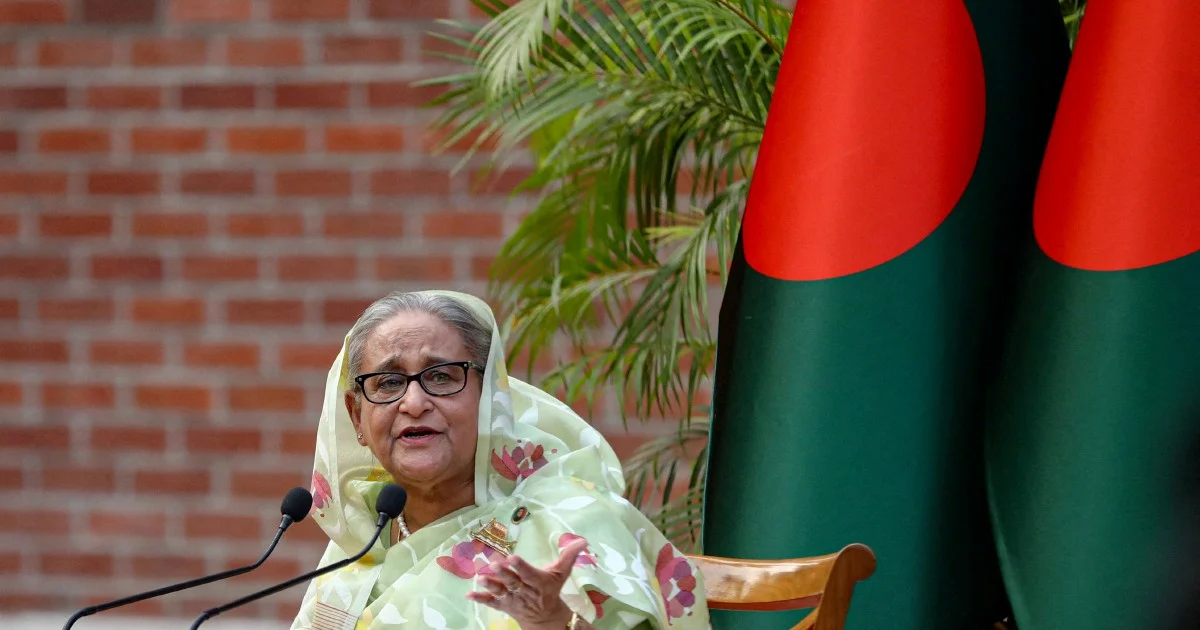
Sheikh Hasina, Bangladesh's ousted Prime Minister, faces potential imprisonment should she return from her current refuge in India, according to a stern warning issued by a senior government official in Dhaka on Monday. The caution arrived just days after Hasina herself indicated to Reuters that she was planning a homecoming in December and would willingly present herself before the courts upon arrival.
The timing of the warning underscores the volatile political atmosphere engulfing Bangladesh following the extraordinary circumstances that forced Hasina to flee the country. Her departure marked a dramatic rupture in the nation's recent political history, leaving the government structure in flux and raising questions about judicial processes and the future of accountability mechanisms in the country.
The prospect of Hasina's incarceration upon return reflects the serious allegations and charges that have accumulated against her during and after her period in power. These charges encompass a range of matters that the interim administration and its supporters view as sufficiently grave to warrant detention. The specificity of these cases and their legal foundation remain central to understanding the broader political showdown unfolding between Hasina's supporters and the forces that orchestrated her departure.
Hasina's stated willingness to face court proceedings represents a tactical position in managing her political future. By publicly declaring her intention to surrender voluntarily, she potentially seeks to frame herself as cooperating with the judicial system while simultaneously maintaining her credibility among domestic and international observers. However, this calculated approach now collides with the government's explicit rejection of her proposed return scenario.
The divergence between Hasina's declared intentions and the official warning signals a deeper breakdown in communication channels between her camp and the current Bangladesh administration. It suggests that any meaningful dialogue between the two sides remains absent or ineffective, complicating prospects for any negotiated resolution to the constitutional and political crisis.
India's role as Hasina's host nation adds a regional dimension to this unfolding drama. New Delhi's willingness to provide refuge reflects historical ties and geopolitical considerations, yet it also places the Indian government in a delicate position. Pressure from Bangladesh authorities could create diplomatic tensions between the two neighbouring countries, particularly given India's significant interests in Bangladesh's stability and the broader South Asian balance of power.
The December timeline mentioned by Hasina may prove unrealistic given the hardening of positions evident in Monday's ministerial statement. Any actual return attempt could provoke a severe constitutional and legal crisis, potentially leading to her arrest at the border or airport. Such a scenario would dramatically intensify internal polarization and could trigger significant civil unrest among her supporters.
For Malaysian observers and the broader Southeast Asian region, Bangladesh's political turbulence carries important implications. The country's stability directly affects regional trade, migration patterns, and the functioning of ASEAN-led mechanisms. Prolonged political uncertainty in Bangladesh reverberates through the entire subregion, influencing investment confidence and strategic calculations across Southeast Asia.
The international community watches closely as well. Rights groups and diplomatic missions are monitoring how Bangladesh handles the accountability process and whether any proceedings against Hasina will meet internationally recognized standards of due process and fairness. The credibility of Bangladesh's institutional frameworks hangs in the balance, as does the nation's reputation for upholding rule of law principles.
Hasina's predicament illustrates the precarious position former leaders can occupy in countries experiencing rapid political transitions. The absence of a clear framework for handling the previous administration—whether through reconciliation mechanisms, truth commissions, or conventional legal proceedings—leaves space for politicized justice and retaliatory measures that could further destabilize democratic institutions.
Observers in neighbouring countries should note how Bangladesh navigates this challenge, as similar tensions could emerge elsewhere in the region. The question of how nations balance accountability with political stability, and how international norms interact with domestic political imperatives, remains unresolved in many Asian democracies and semi-democracies.
The confrontation between Hasina's announced plans and official warnings suggests that any resolution will likely prove messy and contested. Whether through negotiated exile, international mediation, or confrontational legal proceedings, Bangladesh faces a critical juncture that will significantly influence its political trajectory for years ahead. The coming weeks will reveal whether the December timeline remains viable or becomes merely another casualty of escalating rhetoric between competing political forces.

