The fashion world has executed a curious inversion of its own logic. For decades, the industry's foundational principle held that exclusivity and prestige demanded perfection—immaculate seams, flawless finishes, spotless surfaces. Yet contemporary luxury now celebrates precisely the opposite: garments that appear weathered, stained, torn, and degraded command premium prices and spawn lengthy waiting lists. This deliberate embrace of imperfection represents a fundamental shift in how high-end brands construct desire, one with implications that extend beyond aesthetics into broader questions about value, authenticity, and the psychology of consumption.
Chanel's reimagining of its legendary 2.55 handbag exemplifies this transformation. The house has distorted the bag's silhouette, warping its proportions as though it had been trampled under an errant heel. Simultaneously, Prada's recent collections feature garments adorned with yellowed stains that evoke decades of neglect, items seemingly retrieved from abandoned storage spaces. Coach has perhaps taken the concept most literally with its "Loved Leather" collection, a euphemistic marketing term for leather that has been pre-scuffed and artificially aged before reaching consumers. The collection sold out entirely, prompting the brand to release additional iterations in different colour palettes this season, demonstrating that demand for this aesthetic extends beyond novelty into sustained consumer preference.
For Southeast Asian fashion consumers, particularly those in Malaysia's affluent urban centres, this trend carries particular resonance. The region has historically viewed Western luxury as synonymous with pristine condition and meticulous maintenance—markers of wealth and refinement. The notion that designers now deliberately introduce damage fundamentally challenges these inherited assumptions. It suggests that true sophistication may reside in appearing unmindful of perfection, in projecting a casual ease incompatible with anxious preservation. This philosophical shift opens space for conversations about conspicuous consumption and whether deliberate distressing represents authentic rebellion or merely capitalism's ability to commodify even resistance itself.
The practical implications prove equally intriguing for environmentally conscious consumers. When luxury brands legitimise worn garments and aged finishes as desirable, they implicitly argue against the disposable fashion cycle that has long dominated the industry. Consumers no longer face pressure to discard wardrobe pieces once they show signs of wear; instead, aging and patina become virtues rather than defects. For a region increasingly concerned about fashion's environmental footprint, this represents an accidental alignment between commercial incentive and ecological responsibility. The pre-distressed trend paradoxically encourages longevity by transforming signs of wear into status markers rather than shame triggers.
Ralph Lauren's Spring 2027 collection demonstrates how designers are reconciling this aesthetic with traditional notions of tailoring and refinement. The collection pairs strategically ripped jeans with crisp button-down shirts, waistcoats, and blazers—juxtaposing damage with formality. White-and-green penny loafers and a tan leather tote complete the ensemble, creating what might be termed "prep-punk," a hybrid that subverts both working-class casualness and upper-class propriety simultaneously. This sartorial contradiction mirrors broader cultural tensions between authenticity and artifice, between appearing effortlessly put-together and deliberately undone.
Burberry's contribution to this aesthetic takes a different approach through stonewashed pink denim styled with a V-neck argyle sweater and coordinating jacket. The resulting silhouette projects a well-worn informality while maintaining prep-school undertones, a distinctly British articulation of the worn-in aesthetic. Similarly, Sandro's Spring/Summer 2026 collection pairs a cropped denim vest with shorts, elevating the distressed look through rustic gold and silver studs and contrasting rich brown suede trim. These examples illustrate how the distressed trend has evolved beyond simple damage simulation into a complex design vocabulary where imperfection becomes another tool in designers' compositional arsenal.
Luxury houses have begun using mud, grime, and dirt as actual design elements rather than manufacturing defects. Louis Vuitton's denim jacket for Spring/Summer 2027 features earth-toned smudges and sandy grit, deliberately applied to create an appearance of having survived an off-road adventure. Acne Studios has similarly coated jeans in a mud-slick patina, pairing them with crumpled denim jackets. These approaches push beyond simple pre-distressing into theatrical presentation, transforming garments into visual narratives of rough usage and authentic lived experience—experiences that most luxury consumers will never actually undertake but can now purchase as aesthetic signifiers.
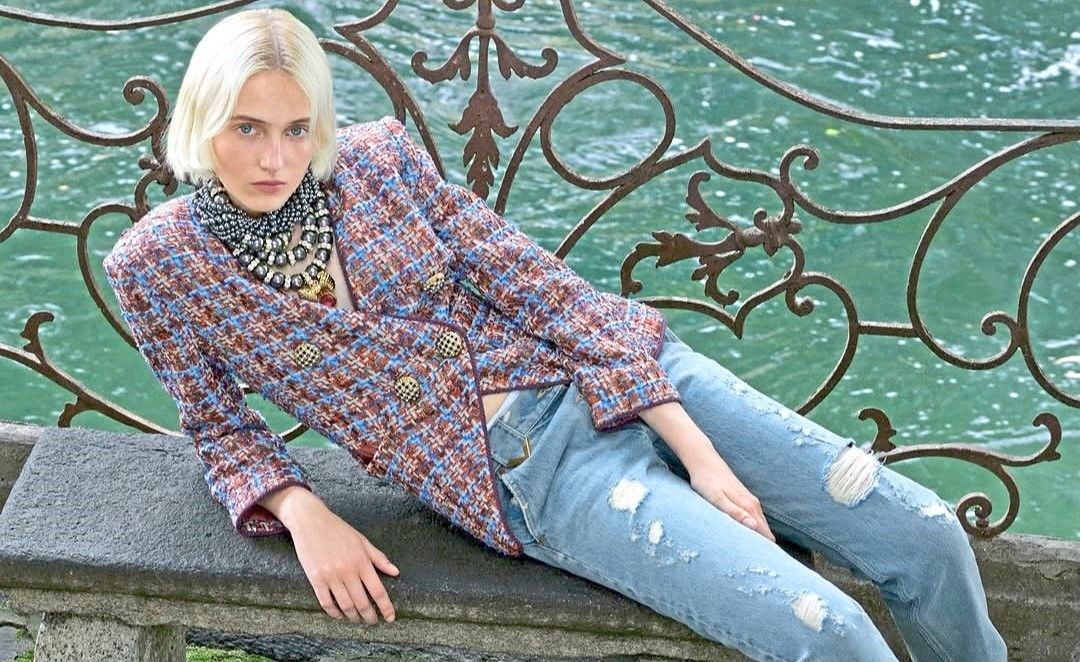
Valentino's Cruise 2027 collection presents perhaps the most audacious expression of this paradox. The brand, historically associated with meticulous glamour, polished elegance, and refined femininity, has paired a tweed jacket with shredded jeans. Add multi-strand black pearl necklaces and golden studded heels to this combination, and the result becomes deliberately incongruous—suggesting that true luxury confidence permits contradiction, that expensive perfection paired with affordable ruin creates compelling visual tension. For Malaysian consumers schooled in the notion that luxury demands congruence and coordinated opulence, this approach challenges fundamental assumptions about how wealth should present itself.
The commercial success of this trend reveals important insights about contemporary consumer psychology. Waiting lists for pre-damaged luxury items suggest that consumers interpret intentional distressing as evidence of design authenticity and artistic vision. A deliberately damaged piece becomes harder to counterfeit than a perfect one, paradoxically offering greater assurance of genuine authorship in an era when counterfeits proliferate. The worn aesthetic also signals insider knowledge—only someone confident in luxury's legitimacy can afford to appear careless about its maintenance. For aspirational consumers in Southeast Asia navigating social hierarchies where material display remains culturally significant, the distressed luxury trend offers a sophisticated avenue for distinction that actually discourages conspicuous expenditure on replacement and renewal.
This inversion of fashion's foundational values reflects broader cultural shifts toward authenticity and anti-consumerist positioning, even as it fundamentally remains consumerist in execution. By legitimising wear and damage, luxury brands have discovered a way to extend market reach, justifying premium pricing for items that appear less finished, less polished, less perfect than their predecessors. The trend simultaneously permits consumers to feel virtuous about imperfection while maintaining aspirational attachment to expensive brands. For Malaysia's growing luxury consumer base, understanding this trend requires recognising that contemporary status doesn't necessarily reside in pristine presentation, but in the confident, knowing wearing of apparent disrepair.

