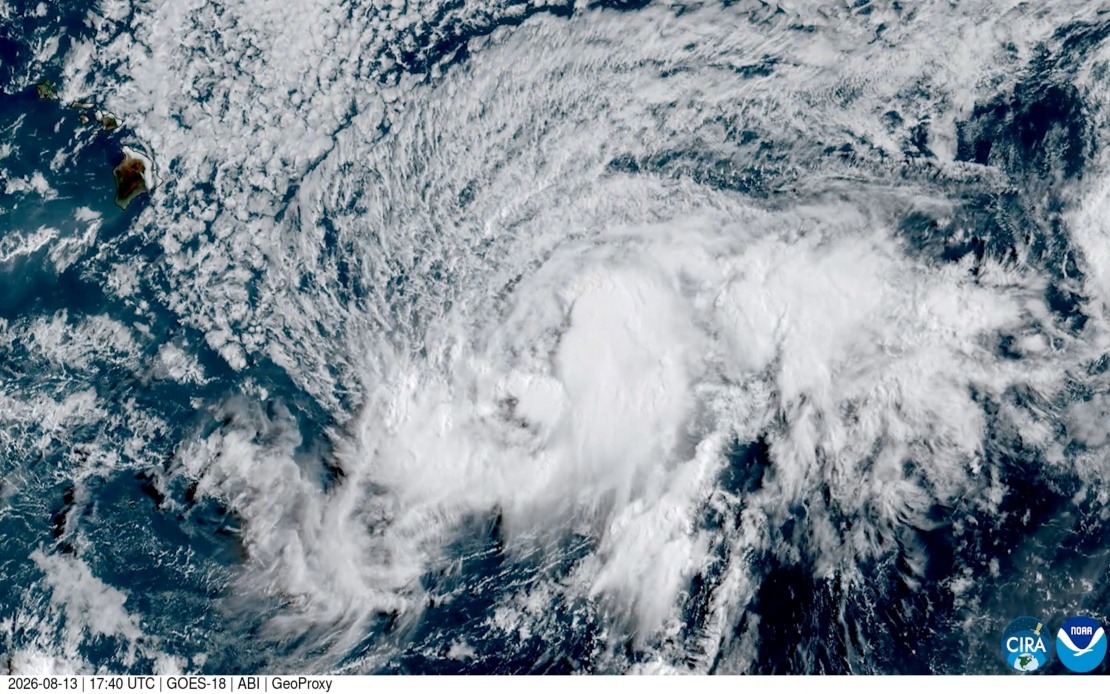
Tropical Storm Lala is gathering strength in the Pacific and poses an unusual threat to Hawaii's Big Island as it approaches this weekend with the potential to become the first hurricane to hit the island in more than 150 years. The National Hurricane Centre expects the system to reach hurricane-strength conditions before reaching the island on Saturday, bringing the dual hazards of torrential rainfall that could trigger destructive floods and powerful gusts capable of igniting wildfires across the landscape.
The prospect of a direct hurricane strike on the Big Island represents a meteorologically uncommon occurrence that has not happened since the 19th century. Historical analysis conducted by researchers at the University of Hawaii examining newspaper records from the era indicates that a Category 3 hurricane struck the northeast section of the island back in 1871, making any current landfall a landmark event in the modern satellite era. Vanessa Almanza, a meteorologist stationed with the National Weather Service in Honolulu, underscored the rarity of such an event, noting that while historical records exist of the 1871 storm, contemporary forecasting capabilities and satellite technology represent a dramatically different landscape for prediction and response.
The latest modelling from forecasters suggests that Lala's trajectory may position it dangerously close to the southern tip of the Big Island, though the precise track remains subject to refinement as the system approaches. This positioning along the southern exposure creates particular vulnerability for communities and infrastructure in that region. The convergence of topographical features unique to the Big Island—including its volcanic terrain and varying elevations—could significantly influence how the hurricane's moisture and wind patterns interact with the landscape once it reaches Hawaiian waters.
In response to the escalating threat, the National Hurricane Centre issued an official hurricane warning specifically for the Big Island, elevating the alert status to reflect the heightened risk of dangerous conditions. Simultaneously, a tropical storm warning has been activated for Maui County, the archipelago of islands that encompasses Maui, Molokai, Lanai, and Kahoolawe, indicating that even neighbouring islands face potentially severe weather impacts from the system.
The dual hazards posed by Lala—extreme precipitation and violent winds—represent complementary threats to island infrastructure and communities. Heavy rainfall accompanying hurricane-force winds can overwhelm drainage systems and create flash-flood conditions in low-lying areas and coastal zones, while simultaneously the powerful gusts create ideal conditions for wildfires to spread rapidly, particularly across drier leeward slopes. This combination has historically proven devastating in tropical environments where rapid topographical changes can concentrate rainfall patterns unpredictably.
For Malaysian and regional observers, the Hawaii situation illustrates broader climate dynamics affecting Pacific island nations and demonstrates the vulnerabilities of island communities to extreme weather events. The warming ocean temperatures that support hurricane intensification are a matter of increasing concern across Southeast Asia and the broader Indo-Pacific region, where similar threats to island nations and coastal areas have grown more pronounced. The preparedness protocols and response mechanisms being deployed in Hawaii offer insights into disaster management strategies relevant to archipelagic nations throughout the region.
The rarity of direct hurricane landfalls on the Big Island reflects broader meteorological patterns affecting the Hawaiian Islands, which typically sit outside the primary hurricane belt. Most tropical cyclones in the region either recurve northward before reaching the islands or dissipate before making landfall. The Big Island's last recorded hurricane strike in 1871 occurred in an era before modern meteorological observation networks, making contemporary comparisons difficult. However, the island's location and the typical tracking patterns of North Pacific tropical cyclones mean that hurricane landfalls remain statistically infrequent events, making Lala's projected path genuinely exceptional.
The environmental and infrastructural stakes of a major hurricane strike extend beyond immediate wind and water damage. The Big Island's economy depends substantially on agriculture and tourism, both sectors vulnerable to hurricane disruption. Agricultural operations, particularly on windward slopes, could face significant losses, while the tourism sector confronts the prospect of operational shutdowns and facility damage. Recovery timelines for hurricane impacts on island economies can extend significantly, particularly when infrastructure repair requires importation of materials and specialised labour.
As Lala continues its approach, Hawaiian residents and authorities are implementing standard hurricane preparation measures including securing structures, stocking supplies, and reviewing evacuation plans. The meteorological monitoring will intensify as the system draws closer, with forecast updates becoming more precise regarding track and intensity. The convergence of rare meteorological conditions—a tropical cyclone reaching major hurricane strength and maintaining a track directly toward an island community—underscores the dynamic and sometimes unpredictable nature of Pacific weather systems and serves as a reminder of nature's capacity to surprise even well-studied regions.

