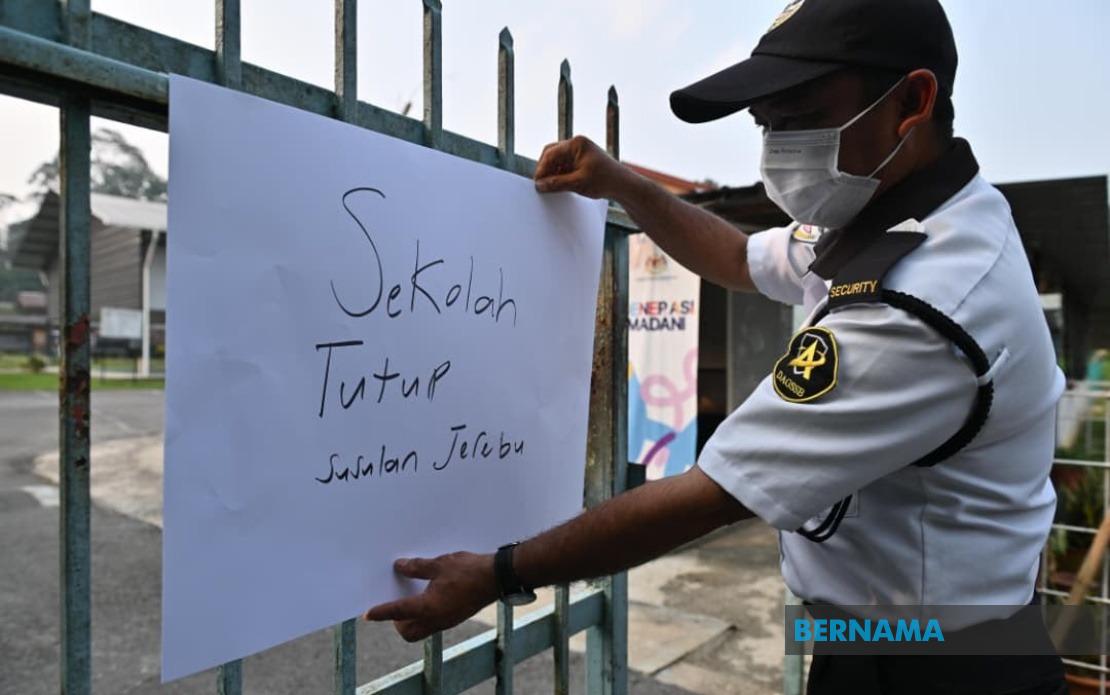
Sarawak's education system has ground to a halt in the Serian district, with authorities closing 108 schools to shield students and staff from hazardous air conditions that have deteriorated sharply over the past two weeks. The decision came after the Air Pollutant Index (API) climbed above the critical 200 threshold—a level classified as "very unhealthy" under Malaysia's air quality framework—prompting immediate implementation of closure protocols established under the National Haze Action Plan.
The Sarawak State Disaster Management Committee (JPBN) framed the measure as a precautionary step grounded in child welfare, noting that such closures are mandatory whenever pollution readings breach the 200 mark within the state education system's jurisdiction. This threshold represents a significant deterioration from moderate air quality, where readings between 51 and 100 pose minimal health concerns, through the "unhealthy" band spanning 101 to 200, and into the dangerously polluted zone. The state has established a clear escalation ladder: readings above 300 trigger hazardous-level alerts, while the 201 to 300 band demands immediate closure orders.
To prevent educational disruption during the shutdown period, the education authorities have pivoted toward Home-Based Teaching and Learning (PdPR), ensuring that students continue their academic progress remotely. This hybrid approach attempts to balance public health imperatives against the need to maintain learning continuity, though such measures often create challenges for families lacking adequate home infrastructure or digital resources. The JPBN's commitment to maintaining pedagogical momentum reflects broader recognition that prolonged school closures carry their own developmental costs for vulnerable student populations.
The atmospheric crisis engulfing Sarawak has been building momentum since the beginning of August, with API measurements trending upward across the state over the past fortnight. By mid-August, the spatial distribution of pollution revealed a worrying concentration in the southwestern region. Tebedu emerged as the worst-affected locality with a reading of 212, closely followed by Serian itself at 202. However, the contamination extended far beyond these two epicenters, with eleven additional monitoring stations registering unhealthy-range pollution including Kuching, Samarahan, Sri Aman, Sarikei, Sibu, Bintulu, Samalaju, Miri, Lundu, Lubok Antu, and Lawas—a sprawl indicating that this represents a state-wide atmospheric phenomenon rather than a localized incident.
For Malaysian and regional observers, Sarawak's haze episodes carry particular significance given the state's history of transboundary air pollution stemming from agricultural burning and industrial activities across the border. The rapid escalation from moderate to very unhealthy conditions underscores the region's vulnerability to atmospheric disruption and the speed at which air quality can deteriorate during peak burning seasons. The fact that 108 schools required simultaneous closure highlights the geographic extent and intensity of current pollution levels, affecting tens of thousands of students across a single district.
Public health authorities identified high-risk populations requiring heightened vigilance: children whose developing respiratory systems remain particularly susceptible, elderly residents with accumulated pulmonary damage, pregnant women whose respiratory burden naturally increases, and individuals with pre-existing heart or lung conditions. These groups face genuine health jeopardy when exposed to sustained pollution at very unhealthy or hazardous levels, as particulate matter penetrates deep into lung tissue, triggering inflammation and exacerbating underlying pathologies. The JPBN's guidance to minimize outdoor exposure and curtail physical activities represents standard epidemiological practice for managing air quality crises.
The state authorities issued explicit warnings against public speculation or informal information-sharing regarding haze conditions, emphasizing that official government channels represent the sole authoritative source for pollution data and policy updates. This messaging reflects legitimate concerns about misinformation spreading through social media during environmental crises, particularly where residents might interpret conflicting guidance or outdated information. The instruction to consult official sources exclusively aims to prevent panic while ensuring coordinated public health responses.
Sarawak's experience demonstrates the cascading administrative demands triggered by transboundary haze events. When API readings breach critical thresholds, educational institutions, healthcare systems, industrial operators, and transport authorities must simultaneously shift operational protocols. Schools transition to remote learning; hospitals prepare for respiratory emergencies; outdoor construction halts; and residents stockpile protective equipment. For Malaysian policymakers, the incident reinforces the necessity of strengthening bilateral and multilateral cooperation with neighboring jurisdictions to address atmospheric pollution at its source, rather than simply managing consequences after hazardous conditions materialize.
The closure of 108 schools represents just one visible manifestation of haze impacts rippling through Sarawak's economic and social systems. Families with working parents must arrange childcare; students in examination preparation face disrupted study schedules; and teachers contend with interrupted instructional calendars. Beyond individual inconvenience, prolonged school closures accumulate learning deficits particularly for disadvantaged students lacking home support structures, potentially widening achievement gaps. The shift to PdPR, while educationally preferable to extended closures, places additional burdens on households with limited internet connectivity or digital devices—concerns especially acute in rural Sarawak.
Looking forward, the persistence of very unhealthy API readings across multiple districts suggests that current atmospheric conditions may sustain school closures for additional days unless air quality improves markedly. Sarawak's experience underscores the reality that Southeast Asia's transboundary haze problem remains fundamentally unresolved despite decades of regional dialogue, bilateral agreements, and diplomatic pressure. Until substantive progress emerges on regional burning suppression and land-use governance, Malaysian states and neighboring jurisdictions must perpetually manage crisis responses that disrupt education, commerce, and public health. The 108 closed schools represent not isolated incidents but recurring symptoms of a systemic atmospheric crisis demanding transformative solutions beyond reactive school closures and public health advisories.

