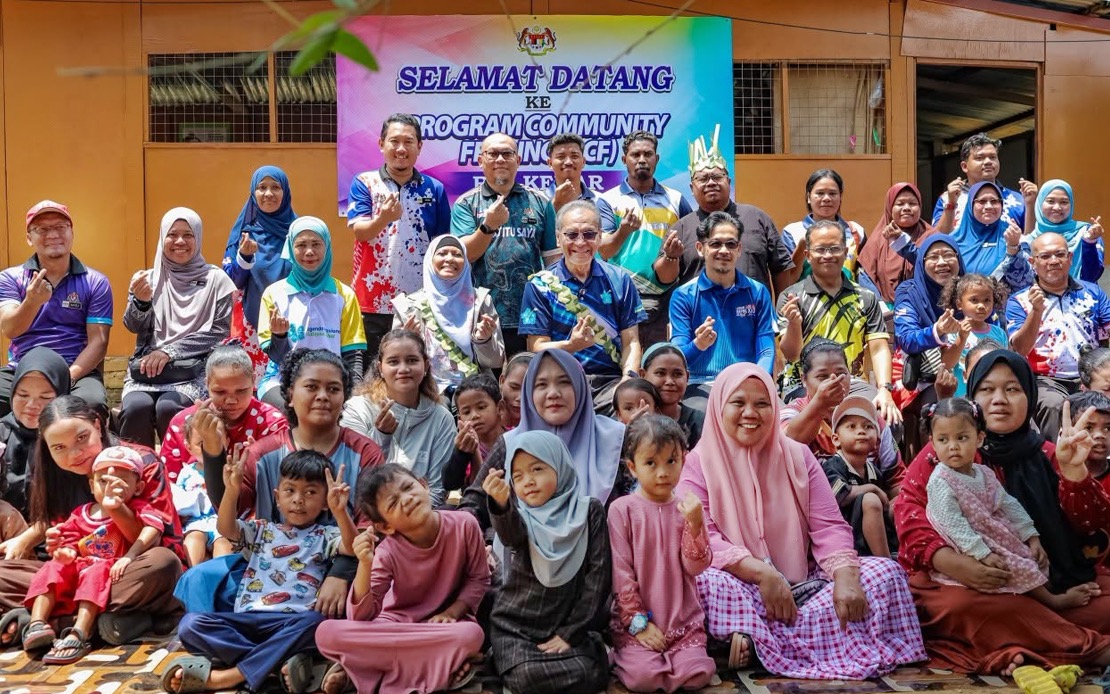
The Ministry of Health has committed RM500,000 to modernise the Kemar Health Clinic in Gerik, reflecting a concentrated effort to strengthen medical services reaching the Orang Asli communities of Hulu Perak. Health Minister Datuk Seri Dr Dzulkefly Ahmad announced the funding allocation during an inspection of the facility, emphasising that the investment forms part of broader governmental efforts to ensure healthcare equity across Malaysia's most challenging terrain. This development underscores ongoing attempts to bridge healthcare gaps affecting indigenous populations who face unique geographical and logistical barriers to accessing quality medical treatment.
The approved funding will be directed toward several interconnected improvements designed to enhance the clinic's operational capacity. A new Boat Storage Facility represents a cornerstone of the investment, addressing critical infrastructure deficiencies that have compromised the clinic's ability to serve riverine communities. The existing storage structure, now exceeding eleven years old, has deteriorated significantly and lacks sufficient capacity to properly house and maintain the boats essential for waterway-based healthcare delivery. By constructing modern replacement infrastructure, the ministry aims to protect vital medical transport assets and ensure their longevity for future community service.
Beyond facility improvements, the allocation encompasses essential vehicle and equipment procurement aimed at modernising the clinic's operational toolkit. The ministry will utilise a portion of the funding to acquire a four-wheel-drive vehicle to replace an ageing transport asset that has outlived its effective service life. Critically, the investment also covers medical equipment acquisition, specifically including a Video Laryngoscope—a sophisticated device fundamental to emergency intubation procedures. This equipment proves especially vital given the clinic's role serving communities in remote areas where emergency medical interventions may determine patient survival outcomes.
The appointment of a new multipurpose vessel, the Medik 8 Boat, represents a tangible demonstration of the ministry's commitment to improving response capabilities for the region's indigenous population. Unveiled at the Belum Rainforest Resort Jetty, this twelve-passenger craft cost RM350,000 and will augment the existing six-vessel fleet serving over 4,500 Orang Asli residents in the RPS Kemar settlement area. The vessel's deployment directly addresses a critical constraint limiting medical outreach—namely, the inadequate fleet size relative to the population requiring servicing. Water transport remains the primary connectivity mechanism for settlements nestled within the region's isolated river systems, making vessel availability a direct determinant of healthcare accessibility.
The broader initiative reflects the government's Malaysia MADANI framework positioning healthcare access as a fundamental right transcending geographical limitations. Dr Dzulkefly articulated this principle explicitly, asserting that challenging terrain and remote location must never constitute barriers preventing Malaysian citizens from accessing quality medical care. This rhetorical commitment carries particular significance for indigenous populations historically marginalised within Malaysia's healthcare systems, suggesting policy-level recognition that previous service delivery models have proven inadequate. The statement implies willingness to direct resources toward addressing these historical inequities through targeted infrastructure investment.
Healthcare delivery in remote Orang Asli settlements depends critically upon ground-level personnel willing to navigate challenging environmental conditions. The minister acknowledged the extraordinary commitment demanded of healthcare workers, including doctors, nurses, and boat operators who regularly confront dangerous river currents and adverse weather conditions whilst pursuing their professional duties. This recognition extends beyond symbolic appreciation, implicitly justifying resource allocation toward improving working conditions and safety measures for medical personnel operating in high-risk environments. Such acknowledgment may facilitate recruitment and retention efforts crucial for maintaining service continuity in isolated posting locations.
The planned construction of a new Kemar Health Clinic designated as Type 5 facility signals ministerial intent to fundamentally upgrade the physical infrastructure supporting community healthcare. This construction initiative extends beyond incremental improvements, suggesting comprehensive facility redesign incorporating modern standards for comfort, service comprehensiveness, and technological integration. The upgrade trajectory indicates recognition that current facilities, despite their functional importance, fail to meet contemporary standards for healthcare delivery environments. For communities accustomed to receiving care within outdated structures, a Type 5 facility represents substantial qualitative improvement affecting both patient experience and clinical outcomes.
Nutrition intervention represents a complementary healthcare initiative with documented success in improving Orang Asli child health outcomes. The Community Feeding Programme at RPS Kemar has operated since 2015, providing targeted nutritional support for children aged six months to six years through active feeding protocols, full-cream milk supplementation, multivitamin provision, and therapeutic food products addressing malnutrition cases. Over the decade-long implementation period through 2025, the programme has achieved remarkable measurable results, reducing childhood stunting rates from 75.2 percent to 50.8 percent. This substantial decline demonstrates the effectiveness of sustained, evidence-based nutritional intervention in reversing adverse health trajectories affecting indigenous child populations.
The parallel reduction in childhood underweight rates—declining from 43.7 percent to 25.2 percent—substantiates the programme's broader health impact beyond stunting prevention alone. These improvements reflect cumulative benefits from consistent programme implementation across multiple years, illustrating that sustained investment in preventative healthcare yields measurable population-level health improvements. For Southeast Asian contexts where child malnutrition affects numerous indigenous populations, the Kemar programme provides replicable evidence that targeted nutritional intervention programmes can achieve significant health gains. The outcomes suggest that Malaysian models may offer valuable lessons for regional governments addressing similar nutritional health challenges.
The Kemar initiatives collectively demonstrate the ministry's recognition that serving remote indigenous populations requires integrated approaches combining facility infrastructure, transport capacity, modern medical equipment, personnel support, and preventative health programmes. Incremental improvements in any single dimension prove insufficient for meaningful service enhancement; rather, comprehensive investment across multiple operational dimensions creates synergistic improvements in overall healthcare delivery effectiveness. For Malaysian policymakers and regional observers, these initiatives establish benchmarks for indigenous healthcare provision whilst highlighting the resource intensity required for equitable service delivery across challenging geographies. The financial commitment and programmatic scope suggest that meaningful equity improvement demands sustained governmental investment rather than symbolic gestures.
The significance of these investments extends beyond Hulu Perak's immediate geography, carrying implications for Malaysia's broader indigenous healthcare agenda. The Orang Asli population has historically experienced healthcare disparities reflecting a combination of geographical remoteness, limited infrastructure, and insufficient resource allocation. Recent governmental initiatives demonstrate shifting policy prioritisation, with centralised health ministry allocations increasingly directed toward addressing these documented inequities. However, the RM500,000 allocation for Kemar upgrades, whilst substantial for a single facility, remains modest relative to the scope of nationwide indigenous healthcare improvements required.

