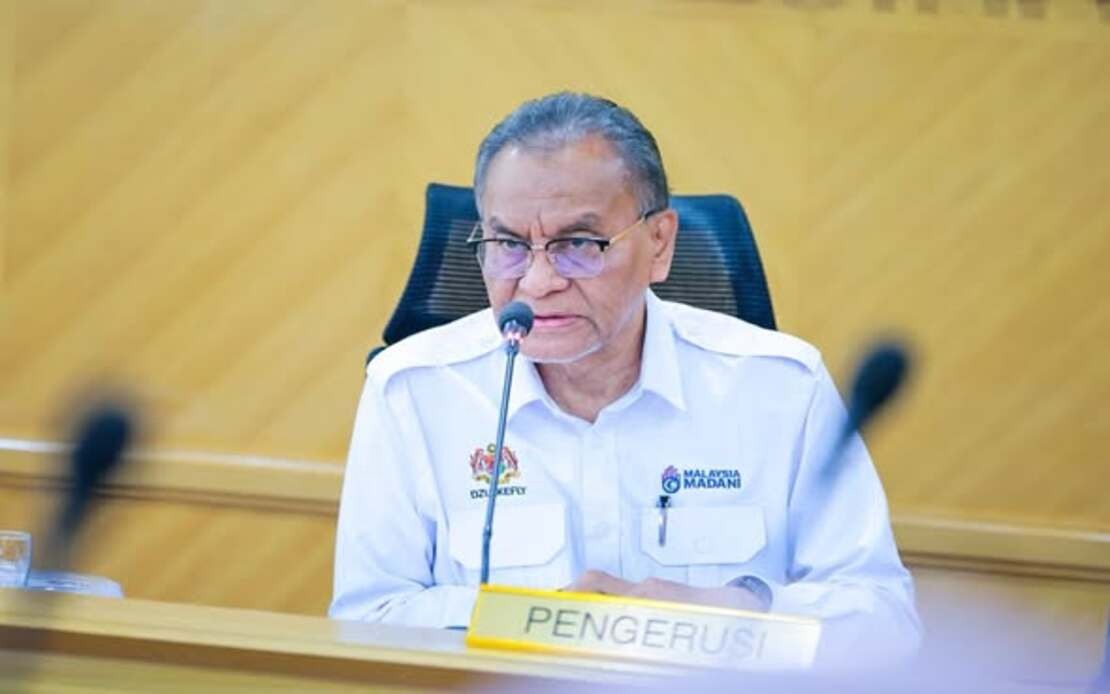
The Ministry of Health has signalled a harder line against project delays, placing more than 1,300 healthcare facility development initiatives under active monitoring and signalling readiness to terminate contracts with underperforming construction firms. Health Minister Datuk Seri Dr. Dzulkefly Ahmad stated the ministry will not tolerate unjustified postponements that slow the rollout of healthcare infrastructure, emphasising that swift completion remains essential for delivering tangible health benefits to Malaysians and protecting the integrity of government spending.
The decision emerged during the second Development Action Council meeting of 2026, where ministry leadership, alongside representatives from the Public Works Department and Finance Ministry, discussed strategies to accelerate project completion across the healthcare estate. The collaborative approach signals recognition that delays often stem from multifaceted challenges beyond contractors' direct control, though accountability for performance remains non-negotiable. This coordinated governance structure reflects broader government efforts to synchronise spending departments and infrastructure agencies in pursuit of more efficient project delivery.
For Malaysians tracking healthcare infrastructure development, this announcement carries immediate practical significance. Health facilities currently languishing in construction limbo represent not only delayed access to medical services but also frozen capital that could be deployed elsewhere within strained public health budgets. Rural and semi-urban communities, in particular, have historically experienced longer waits for facility upgrades, making enforcement of delivery timelines consequential for equity in healthcare access across the peninsula and East Malaysia.
The ministry's collaborative framework with state governments and utility companies addresses a critical insight: construction delays in healthcare projects frequently trace to bottlenecks in land acquisition, utility connections, or regulatory approvals rather than purely contractor inefficiency. By engaging these actors directly, the MOH signals understanding that sustained progress requires systemic problem-solving rather than punitive measures alone. This pragmatic stance, combined with willingness to invoke contract termination clauses, positions the ministry to simultaneously support legitimate operational challenges while eliminating excuses for genuine negligence.
Progress updates released by the minister provide a concrete measure of momentum. Ten major health facilities reached completion by August, spanning blood centres, hospital expansions, and community clinics distributed across Kedah, Negeri Sembilan, and Perak. These completions underscore that despite widespread challenges, significant segments of the health infrastructure pipeline continue advancing. The geographic spread of these deliveries—covering both peninsular and regional disparities—suggests the ministry's efforts to prioritise equity in facility distribution are yielding tangible results.
The 'Program Cakna MADANI' initiative, with 268 completed projects representing 37.75 per cent of its portfolio, demonstrates progress on targeted health improvements beyond major construction. These encompassing enhancements to rural clinic facilities, expanded haemodialysis capacity, and equipment modernisation address less visible but operationally critical infrastructure needs. For healthcare professionals working in remote regions, such upgrades translate directly into improved clinical conditions and patient safety, making their steady completion consequential for workforce retention and service quality.
From a fiscal accountability perspective, the minister's emphasis on translating healthcare budgets into tangible improvements reflects pressure to demonstrate return on public investment. Malaysian taxpayers have grown increasingly sophisticated in questioning why health infrastructure spending sometimes produces minimal on-ground change, making ministerial commitment to efficient fund deployment politically and administratively necessary. This transparency also resonates with Malaysia's broader public finance governance reforms, positioning the Health Ministry as responsive to taxpayer concerns about wastage.
The decision to maintain public focus on project timelines also sets expectations for future performance reporting. By explicitly monitoring 1,300 initiatives and communicating enforcement readiness, the MOH creates accountability markers against which future progress will be measured. Stakeholders—including healthcare workers, patient advocacy groups, and financial oversight bodies—now possess clear benchmarks for evaluating ministry performance in infrastructure delivery.
For construction firms and project partners engaged with the MOH, the messaging signals tightened expectations and reduced tolerance for graduated delays that have historically characterised Malaysian infrastructure projects. Contractors must now demonstrate consistent, visible progress or face contract termination and potential reputational damage, reshaping incentive structures within health facility procurement. This disciplinary shift may prove particularly consequential for smaller firms lacking sophisticated project management capacity, potentially concentrating future contracts among larger, more sophisticated operators.
The regional context matters too. Within Southeast Asia, Malaysia's health infrastructure development competes for international attention and investor confidence. Demonstrable progress in completing facilities efficiently enhances the nation's governance reputation and signals commitment to healthcare investment—factors that influence both domestic confidence and regional perceptions of institutional effectiveness. By publicly committing to project delivery acceleration, the ministry positions Malaysia as administratively capable of converting policy intentions into on-ground results.
Looking forward, the sustainability of this enforcement posture depends on sustained political will and coordination between agencies. Previous infrastructure crackdowns in Malaysia have periodically relaxed when political attention shifted, allowing delays to resume. Maintaining momentum requires institutional memory, continued high-level focus, and willingness to pursue contract terminations even when doing so generates political friction with affected contractors or regional leaders whose constituents lose projects.
The minister's invocation of religious sentiment—requesting divine facilitation of efforts—reflects culturally appropriate governance communication in Malaysia but also underscores that infrastructure delivery ultimately depends on human commitment and institutional discipline. The ministry's stated determination to ensure every ringgit of health allocation translates into equitable, modern healthcare systems represents an ambitious undertaking requiring sustained execution excellence, and the coming months will reveal whether current enforcement signals convert into durable improvements in project delivery timelines.

