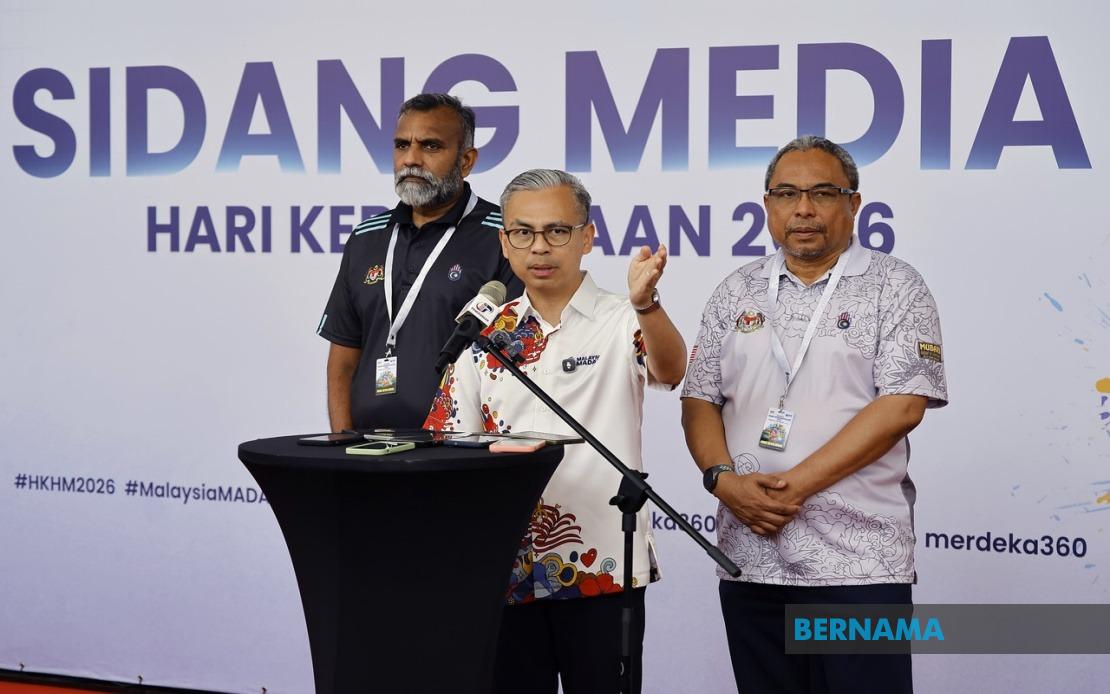
As Malaysia prepares to commemorate its National Day this Monday at Dataran Putrajaya, organisers have issued guidance for the anticipated crowds to take protective measures against the prevailing haze conditions affecting the region. Communications Minister Datuk Seri Fahmi Fadzil, who chairs the main committee overseeing the 2026 National Day and Malaysia Day (HKHM) celebrations, emphasised that visitors should consider wearing N95 masks to shield themselves from air quality deterioration, particularly those considered vulnerable to respiratory impacts.
The advisory aligns with guidelines previously circulated by the Ministry of Health, which has specifically flagged certain demographic groups as requiring heightened protection. Rather than imposing a blanket mandate, the organising committee has taken an approach centred on individual choice, recognising that comfort and practicality vary among attendees. This flexible stance reflects contemporary approaches to public health messaging, where voluntary compliance often proves more effective than restrictive policies, particularly during large-scale public gatherings where enforcement would prove challenging.
To ensure participants can act on these recommendations, event organisers have made a substantial logistical commitment by procuring N95 masks for distribution to more than 10,000 participants attending the celebrations. This proactive supply reflects lessons learned from previous years and demonstrates heightened awareness among planners regarding the intersection of environmental challenges and public health during significant national events. The decision to provide masks removes barriers that might otherwise prevent vulnerable populations from participating fully in national commemorations.
Fahmi specifically highlighted that parents accompanying young children should prioritise bringing masks, as this age group remains particularly susceptible to haze-related complications. Similarly, individuals managing asthma and other pre-existing respiratory conditions were identified as candidates for protection, signalling that organisers have conducted risk assessments and tailored their guidance accordingly. This targeted communication strategy suggests a more sophisticated understanding of public health messaging than mere generalised warnings.
Beyond mask distribution, the Ministry of Health has established medical infrastructure at strategic locations throughout Dataran Putrajaya to respond swiftly to any emergencies arising during the celebrations. These medical bases will operate throughout the event, staffed by qualified MOH personnel equipped to handle health incidents ranging from respiratory distress to heat-related conditions that might emerge during extended outdoor gatherings. Fahmi noted that these facilities have been tested and are functioning smoothly, indicating that contingency planning has moved beyond the theoretical stage into operational reality.
The full dress rehearsal conducted prior to the main event proceeded without significant hitches, suggesting that months of preparation have positioned organisers to manage the complex logistics of hosting a major national celebration. This trial run would have stress-tested crowd management protocols, medical response systems, and security arrangements under conditions approximating the actual event, thereby identifying and addressing potential vulnerabilities before Monday's proceedings commence.
Medial coverage of the celebrations will receive substantially expanded support this year, with 823 accredited media practitioners expected on assignment compared to approximately 600 in the previous year. This expansion reflects growing national and international interest in Malaysia's commemorative events and underscores the government's commitment to ensuring comprehensive documentation and dissemination of the proceedings. The increased journalistic presence transforms the event into a broader national conversation rather than a localised gathering.
Recognising that modern media operations depend critically on functional digital infrastructure, the Malaysian Communications and Multimedia Commission (MCMC) has collaborated with telecommunications providers to upgrade network capacity at 102 distinct locations across the celebration venue. The installation of additional communications equipment addresses chronic challenges that have previously constrained journalists' ability to transmit live coverage and file reports seamlessly. This technical investment acknowledges that contemporary National Day celebrations function simultaneously as physical events and as media spectacles consumed across digital platforms by millions of Malaysians unable to attend in person.
Security arrangements have remained a priority throughout the planning process, with the Royal Malaysia Police (PDRM) maintaining vigilant oversight of preparatory activities and early-stage crowd gatherings. As of the date of Fahmi's press conference, no incidents requiring urgent intervention had been reported, and public order remains stable. The absence of security alerts does not reflect complacency but rather the culmination of intelligence assessments and preventive policing strategies that maintain safety without intruding obtrusively on the celebratory atmosphere.
The layered approach to managing the 2026 National Day celebrations—combining environmental health precautions, medical readiness, logistical preparedness, media accommodation, and security vigilance—reflects institutional learning from accumulated experience organising such events. For Malaysian attendees, this means the opportunity to participate in meaningful national commemoration while benefiting from systems designed to mitigate foreseeable risks. The event represents not merely a ceremonial occasion but an orchestrated demonstration of governmental capacity to conduct complex, large-scale operations serving millions of citizens across diverse needs and circumstances.

