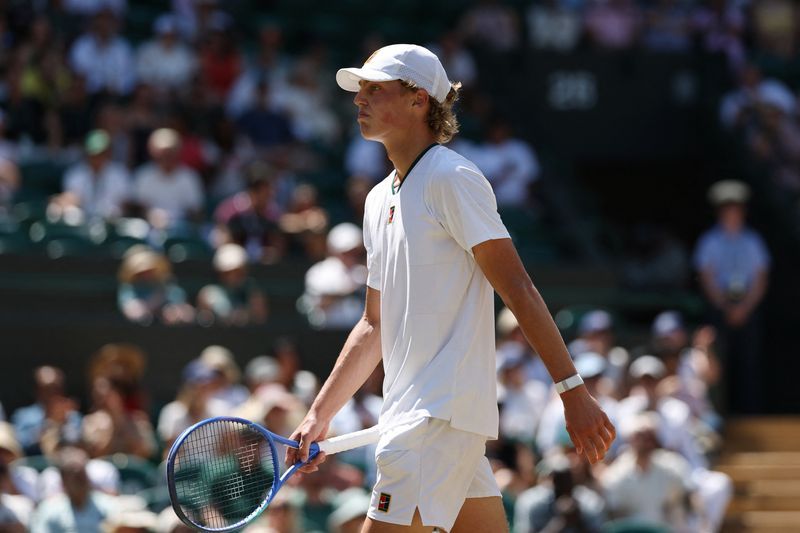
At just 17 years old, Cruz Hewitt has etched his name into ATP Tour history by claiming his maiden main draw victory at the Washington Open on Tuesday. The Australian qualifier defeated American Marcos Giron with a convincing 6-3 6-4 scoreline in the first round, marking a significant milestone in what has already proven to be a transformative period for the young tennis prodigy. The achievement caps an extraordinary month that saw Cruz finish as runner-up in the Wimbledon boys' championship, narrowly losing to American Jordan Lee in what would have been a triumphant milestone for the family just over two decades after his legendary father, Lleyton Hewitt, claimed the Wimbledon men's singles title.
Cruz's performance in the American capital holds particular resonance given the venue's deep connection to his family. His father, a former world number one, won the Washington Open title in 2004, making the venue emotionally and historically significant. Now, Cruz has become the youngest player to register a victory at this ATP 500 tournament since Japan's Kei Nishikori achieved the feat in 2007. Despite being ranked only 612nd in the world and having secured a qualifying berth rather than a direct main draw spot, the teenager navigated his opening match with composure that belies his age and limited professional experience at the top level.
The emotional weight of competing at a venue steeped in family memory was not lost on Cruz in his post-match remarks. Speaking to reporters immediately after his victory, he described the moment as surreal, reflecting on his childhood memories of watching his father compete at the same tournament. He recalled attending what he believed to be his father's final appearance at the event, creating a poignant full-circle moment as he now begins his own journey through the tournament. For a teenager who has grown up in the shadow of tennis greatness, stepping onto the same courts where his father once dominated must carry immense psychological weight, yet Cruz appears to be channelling that pressure into focused, mature performances.
Lleyton Hewitt's influence extends beyond mere venue nostalgia; the former champion has been actively mentoring his son through the demanding transition to professional tennis. During their discussions, Lleyton emphasised the importance of remaining present in the moment, advising Cruz to savour each point individually while absorbing the atmosphere and energy of a professional tournament environment. This philosophical approach to competition—focusing on process over outcome and embracing the occasion rather than fearing it—reflects the mindset that helped propel Lleyton to his career heights. Cruz's willingness to absorb this counsel and apply it in real match situations suggests a maturity and tennis intelligence beyond his years.
Managing pressure at such a young age represents one of the greatest challenges for emerging professional athletes, and Cruz demonstrated commendable self-awareness when discussing this aspect of his performance. While acknowledging the tension inherent in competing at the highest levels of professional tennis, he described his approach as one of converting nervous energy into positive momentum. This balanced perspective—neither dismissing the psychological challenge nor allowing it to overwhelm his decision-making—signals that the teenager possesses the emotional intelligence necessary to sustain a long-term career at the elite level. His comments suggest he is learning to view pressure not as an obstacle but as an integral part of the competitive experience.
Cruz's triumph comes at a particularly notable moment in tennis generational progression. By earning a main draw victory, he has joined an exclusive club of players born in 2008 or later who have already achieved ATP Tour wins. This cohort includes Diego Dedura, Thijs Boogaard, and Moise Kouame, placing Cruz in genuinely elite company among his generational peers. The distinction underscores that his success is not merely a product of favourable circumstances or family privilege, but rather reflects genuine competitive ability and match readiness that distinguishes him from other teenagers attempting to break through at the professional level.
The second-round draw presents Cruz with tantalising possibilities that could further define this fortnight in Washington. His potential opponent is either world number four Stefanos Tsitsipas or fellow Australian Alex de Minaur, depending on that match's outcome. While an encounter with Tsitsipas would represent an extraordinary step up in competition, it is the possibility of facing de Minaur that genuinely excites the teenager. de Minaur, himself an accomplished professional with numerous ATP titles and deep Grand Slam runs, has maintained a close personal relationship with Cruz throughout the latter's upbringing, to the extent of spending holidays together as extended family. Cruz described de Minaur as an older brother figure who has provided mentorship both on and off the court, making the prospect of competing against him a cherished possibility rather than a daunting obstacle.
The personal dynamics between Cruz and de Minaur add a distinctive human element to what could otherwise be a routine second-round matchup. For the teenager, squaring off against a player he genuinely admires and loves would represent not a competitive threat but rather an opportunity to create a shared memory with someone who has helped shape his development as a player and person. This reflects a relatively healthy attitude towards professional competition among the younger generation of Australian tennis talent, where the intensity of on-court rivalry does not preclude genuine affection and mutual respect off the court. Should such a matchup materialise, it would likely capture significant media attention beyond pure tennis circles, given the compelling personal narrative.
Cruz Hewitt's breakthrough at Washington arrives at a moment of heightened global interest in tennis's next generation, with several teenagers beginning to make meaningful impacts at the professional level. His combination of family pedigree, evident talent, psychological resilience, and the mentorship of accomplished players suggests he possesses multiple advantages in his pursuit of a sustained professional career. The Washington victory, while significant, represents merely the opening chapter of what could prove to be a compelling sports story. As he progresses through the tournament and beyond, both the Australian tennis community and international observers will be watching closely to see whether this promising start crystallises into a truly world-class career.

