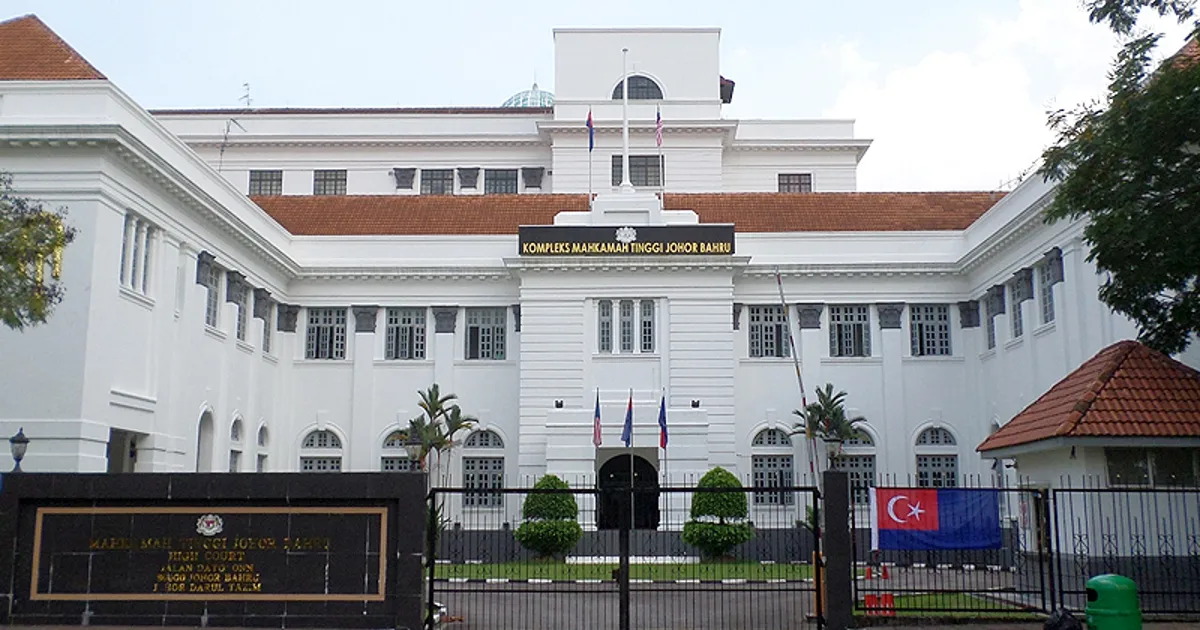
An instructor employed at a government training institute has been formally cleared of sexual assault allegations after a High Court judge determined that the prosecution's case had collapsed due to fundamental deficiencies in the police investigation. The court's decision represents a significant rebuke to the investigative process, with the bench noting that the law enforcement response fell markedly short of the rigorous standards expected in cases involving serious criminal allegations.
The judge's criticism extended beyond a simple acquittal, instead offering detailed observations about how the police inquiry was conducted. Rather than merely stating that guilt had not been proven beyond reasonable doubt, the court articulated specific concerns about investigative methodology and thoroughness. This distinction matters considerably in Malaysian legal circles, as judicial commentary on police performance can influence future investigations and training protocols across the force.
Cases involving allegations of sexual assault at government institutions carry particular weight in public discourse. Government training institutes function as spaces where vulnerable populations may receive instruction, and the public has a legitimate interest in ensuring that such environments maintain robust safeguarding standards. However, the acquittal underscores the equally vital principle that accusations, even in sensitive contexts, must be supported by investigative work meeting professional benchmarks.
The collapse of this prosecution illustrates a recurring tension within Malaysia's criminal justice system. While victim protection and support remain paramount concerns, ensuring that investigations are thorough, impartial, and properly documented is equally critical. Poor investigative practice can undermine legitimate cases while simultaneously damaging the reputations of those falsely accused, creating broader erosion of public confidence in the system.
The High Court's scrutiny of investigative standards reflects growing judicial attention to the quality of police work underpinning criminal prosecutions. Malaysian courts have increasingly been examining whether statements have been properly recorded, whether evidence has been competently gathered, and whether investigators have pursued all logical avenues of inquiry. This trend suggests courts are becoming less willing to accept convictions resting on investigative foundations that lack solidity.
For the accused instructor, the acquittal provides formal vindication, though the reputational impact of facing such serious charges may endure regardless of legal outcome. The case raises important questions about how government agencies manage investigations into allegations against their own staff. There exists an inherent tension between institutional interests and investigative impartiality that requires careful navigation to maintain public trust.
The broader implications for government training institutes across Malaysia warrant consideration. These institutions must balance their duty of care for students with fair treatment of staff members facing allegations. The High Court's decision does not diminish the seriousness with which accusations should be received, but rather emphasises that the investigative response must be proportionate and methodical.
This judgment also carries implications for sexual assault complainants more broadly. While one case does not establish a pattern, complainants may experience increased anxiety about whether their allegations will be investigated with adequate rigour. The court's criticism, while directed at police performance rather than the complainant, may create perception that investigative deficiencies could disadvantage victims seeking justice.
The specific investigative shortcomings identified by the High Court remain central to understanding the ruling. Without examining those particular failings, observers cannot fully assess whether this represents an isolated instance of substandard work or evidence of systemic problems within investigation units handling sexual assault cases. Such transparency would assist the public and police leadership in identifying whether corrective measures are required.
Government training institutes employ thousands of instructors nationwide and serve hundreds of thousands of students annually. If institutional procedures for handling accusations are inadequate, the implications extend well beyond one acquittal. The case thus functions as a potential trigger for reviewing how such institutions respond to allegations from the moment they are first reported through investigative completion.
The High Court's forceful language regarding investigative standards may influence how other courts evaluate similar cases moving forward. Malaysian judicial practice develops partly through precedent and partly through the cumulative effect of judicial commentary. When senior judges articulate concerns about investigative quality in published judgments, this messaging filters through the legal profession and law enforcement community, potentially encouraging higher standards.
Looking ahead, the relevant police unit and the government training institute involved would be prudent to examine the High Court's specific criticisms. Whether through enhanced training, procedural adjustments, or closer collaboration between investigative agencies and institutional management, there exists opportunity to strengthen response systems. Such improvements could benefit all parties—victims seeking justice, accused individuals deserving fair investigation, and public confidence in institutions meant to serve the nation.

