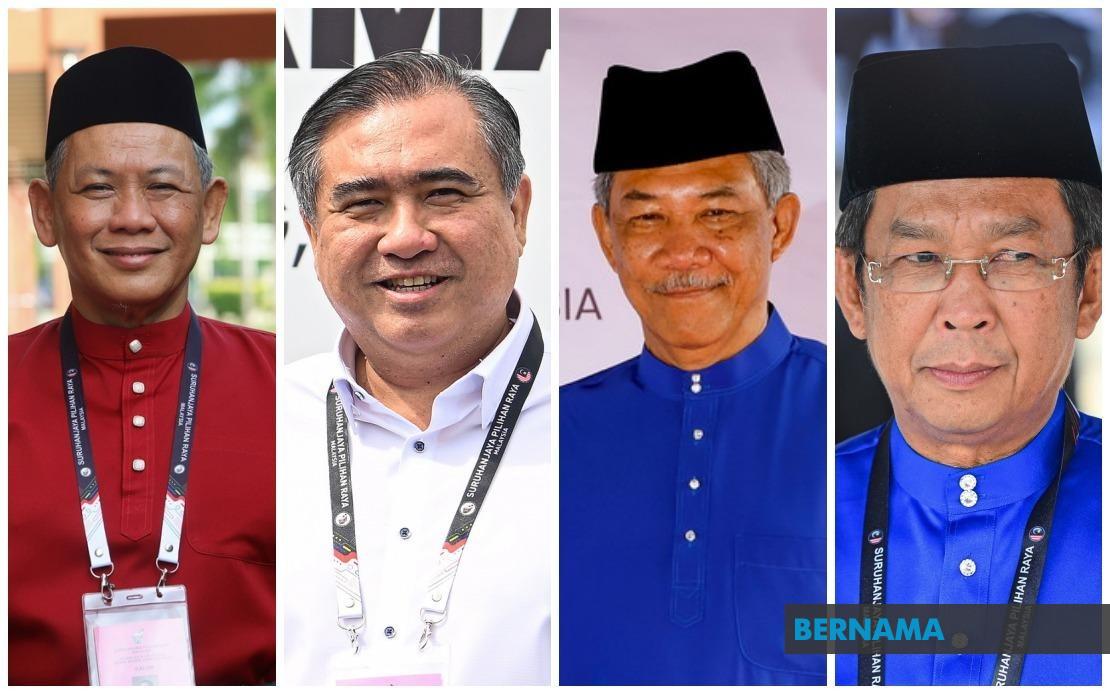
The 16th Negeri Sembilan state election is shaping up as a watershed contest for Malaysia's political establishment, with heavyweight figures from every major coalition facing unexpectedly fierce competition for their seats. Far from enjoying the usual advantages of incumbency and organisational backing, these seasoned operators find themselves in genuinely competitive races that could determine not only their personal political futures but also the trajectory of national politics in the months ahead.
Among the most closely watched contests is Linggi, where Negeri Sembilan's Pakatan Harapan chairman and caretaker Menteri Besar Datuk Seri Aminuddin Harun confronts a three-way battle that threatens to fragment the anti-establishment vote. The PKR vice-president faces incumbent Datuk Mohd Faizal Ramli of Barisan Nasional alongside Bersatu candidate Datuk Zamri Md Said, creating a scenario where any single contender's victory becomes uncertain. This fractured contest demonstrates how Malaysia's splintered political landscape has created openings that once appeared closed to fresh challengers.
Equally significant is the position of DAP secretary-general Anthony Loke in Chennah, a constituency the party has held since 2013. The Transport Minister encounters serious competition from Negeri Sembilan MCA Youth chief Siow Kong Choon, whom Barisan Nasional has fielded with apparent confidence in this traditionally urban seat. The matchup reflects broader questions about DAP's grip on urban constituencies and whether the coalition has taken its support base for granted during a period of national political turbulence.
In Rantau, perhaps the most symbolically significant contest, Barisan Nasional's Datuk Seri Mohamad Hasan—simultaneously serving as Foreign Minister and UMNO deputy president—squares off against Pakatan Harapan's Dr Azizul Hakim Mahdi in a straight fight that reverses the usual generational dynamics. At 70, Mohamad, colloquially known as Tok Mat among the electorate, has represented Rantau since 2004 and epitomises the long-serving regional strongman. Yet his challenger's relative youth and apparently competitive positioning suggest that even such deeply entrenched figures cannot assume automatic victory in Malaysia's contemporary political environment.
The Pertang constituency presents another layered challenge, with incumbent Datuk Seri Jalaluddin Alias of Barisan Nasional, who has held the seat since 2013, navigating a three-cornered contest against Pakatan Harapan's Mohd Umry Abdul Khois and Bersatu's Mohd Faizal Fadli Mohd Idrus. Jalaluddin's tenure as Negeri Sembilan UMNO chief provides him with substantial party machinery, yet the presence of a credible Bersatu challenger indicates how the Mahathir-aligned faction has established organisational capacity in state-level politics and threatens to split the conservative-leaning vote.
Nilai and Sri Tanjung present the election's most chaotic contests, with five candidates each competing intensely for single seats. In Nilai, DAP national deputy chairman and incumbent J. Arul Kumar confronts challengers from Barisan Nasional, Bersatu, Berjasa, and an independent candidate, a distribution suggesting genuine voter ambivalence and organisational fragmentation. The Sri Tanjung five-way contest grows more intriguing with the emergence of Bersatu's Leevineshwaraan Murugan, at just 23 years old the youngest candidate in the entire state election, whose presence alongside independent contenders indicates how younger voters and political outsiders have penetrated electoral contests previously dominated by established party machinery.
The broader mathematical context reveals a political landscape fundamentally altered from previous state elections. Across 36 seats, 103 candidates are competing, a significant surge reflecting genuinely competitive politics. Pakatan Harapan fields the maximum complement at 36 candidates, Barisan Nasional presents 25, Bersatu 24, and Perikatan Nasional 11, with smaller parties and independent candidates comprising the remainder. This candidate density suggests that organisational advantages have become diluted and that even major parties cannot suppress internal dissent or external competition through nomination control alone.
For Malaysian and Southeast Asian observers, these contests illuminate the precariousness of political incumbency in an era of rapid coalition realignment and voter volatility. The Negeri Sembilan election, scheduled for August 1 with early voting on July 28, arrives during a period of national political uncertainty following Anwar Ibrahim's rise to the premiership and subsequent tensions within the ruling coalition. These state-level contests will test whether the federal-level political realignment translates into meaningful electoral consequences at the regional level, or whether state-based considerations and local personalities retain sufficient weight to override national trends.
The nomination process, which concluded on July 18 with formal commencement of the 14-day campaign, has crystallised these competitive dynamics. The absence of any obvious walkover victories for major party figures suggests that Negeri Sembilan voters possess genuine choice and that parties must mobilise actively rather than rely on organisational inertia. This competitive intensity, particularly affecting senior national politicians whose profiles exceed their state constituencies' typical political horizons, indicates that Malaysian electoral politics has entered a new phase where no position—however senior, however long held—can be treated as secure.
The implications extend beyond Negeri Sembilan's borders. Results here will signal whether Pakatan Harapan can consolidate support outside its urban strongholds, whether Barisan Nasional retains sufficient organisational capacity to compete effectively in multi-cornered contests, and whether Bersatu has established itself as a genuine regional force or remains dependent on splinter politics. Southeast Asian analysts monitoring Malaysian political stability should regard this state election as a crucial diagnostic regarding the durability of the current federal coalition and the trajectory of regional stability in Malaysia's most challenging political transition since the 1998 Reformasi movement.

