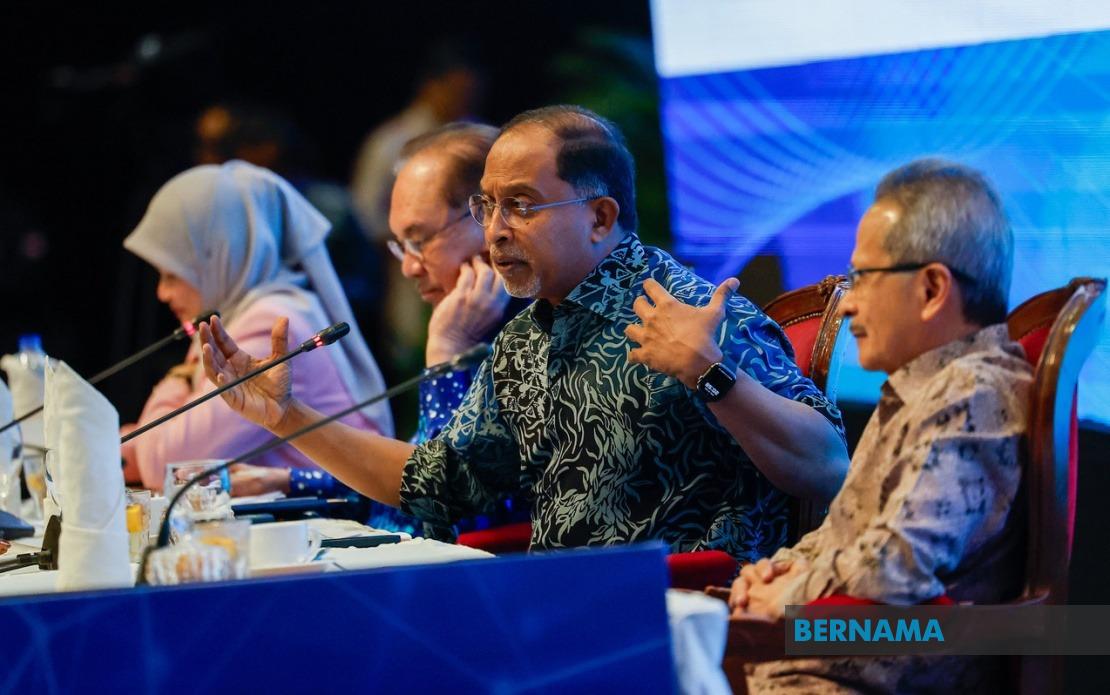
Malaysia's higher education landscape urgently requires a fundamental reimagining of its legal foundations, according to Higher Education Minister Datuk Seri Dr Zambry Abd Kadir, who has called for a sweeping review of the Universities and University Colleges Act 1971 (AUKU) to align the sector with contemporary needs. Speaking at the MADANI Malaysian Scholars Forum Series 13 at the University of Malaya's Dewan Tunku Chancellor, Zambry emphasised that the nation's academic institutions have outgrown the regulatory architecture that has governed them for decades, necessitating legislative modernisation to unlock their potential.
The minister articulated a vision where Malaysia's higher education ecosystem remains dynamic and responsive rather than constrained by legislative provisions designed for an earlier era. He stressed that the review process must extend beyond AUKU itself to encompass the broader tapestry of statutes affecting universities and university colleges, recognising that piecemeal adjustments are insufficient to address systemic challenges. This comprehensive approach reflects an acknowledgment within government circles that Malaysian academia operates within restrictive parameters that warrant fundamental reconsideration.
Central to Zambry's argument is the urgent need to fortify academic freedom and freedom of expression within tertiary institutions, dimensions of university life that he suggested have been historically constrained. The minister indicated that previous regulatory limitations have created institutional environments where scholars and researchers face unnecessary impediments, and where students find their voices circumscribed by rules designed with different objectives. These constraints, he implied, have undermined Malaysia's competitive positioning in global academic discourse and hindered the nation's capacity to nurture innovative thinking.
Recognising the complexity of legislative reform, the Ministry of Higher Education has established an Independent Committee tasked with gathering and synthesising perspectives from the academic community and student representatives. This consultative mechanism signals an intention to ground any legislative revision in the lived experiences of those most directly affected by current regulations. The committee's mandate encompasses collecting memorandums and viewpoints from diverse stakeholders, ensuring that reform proposals reflect multifaceted concerns rather than top-down impositions.
Beyond incremental adjustments, the ministry is contemplating a more radical consolidation: the drafting of a unified One Higher Education Act that would coordinate the fragmented legislative landscape under a single, coherent framework. Such an approach would represent a significant departure from Malaysia's current arrangement of multiple overlapping statutes, potentially creating clearer pathways for institutional governance whilst simultaneously addressing gaps and contradictions that exist within the present system. This consolidation strategy suggests ministry officials recognise that patchwork legislation has created confusion and inefficiency.
The forum, which included Prime Minister Datuk Seri Anwar Ibrahim in a moderating capacity, underscored the priority that government leadership has accorded to higher education reform. The presence of multiple cabinet ministers and senior academic figures demonstrated the cross-sectoral importance of these discussions. Education Minister Datuk Seri Fadhlina Sidek and Academy of Sciences Malaysia President Tengku Datuk Mohd Azzman Shariffadeen contributed their perspectives, reflecting the interconnected nature of policy challenges spanning primary, secondary, and tertiary education levels.
Fadhlina articulated a complementary vision for Malaysia's broader education system, emphasising accessibility and inclusivity as foundational principles. The Education Ministry has committed to advancing a 'humane education' approach that recognises students as holistic individuals rather than repositories of examination scores. This philosophical repositioning reflects growing global recognition that educational systems must nurture balanced, resilient individuals equipped with moral fortitude alongside intellectual capacity. Such an orientation potentially extends to higher education, where similar principles of holistic development might inform reform agendas.
The minister highlighted concrete initiatives demonstrating this commitment to equitable access, including Schools in Hospital programmes, educational facilities within rehabilitation centres, and specially designed school models for Orang Asli communities. These interventions signal that Malaysian education policy increasingly recognises that learning opportunities must reach beyond conventionally structured classroom environments to encompass diverse populations and circumstances. Free pre-school access expansion further reflects a conviction that educational investment should begin in early childhood rather than awaiting formal schooling.
Fadhlina's articulation of education's purpose extends beyond workforce preparation, positioning schools and universities as institutions responsible for developing mentally resilient individuals with sound ethical frameworks. She emphasised that students arrive at educational institutions as complete human beings with intellectual capacities, emotional needs, ambitions, and vulnerabilities requiring institutional recognition. This perspective challenges narrower conceptions of education as primarily instrumental to economic productivity, suggesting instead that Malaysian policy is shifting toward viewing educational systems as responsible for whole-person development.
The intersection of these reform trajectories—legal modernisation at the tertiary level alongside philosophical reorientation throughout the education system—suggests Malaysian policymakers perceive interconnected challenges requiring coordinated solutions. By simultaneously addressing AUKU's restrictions on academic freedom whilst promoting humane education principles, government leadership appears committed to creating an environment where Malaysian universities can attract and retain talent, foster innovation, and contribute meaningfully to regional and global scholarship. However, translating these aspirations into legislative reality will require navigating competing interests and entrenched positions.
For Malaysian higher education stakeholders, the signals emanating from government are encouraging but still preliminary. The establishment of the Independent Committee represents a necessary first step, yet the timeline for legislative outcomes remains unclear. For regional observers, Malaysia's potential recalibration of its higher education regulatory framework carries significance given the nation's academic influence across Southeast Asia. Should Malaysia successfully modernise its legislation whilst protecting academic freedom, the example might encourage neighbouring countries to undertake similar assessments of their own institutional arrangements, potentially catalysing broader regional movement toward more open, dynamic academic environments.

