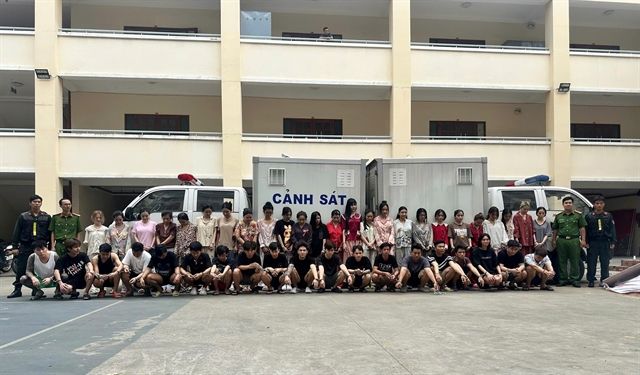
Ho Chi Minh City authorities have dismantled a significant criminal enterprise trafficking electronic cigarettes adulterated with etomidate, a controlled anaesthetic agent. The operation resulted in 49 arrests, including four international nationals, and the seizure of 1,670 vape pods alongside substantial quantities of ketamine and methamphetamine. The discovery highlights an emerging trend in Southeast Asian drug trafficking that deliberately exploits regulatory gaps and the perceived harmlessness of vaping devices among young consumers.
Etomidate represents a particularly insidious threat because it operates outside conventional drug detection frameworks. As a short-acting sedative intended solely for surgical anaesthesia under medical supervision, the substance was added to Vietnam's controlled substance list only in January, underscoring how criminal networks often stay ahead of regulatory frameworks. When inhaled through vapes rather than administered intravenously in hospitals, etomidate bypasses normal medical safeguards entirely. The drug crosses from the lungs directly into the bloodstream, reaching the brain within seconds and producing effects ranging from initial light-headedness and mild hallucinations to severe neurotoxicity, muscle spasms, and loss of consciousness.
The criminal operation comprised multiple interconnected supply chains, each serving different customer demographics. The investigation began with Nguyen Huu Huan, 28, operating under the street name Ba Giá along An Duong Vuong Street in An Lac Ward. On June 25, Huan and his wife Ngo Thi Kim Chi were detained after selling etomidate-laced vapes to another resident, Tran Phuc. This seemingly routine transaction proved to be the thread that unravelled the entire network, revealing two distinct smuggling pipelines feeding the Ho Chi Minh City market.
The first supply route was directed by Huynh Ngoc Thuy Nhu, 26, assisted by Hua Tuong Vy, 20, both based in Ho Chi Minh City. The second operation, headed by Le Quoc Duy from An Giang province, represented a transnational smuggling model trafficking vapes across the Vietnam-Cambodia border through remote crossing points before transporting them northward to Ho Chi Minh City. Police recovered 37 vape pods from Duy's location, along with 200 grams each of ketamine and methamphetamine. This cross-border dimension adds complexity for regional law enforcement, requiring coordination between Vietnamese and Cambodian authorities to address the supply chain at its source.
A third criminal group, headed by Cambodian national Han Kiat and three other foreign nationals, specifically targeted expatriate communities living in Ho Chi Minh City. This segmentation of the market according to customer nationality suggests sophisticated understanding of consumer preferences and law enforcement vulnerabilities. The targeting of foreign residents may reflect assumptions that international communities present fewer investigative complications or are more willing to experiment with novel substances marketed as trendy and fashionable.
The marketing strategy employed by these networks demonstrates calculated exploitation of youthful demographics and the aesthetic appeal of vaping culture. The drug-laced pods were packaged and promoted under innocuous brand names such as "chill pod," "relaxation pod," "sleep-well pod," and "fly pod," disguising their lethal contents within the broader landscape of flavoured vape products. These names deliberately invoke wellness and recreational themes likely to resonate with young consumers in bars, karaoke establishments, and rental apartments—venues where youth congregate and social pressure to experiment with substances operates most powerfully.
What makes etomidate particularly dangerous as a concealed drug threat is its invisibility to standard drug detection methods. Commercial rapid test kits available to the public can identify traditional narcotics such as heroin, cannabis, or methamphetamine, but they cannot detect etomidate due to its distinct chemical structure. Only specialized forensic analysis equipment operated by police and laboratory agencies can accurately identify this substance. This detection gap creates a commercial advantage for traffickers: customers cannot verify what they are purchasing, and law enforcement identification requires more sophisticated resources than street-level narcotics screening.
The health consequences of etomidate consumption are potentially catastrophic. High doses or concurrent use with alcohol and other central nervous system depressants can precipitate sudden respiratory arrest and death. Users inhaling the substance experience rapid onset effects because of the direct lung-to-blood pathway, eliminating the buffering capacity of oral ingestion or slower absorption methods. Young people remain particularly vulnerable to acute toxicity because of lower body weight, potentially underdeveloped tolerance to sedative substances, and the likelihood of concurrent alcohol consumption in the bar and nightlife venues where these vapes were being distributed.
For Malaysia and other Southeast Asian nations, this Ho Chi Minh City case presents cautionary implications regarding emerging drug threats. Vaping devices have proliferated across the region, and the convergence of vaping culture with pharmaceutical-grade anaesthetics demonstrates how criminal networks continuously innovate to circumvent detection and regulatory frameworks. Malaysia's customs and narcotics enforcement agencies should consider whether similar etomidate trafficking has penetrated domestic markets, particularly given proximity to trafficking routes and established smuggling networks operating across Southeast Asian borders.
The operation also underscores the importance of information-sharing between regional drug enforcement agencies. Le Quoc Duy's cross-border smuggling operation involved Cambodia, and the involvement of Cambodian, Chinese, and South Korean nationals points to transnational criminal coordination that exceeds the capacity of single-nation responses. ASEAN member states benefit from deeper collaboration through existing frameworks such as the ASEAN Secretariat and bilateral drug enforcement agreements to identify emerging synthetic substance threats before they achieve widespread distribution.
Ho Chi Minh City police have urged citizens, particularly young people, to exercise caution regarding vaping products of uncertain origin and to recognize that criminal advertisements promising substances to be "undetectable" or yielding "100 per cent negative" test results exploit the detection limitations discussed above. The advice reflects a shift in drug prevention messaging from traditional substance identification toward recognizing the broader ecosystem of criminal marketing tactics that exploit technological and regulatory gaps.
This case reveals how post-pandemic shifts in leisure and social behaviour have created new vulnerabilities that criminal networks exploit rapidly. The proliferation of vaping, the growth of nightlife venues catering to younger demographics, and the relative novelty of enforcement frameworks targeting pharmaceutical substances rather than traditional plant-based or synthetic drugs all created conditions in which this smuggling network flourished. Regional governments must accelerate efforts to identify and schedule emerging synthetic threats while simultaneously building detection capabilities and cross-border enforcement mechanisms necessary to disrupt supply chains before they establish deep roots.

