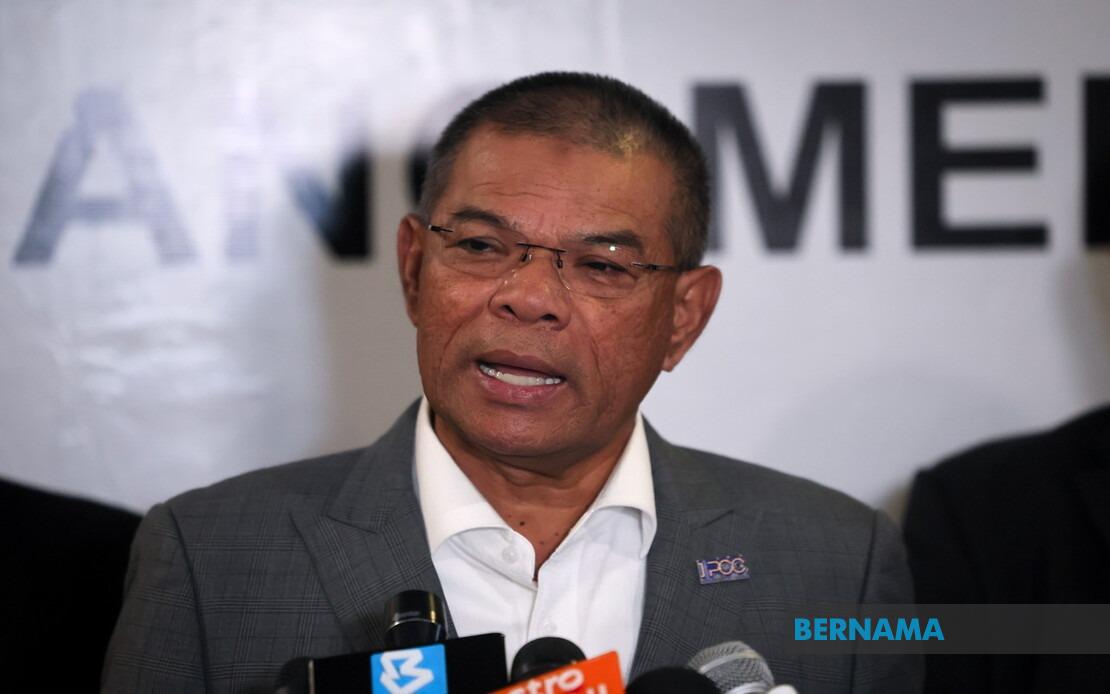
Home Minister Datuk Seri Saifuddin Nasution Ismail has directed the Malaysian Immigration Department to extend complete cooperation with investigating authorities following a catastrophic early morning collision involving a departmental vehicle that resulted in the deaths of three family members. The minister issued the directive through a Facebook statement, pledging that accountability will be pursued vigorously if the inquiry uncovers any lapses in conduct, negligence or violations of the law. His measured response underscores the seriousness with which the government is treating the incident and signals an expectation that those found responsible will face consequences proportionate to their actions.
The tragedy occurred around 1 am on Jalan Sultan Ismail when an Immigration Department Black Maria lorry, unoccupied at the time, collided with multiple vehicles and pedestrians at the Maju Junction intersection. Three members of a single family were killed, whilst a fourth person sustained serious injuries. The incident also involved contact with a Proton Saga and an Inokom Matrix multi-purpose vehicle. The scale of the collision and the involvement of a government-owned vehicle have intensified public and institutional scrutiny regarding operator conduct and vehicle safety protocols.
Accounts of the collision suggest the Immigration Department lorry proceeded through the Maju Junction intersection against a red traffic signal, with its emergency beacon and siren activated, whilst a Proton Saga travelling on a green light was unable to execute evasive manoeuvres in time. Upon impact, the lorry lost directional control and skidded across the roadway, striking the pedestrians and the multi-purpose vehicle with considerable force. The sequence of events indicates the intersection geometry and signal timing may have created a dangerous situation compounded by potential driver error or inattention.
At the time of the collision, the lorry was operating as an unoccupied transport vehicle en route to the Chow Kit district to conduct a coordinated enforcement operation targeting undocumented migrants. Such operations are routine within the Immigration Department's mandate, yet the involvement of a departmental asset in a fatal public safety incident raises questions about vehicle maintenance standards, driver training protocols and operational procedures. The fact that the lorry was traversing a major urban intersection at that hour whilst responding to an operational commitment adds complexity to the investigation.
Investigators are proceeding under Section 41(1) of the Road Transport Act 1987, which addresses culpability in traffic incidents resulting in injury or death. This legal framework provides prosecutors and the court system with mechanisms to establish whether negligence, recklessness or criminality underpinned the collision. The choice of statute suggests authorities are examining whether the driver's conduct fell below the standard expected of a professional operator, or whether systemic failures within the Immigration Department contributed to the incident.
Saifuddin Nasution's statement conveyed the Ministry of Home Affairs' formal condolences to the bereaved family and invoked religious sentiment by expressing prayers for the family's fortitude during their period of grief. This language serves multiple functions within Malaysian political communication: it demonstrates empathetic leadership, acknowledges the human cost of the incident and establishes a baseline expectation that institutional response should match the gravity of the loss. His emphasis on extending "strength and resilience" to the survivors reflects Malaysia's cultural framework in which political leaders are expected to offer moral support alongside administrative action.
The collision carries implications extending beyond the immediate investigation. Government agencies operate with exemptions and operational privileges that private entities do not possess—including special treatment at traffic intersections and reduced accountability frameworks in certain contexts. When a government vehicle causes civilian casualties, public confidence in institutional restraint and accountability mechanisms faces testing. The minister's unambiguous directive that "firm action must be taken against those responsible" signals recognition of this dynamic and attempts to restore public trust through explicit commitment to consequence.
Such incidents historically prompt review of departmental operating procedures, vehicle fleet maintenance and driver training standards. The Immigration Department operates a substantial fleet of vehicles deployed across the country for enforcement operations. A comprehensive review may examine whether drivers receive adequate training in high-speed intersection navigation, emergency vehicle operation, and decision-making protocols during transit. Fleet maintenance records will likely be scrutinised to determine whether mechanical failure contributed to loss of vehicle control.
For Malaysian road safety advocates, the incident illustrates vulnerabilities within the urban traffic environment where emergency vehicles equipped with special privileges intersect with ordinary civilian traffic flows. The activation of beacon lights and sirens does not automatically grant vehicles immunity from responsibility to avoid collisions; rather, it imposes heightened obligations on drivers to navigate intersections with elevated caution. The investigation's outcome may influence how emergency vehicle privileges are exercised across government agencies and whether additional training or technological safeguards warrant implementation.
The investigation will likely extend beyond the immediate driver to examine command responsibility and institutional oversight. Supervisory personnel, fleet managers and potentially departmental leadership may face scrutiny regarding whether adequate systems existed to prevent the incident. Malaysian courts have increasingly recognised that institutional negligence—failures of supervision, training and accountability—can constitute grounds for liability even when immediate causation appears to rest with individual action. The breadth of the investigation Saifuddin Nasution has ordered may reflect awareness of these legal developments.

