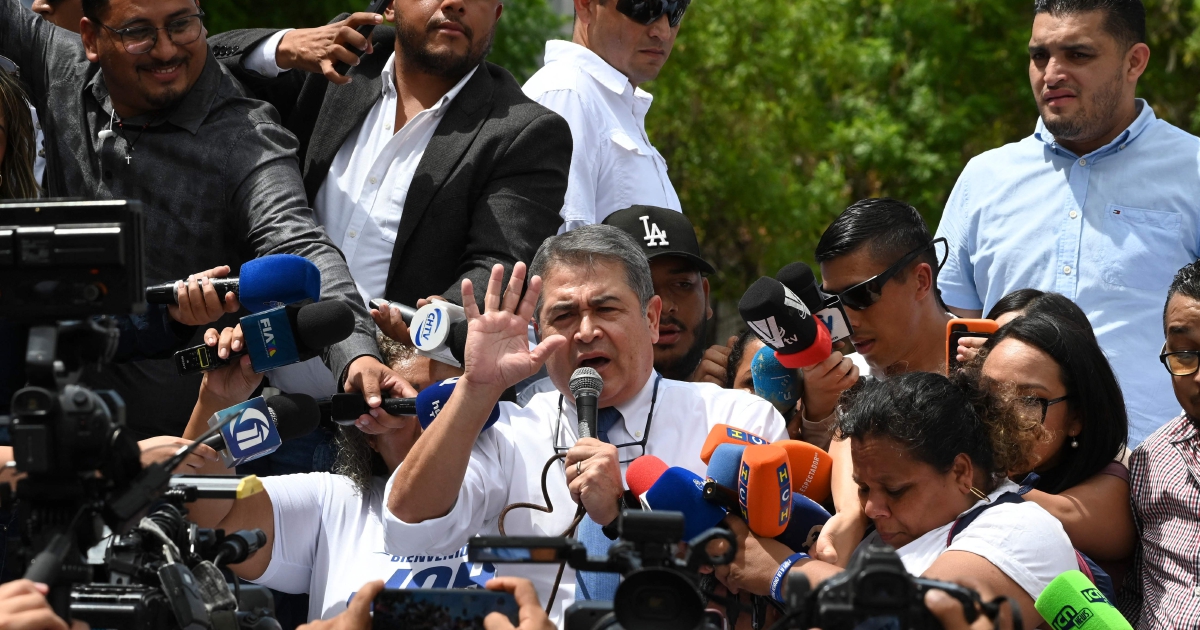
A Honduran court has granted former president Juan Orlando Hernández liberty pending trial on corruption allegations, allowing the controversial political figure to avoid immediate detention as his domestic legal proceedings advance. The judicial decision, handed down Monday in Tegucigalpa, represents a significant development in the complex legal saga surrounding the ex-leader, whose fortunes shifted dramatically last year when newly inaugurated US President Donald Trump issued a pardon that wiped away his American drug trafficking conviction.
Hernández had been serving time in the United States following his extradition and conviction on charges related to drug smuggling operations allegedly linked to his tenure as Honduras's chief executive from 2014 to 2022. The Trump pardon, announced shortly after the president's return to office, caught observers both inside and outside Central America by surprise, given that Hernández remained under investigation for corrupt practices during his administration. The pardon effectively removed a major legal obstacle for the former leader, allowing him to return to his homeland and contest the charges he now faces there.
The domestic corruption trial represents a different but equally serious legal challenge. Honduran authorities have pursued investigations into Hernández's conduct while in office, focusing on allegations that he diverted state resources and engaged in illicit financial dealings throughout his presidency. These charges reflect broader concerns about governance failures and institutional decay that plagued Honduras during his two terms, when the country grappled with persistent violence, poverty, and the emergence of powerful criminal networks that allegedly exploited state institutions for their benefit.
The judge's decision to keep Hernández outside custody does not constitute an exoneration or minimisation of the allegations against him. Rather, it reflects standard judicial procedure in Honduras that permits defendants to remain free under certain conditions while awaiting trial, particularly for individuals without flight risk concerns or those deemed unlikely to interfere with proceedings. The ruling suggests that the court weighed various factors, including his status as a former high-ranking official and potential ties to Honduras, and concluded that preventative detention was not necessary at this stage.
The political implications of Hernández's continued freedom extend beyond his personal circumstances. His presidency remains deeply controversial within Honduras, marked by contested elections in 2017, significant allegations of fraud, and widespread public anger over corruption and misgovernance. Many Hondurans viewed his eventual extradition and US conviction as partial vindication of their grievances and a demonstration that even leaders of state could face justice for alleged criminality. The Trump pardon consequently generated considerable backlash among civil society groups and anti-corruption advocates who saw it as undermining accountability mechanisms.
Hernández's case reflects the complexities surrounding international criminal justice and US foreign policy in Central America. Honduras remains a crucial partner for Washington in migration management and regional stability efforts, and the pardon raised questions about whether diplomatic or strategic interests influenced Trump's decision-making. The move also highlighted tensions between the United States' stated commitment to fighting drug trafficking in the region and its occasional willingness to extend clemency to figures accused of involvement in such crimes.
The domestic trial will now proceed without the immediate burden of incarceration, allowing Hernández to maintain a public presence and potentially exercise political influence in Honduras. His supporters, who remain active despite his controversial record, have attempted to portray him as a victim of international persecution and political vendetta. Meanwhile, opponents continue to demand accountability for what they characterise as years of systematic corruption that weakened Honduran institutions and facilitated criminal enterprise.
The ruling comes amid ongoing concerns about judicial independence in Honduras. The country has struggled to establish reliable mechanisms for prosecuting high-level corruption, and previous attempts to hold powerful officials accountable have often faltered or been derailed by political pressure. International observers will monitor the upcoming corruption trial to assess whether Honduras can sustain a credible prosecution against a former president, particularly one who has benefited from a US pardon that removes his most high-profile conviction.
For Malaysia and other Southeast Asian nations observing Central American developments, Hernández's case underscores the challenges that middle-income democracies face in combating elite corruption and maintaining institutional credibility. It also illustrates how international legal processes can sometimes work at cross-purposes, with decisions made in one jurisdiction complicating accountability efforts in another. The experience serves as a reminder of the importance of strong domestic institutions capable of functioning independently from external pressures or shifting international priorities.
The coming months will prove critical as the corruption trial progresses through Honduras's judicial system. Questions remain about whether the court will present compelling evidence against Hernández, how he will contest the allegations, and ultimately whether the proceeding will reinforce or undermine public confidence in Honduras's capacity to hold its leaders accountable. The outcome could influence broader regional perceptions about the reliability of Central American justice systems and the prospects for institutional reform across the developing world.

