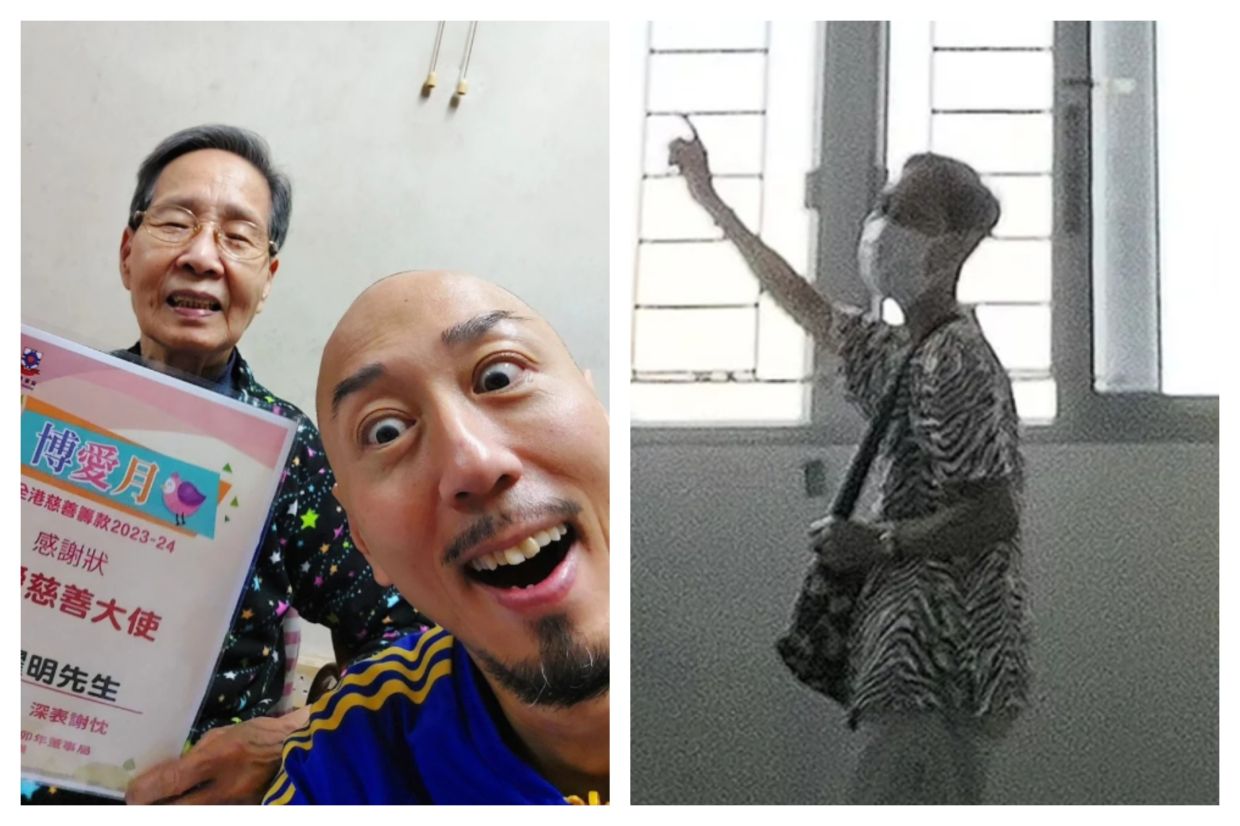
At 54 years old, Hong Kong television actor Dai Yiu Ming has finally achieved what many consider one of life's defining milestones: buying a home for his elderly mother. The TVB veteran recently announced the acquisition on Instagram, sharing photographs of the residence and expressing gratitude for the opportunity to provide his mother with stable housing after a lifetime of humble circumstances. Despite acknowledging the substantial financial burden of the purchase, Dai expressed no regret, reflecting on the irreplaceable value of time spent with aging parents and the moral imperative to honour their sacrifices.
Dai's mother, now in her 80s, has lived through some of the most turbulent periods of modern history. For the majority of her life, she inhabited makeshift shelters and aging public housing units that barely met basic standards. Her son publicly acknowledged this difficult history, drawing particular attention to her experiences during wartime, when she survived in air-raid shelters by foraging for sweet potato leaves. These details underscore not merely a personal family narrative but also the broader historical context of Hong Kong's post-war development, where many residents endured extraordinary hardship during the reconstruction era.
In his Instagram post, Dai articulated sentiments that resonate deeply within East Asian cultures where filial piety holds paramount importance. He wrote that he understood the purchase came late in his mother's life, acknowledging his own financial limitations throughout his career. Rather than expressing frustration at his modest earnings, however, he framed his careful stewardship of resources as a demonstration of commitment. This humility and acceptance of his professional trajectory—neither glamorous nor exceptionally lucrative—reflect an older generation's pragmatic approach to life's realities. His message transcended simple celebration; instead, it constituted a public statement about values and family responsibility during an era when such dedication is increasingly uncommon.
The actor's journey to homeownership reveals a career path marked by both opportunity and disappointment. Dai joined ATV's artiste training programme in 1991 and made his television debut in 1993, entering an industry where success is never guaranteed. However, his initial stint at ATV proved unsatisfying. Feeling underappreciated and lacking meaningful opportunities for career advancement, he departed the broadcaster in 1994 after just over a year. Rather than abandoning entertainment altogether, Dai pivoted to technical work, spending six months as a computer repair technician before securing a contract with TVB, Hong Kong's dominant television network.
At TVB, Dai carved out a distinct professional identity as a reliable supporting actor rather than pursuing leading roles. Over three decades with the station, he appeared in numerous dramas, building a solid reputation for consistent, competent performances. This trajectory—steady rather than spectacular—characterised much of his adult working life. The security of regular employment at TVB provided him with stable income, which he evidently invested in long-term financial planning centred on his primary objective: securing appropriate housing for his mother.
A significant turning point came in 2017 when Dai attempted to expand his horizons by relocating to mainland China. The move represented a calculated decision to access larger markets and potentially more lucrative opportunities in the rapidly growing Chinese entertainment industry. However, the separation proved untenable. Unable to bear extended separation from his aging mother, particularly given his father's death more than a decade earlier, Dai returned to Hong Kong. This decision prioritised filial duty over professional ambition, demonstrating the hierarchy of values that has guided his adult life.
The relationship between Dai and his mother gained particular poignancy following his father's passing. With no siblings mentioned in available accounts and his father no longer present, the responsibility for his mother's wellbeing fell squarely on Dai's shoulders. This dynamic intensified his motivation to achieve the homeownership goal and explains his unwavering commitment despite financial constraints. For many in the Southeast Asian region, where extended family networks traditionally provide safety nets, Dai's situation reflects an increasingly common reality where adult children bear sole responsibility for aging parents.
Public response to Dai's announcement demonstrated how his achievement resonated beyond celebrity gossip circles. Social media users expressed admiration not merely for the material accomplishment but for what it represented: authentic filial devotion in an age often criticised for eroding traditional family values. Comments praising his "sense of filial piety and responsibility" and encouraging him to spend quality time with his mother reflected broader societal appreciation for such values. The online celebration suggested that Dai's quiet perseverance had touched a nerve in audiences increasingly concerned about generational disconnection.
For Malaysian and Southeast Asian audiences, Dai's story carries particular relevance. In societies where rapid urbanisation and economic pressure frequently separate adult children from elderly parents, and where housing costs consume ever-larger portions of income, his achievement embodies both aspiration and struggle. The narrative also illustrates how careers in entertainment industries across the region often provide modest but reliable income rather than glamorous wealth, a reality many aspiring performers must navigate. Furthermore, his decision to prioritise family over geographical opportunity reflects values still deeply embedded in Malaysian and broader Asian societies, even as economic pressures test these commitments daily.
Dai's experience also highlights generational contrasts in wealth accumulation and housing access. His mother's lifetime journey from wartime shelters through public housing to finally residing in privately owned accommodation mirrors the broader economic trajectory of Hong Kong's post-war development. Similar patterns have occurred across East and Southeast Asia, where rapid economic growth benefited some generations more than others. His mother's generation largely missed opportunities for substantial wealth accumulation, placing the burden of elder care financing on subsequent generations who themselves face significant housing affordability challenges.
The actor's modest self-assessment—"I'm not capable enough to make much money"—should not be dismissed as false humility. Rather, it reflects realistic acknowledgment of earning potential within entertainment industries where superstardom remains elusive for most practitioners. Dai's career demonstrates that sustainable financial security often derives from consistency and longevity rather than breakthrough success. His three-decade tenure at TVB, punctuated by careful financial discipline, ultimately enabled achievement of his fundamental life goal. This trajectory offers lessons for younger workers across Southeast Asia navigating uncertain employment landscapes and competing financial pressures.
Looking forward, Dai's homeownership achievement should not be romanticised as the finale of his story but rather as one chapter in an ongoing commitment. His public expression of hope for his mother's continued health and happiness acknowledges that providing housing represents merely one dimension of filial responsibility. The emotional and temporal investments required in caring for an octogenarian parent extend far beyond property ownership. As Southeast Asian societies grapple with rapidly aging populations and evolving family structures, examples like Dai's underscore both the enduring importance of intergenerational support and the very real sacrifices such commitment demands from working-age adults.

