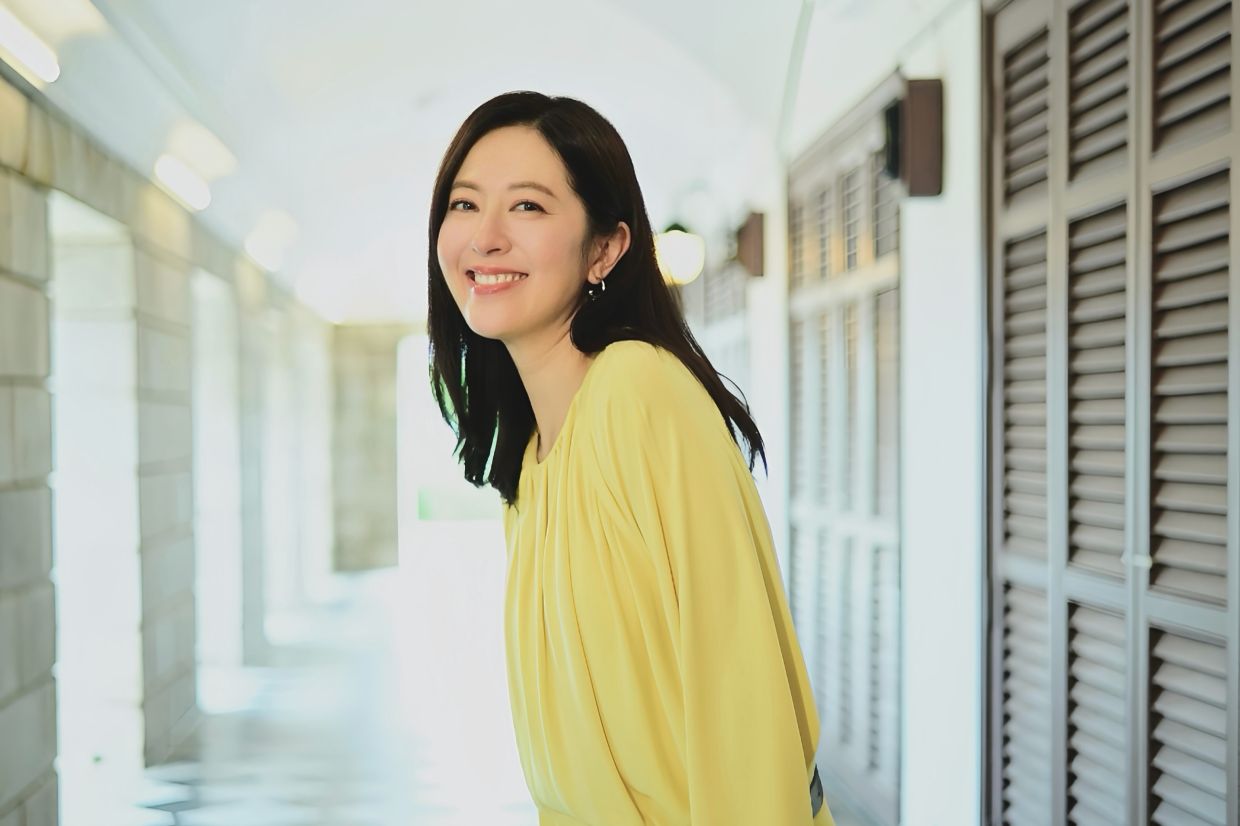
Hong Kong actress Natalie Tong has opened up about the profound loss of her mother, who died in 2009, describing with visible emotion how the tragedy continues to shape her understanding of life's priorities. The 45-year-old performer's candid reflection on a recent variety show appearance has resonated with audiences grappling with similar tensions between professional ambition and familial devotion, particularly in cultures that emphasise both career success and filial responsibility.
During her appearance, Tong did not attempt to conceal the emotional weight of her memories, acknowledging that she had allowed her career ambitions to overshadow her responsibilities to her mother during crucial years. She expressed deep remorse over the disparity between her professional commitments and the time she allocated to her parent, confessing that her singular focus on building her acting career came at a considerable cost to her family relationships. The actress described a pattern of prioritisation that, while common among ambitious professionals, had left her with regrets that persist more than a decade after her mother's passing.
The medical circumstances surrounding her mother's final years added another layer of complexity to Tong's regrets. Her mother had required a pacemaker implantation procedure that necessitated periodic replacements—a routine but essential medical intervention. However, financial constraints at the time prompted the family to postpone the necessary procedure, a decision born from economic pressure rather than medical judgment. Tong reflected that she had then harboured a false sense of temporal security, believing that her mother's health challenges could be addressed whenever circumstances permitted, without recognising the urgency that should have accompanied such medical needs.
The tragic sequence of events unfolded swiftly after her mother embarked on a trip, suggesting that despite her family's financial hesitation, they had not anticipated the imminent nature of the crisis. Upon returning home, her mother suddenly began experiencing severe haemorrhaging, prompting an emergency hospitalisation that would ultimately prove too late. The speed with which her mother's condition deteriorated—from apparent stability to medical emergency to death—crystallised for Tong the fragility of human life and the inadequacy of assuming future opportunities to demonstrate love and devotion.
Tong's account of learning of her mother's death captures the disorienting shock that accompanies sudden loss. She described waking with an inexplicable sense of dread and rushing to the hospital, only to have medical professionals inform her that her mother had already passed away. The visceral impact of this moment—collapsing to the ground in overwhelming grief—marked a turning point in how she would subsequently approach her personal relationships and professional choices. The actress emphasised that such grief transcends rational processing; instead of gaining immediate clarity about loss, she found herself immobilised by the incomprehensibility of the moment.
Years of reflection have allowed Tong to articulate what she identifies as the most painful aspect of her loss: not mortality itself, but the specific constellation of regrets attached to it. She has come to understand that philosophical acceptance of life's transience does not eliminate the anguish of unfulfilled intentions and unexpressed sentiment. The concept of regret, in her estimation, operates differently from simple sadness—it represents the recognition of missed opportunities, roads not travelled, and conversations never held. This distinction proves particularly relevant for high-achieving professionals who sacrifice relational depth in pursuit of career milestones.
Tong's response to her mother's death evolved gradually from immediate grief into purposeful life reconstruction. In 2022, after nineteen years with the television broadcaster TVB, she made the substantial decision to exit that institutional structure, a move that would have appeared improbable during her peak years as an actress. Her departure represented not a withdrawal from professional endeavour but a deliberate recalibration of priorities. She has characterised this transition as an opportunity to correct past patterns and allocate previously unavailable time and emotional energy toward her remaining family members, effectively using the second half of her life to reverse the imbalance that had characterised her earlier decades.
Tong's post-TVB trajectory demonstrates that her commitment to this philosophical shift extends beyond nostalgic reflection into concrete economic commitment. She ventured into the hospitality and food service sector, establishing her own bakery operation in the prestigious Causeway Bay district during 2023. This business venture, operating according to parameters presumably of her own choosing rather than institutional directives, allowed her greater control over her schedule and presumably offered opportunities for integration between work and personal life. The move from acting to proprietorship signals a fundamental reorientation toward self-determination and reduced external demands on her time.
Despite these substantive changes, Tong acknowledges that regret remains a psychological companion rather than something entirely conquered through behavioural modification. However, she has adopted a deliberate posture against permitting these regrets to define her remaining years or determine her future choices. This represents a sophisticated psychological approach: acknowledging past pain without allowing it to foreclose present possibilities. She frames her current life project as one of narrative rewriting, in which she possesses agency to alter her trajectory and establish different patterns of living and relating to those remaining in her life.
Tong's reflections carry particular resonance for Southeast Asian audiences, where the tension between individual career ambition and collective family obligation remains culturally salient. Her willingness to deprioritise career status in favour of relational investment challenges prevailing narratives that equate professional advancement with life success. The actress continues to maintain a presence in entertainment through occasional television appearances and, notably, a 2025 stage debut in theatrical performance, suggesting that her recalibration involved moderation rather than complete renunciation of her artistic identity. Her example offers a meditation on how individuals might reconsider allocating their finite time and energy once the permanence of mortality becomes no longer abstract but deeply, painfully real.

