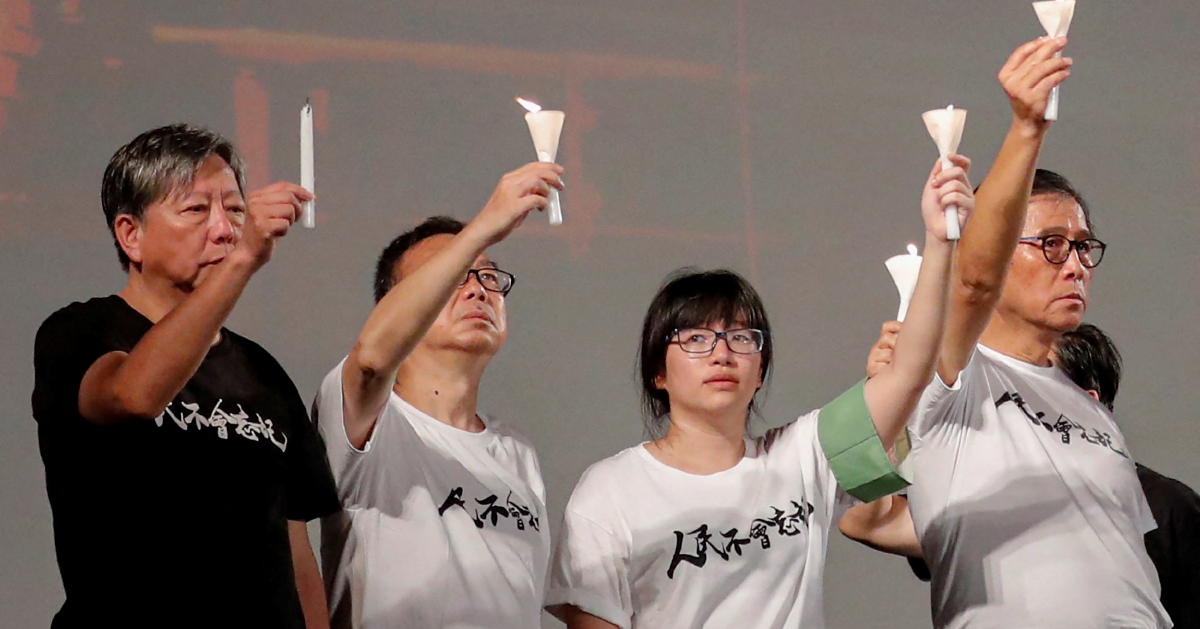
Two Hong Kong activists have been found guilty of inciting subversion by a city court after organising annual commemorative vigils honouring those who died during the 1989 Tiananmen crackdown in Beijing. The Friday court verdict marks another significant legal development in Hong Kong's intensifying crackdown on pro-democracy expression, extending the reach of the city's sweeping national security law into forms of political expression previously considered routine.
The conviction centres on the defendants' role in coordinating the June Fourth vigils, which have been held annually on June 4 since 1989 to remember those killed during the military suppression of pro-democracy demonstrations in Beijing. These gatherings attracted tens of thousands of participants at their peak, representing one of the few places outside mainland China where the sensitive historical event was publicly commemorated. The vigils held particular symbolic importance for Hong Kong's pro-democracy movement and served as barometers of public sentiment toward mainland Chinese government policies.
The broader context reveals how Hong Kong's legal environment has fundamentally transformed since the 2020 National Security Law took effect. Previously, such commemorative gatherings operated within acknowledged grey zones of political tolerance, tacitly permitted despite their contentious nature. The law fundamentally altered this equilibrium by criminalising speech and conduct deemed subversive of state power, fundamentally redefining what constitutes permissible expression in the territory. The subversion charge specifically targets efforts to undermine the authority or sovereignty of China's central government, reflecting an expansive interpretation of security concerns.
This conviction signals how broadly authorities are willing to prosecute activities that challenge official narratives around sensitive historical events. The charges are not based on violent conduct or concrete threats, but rather on organising gatherings and coordinating advocacy—activities historically protected as free expression in Hong Kong's Westminster-derived legal tradition. The prosecution's success in securing guilty verdicts effectively criminalises the act of public remembrance itself when directed toward events the mainland government considers politically dangerous subjects.
For Malaysian observers, this development carries instructive weight given Southeast Asia's complex relationship with free expression, historical memory, and state authority. Hong Kong's experience demonstrates how security legislation, once enacted with stated intentions of preventing violence or separatism, can rapidly expand to encompass conventional political activities and historical commemoration. The precedent suggests that broad security frameworks, even when justified by legitimate governmental concerns, create structural incentives toward prosecutorial overreach and progressive narrowing of permissible discourse.
The vigil organisers' conviction also reflects tensions inherent in Hong Kong's unique position as a Special Administrative Region operating under the "One Country, Two Systems" framework. The National Security Law represents a fundamental assertion of mainland governance frameworks over Hong Kong's previously distinct legal system, gradually harmonising the territory's approach to dissent and historical narratives with mainland practice. This convergence has been particularly evident in education policy, media regulation, and now judicial treatment of commemorative activities.
The international ramifications extend beyond Hong Kong itself. Many Western governments and human rights organisations have expressed concern that the convictions further entrench restrictions on freedom of assembly and expression. This verdict may encourage similar prosecutions against other memorial organisers, further constraining the already-limited space for dissenting voices or alternative historical narratives within Hong Kong. The chilling effect on civic participation and commemorative activities represents a significant shift from Hong Kong's previous status as a relatively open society.
For activists and civil society organisations across the region, the Hong Kong precedent presents troubling implications. It demonstrates how security legislation can transform remembrance activities into prosecutable offences, creating legal jeopardy for basic acts of historical reflection. This development is particularly consequential in Southeast Asia, where various governments grapple with sensitive historical events and minority rights movements. The Hong Kong model shows how security frameworks can systematically marginalise commemoration of events authorities prefer remain unexamined.
The conviction also reflects broader questions about historical memory and state power in contemporary China and affected territories. The 1989 Tiananmen crackdown remains officially disputed within mainland discourse, with discussions heavily controlled and alternative narratives suppressed. Hong Kong's previous willingness to permit commemorative vigils represented an exception to this pattern, a limited space where public reflection on the event was possible. The erasure of this space through criminal prosecution effectively extends mainland censorship regimes into territory previously characterised by comparative openness.
Looking forward, this case will likely influence how other Asian democracies and semi-democratic systems calibrate security legislation. The Hong Kong convictions demonstrate the practical mechanics of how broad security laws gradually constrict civic space, offering a cautionary precedent for jurisdictions debating whether to introduce similar measures. For Malaysia and other Southeast Asian nations, the case underscores how ostensibly targeted security measures can become instruments for systematic suppression of dissent and alternative historical narratives.
The broader trajectory visible in Hong Kong—from annual vigils attracting massive crowds to criminal prosecution of commemorative organisers—represents a dramatic compression of political and expressive freedoms within a single generation. This process has profound implications for how societies manage historical memory, state authority, and the boundaries of permissible discourse. The vigil organisers' convictions symbolise not merely the prosecution of specific individuals, but the systematic narrowing of Hong Kong's previously distinctive approach to historical reflection and political expression.

