The Hong Kong film industry has lost one of its most influential figures with the death of producer Shi Nan-sun, aged 75, on Monday evening at Hong Kong Sanatorium & Hospital. Her company, Film Workshop, announced that she passed away peacefully at 8.51pm, surrounded by family members. The cause was attributed to multiple organ failure stemming from a bacterial infection, marking the culmination of declining health that had plagued her since 2022 when complications with her immune system began to manifest. In recent months, recurring infections had severely compromised her physical condition.
The outpouring of tributes from Hong Kong's entertainment establishment underscores Shi's status as a transformative figure whose influence extended far beyond individual films. International star Jackie Chan expressed his sentiment through a Weibo post, characterising the loss as another blow to world cinema and reflecting on how audiences would forever associate Shi with the strength embodied in her most celebrated productions. Fellow acclaimed actress Carina Lau Ka-ling shared a personal reflection, crediting Shi as a mentor whose wisdom extended to matters of personal integrity and professional conduct. She noted that both she and her husband, Tony Leung Chiu-wai, held Shi in tremendous regard as a female trailblazer and veteran of the industry who had set an exemplary standard for how one should navigate a demanding creative field.
Other prominent figures in Hong Kong cinema, including Brigitte Lin Ching-hsia, Donnie Yen Chi-tan, and Shu Qi, joined in honouring Shi's memory through public statements. The breadth of these tributes reflects her extensive reach across generations of performers and filmmakers who benefited directly from her acumen in production and distribution. Secretary for Culture, Sports and Tourism Rosanna Law Shuk-pui issued an official statement describing Shi as a distinguished producer whose contributions to Hong Kong's film sector had been immeasurable. Law emphasised that Shi had dedicated her entire professional life to advancing the industry, leaving behind a legacy of cinematic works that would continue to resonate with audiences and preserve important memories for Hong Kong society.
Shi's ex-husband, acclaimed director Tsui Hark, spoke movingly about her final days, highlighting her remarkable fortitude as her condition deteriorated. He recounted how she maintained her composure and grace through the ordeal, remaining grateful to those around her until the end. Tsui and Shi had married in 1996 and divorced in 2014 after eighteen years together, but they sustained a close working relationship and personal friendship that endured until her death. Their professional partnership yielded some of Hong Kong's most celebrated films, establishing a template for how creative vision and production excellence could be combined to achieve international recognition.
Brigitte Lin, who maintained a friendship with Shi spanning more than five decades, provided intimate insights into the producer's character and values. Lin invoked the wisdom of legendary novelist Louis Cha Leung-yung, known as Jin Yong, to describe Shi as entirely devoted to her husband and deeply admiring of Tsui as a true artistic visionary. In her early morning tribute on Tuesday, Lin expressed her intention to honour Shi's memory by emulating her example and channelling her positive energy toward others, suggesting that the producer's influence transcended professional matters to encompass broader principles about how to live meaningfully.
Shi's career trajectory demonstrates how strategic thinking and operational excellence could reshape an entire industry. Beginning her professional life in television, she joined Cinema City in 1981, where she quickly established herself as an executive director with exceptional capability in administration, financial management, contract negotiation, and international distribution—skillsets that were essential for positioning Hong Kong productions in global markets. Her move to co-found Film Workshop in 1984 with Tsui represented a pivotal moment, as the company became instrumental in professionalising Hong Kong's approach to film production and establishing international distribution networks that would allow local stories to reach audiences worldwide.
The creation of Distribution Workshop further expanded Shi's sphere of influence, creating pathways for Hong Kong productions to secure global release and recognition. During an era when Hong Kong cinema was emerging as a distinctive and vibrant force in world film, Shi's business acumen and industry connections proved invaluable. Her work extended beyond the mechanics of production to encompass the cultural and commercial dynamics that allowed Hong Kong's unique aesthetic and storytelling traditions to flourish in international contexts. This positioning ultimately contributed significantly to the territory's reputation as a major creative hub throughout the 1980s and 1990s.
Shi's final public appearance came in May at the funeral of fellow veteran producer Linda Kuk Mei-lai, an occasion when observers noted she was using a walking stick, prompting concerns about her deteriorating health. In the months that followed, her condition declined steadily, though details of her illness remained largely private until the announcement of her death. The timing of her passing came just months after she and Tsui jointly received a lifetime achievement award at the Hong Kong Film Awards in 2025, a recognition that celebrated their combined contributions to reshaping the industry over several decades.
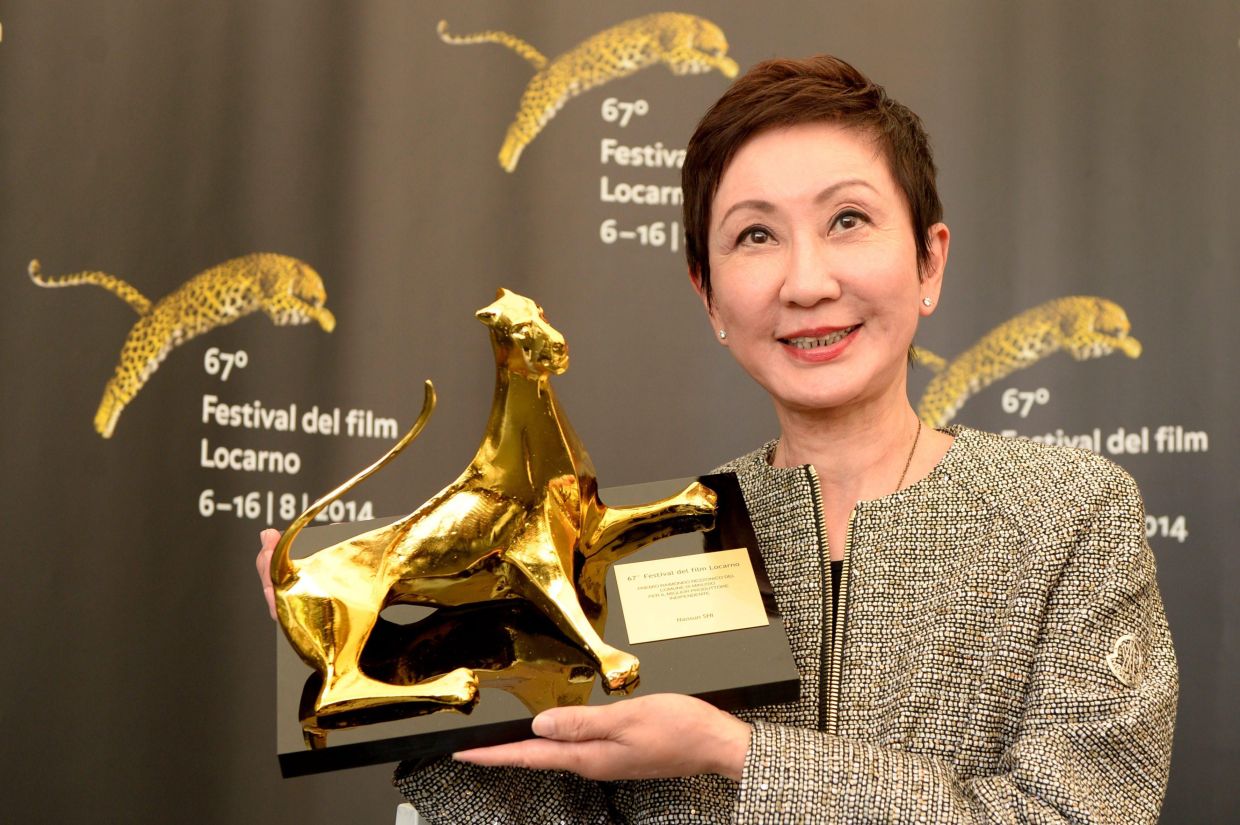
Beyond her commercial achievements, Shi gained international recognition through numerous prestigious honours. She was appointed an officer of France's Ordre des Arts et des Lettres, receiving validation from the French establishment for her cultural contributions. She won the best independent producer award at the Locarno International Film Festival, securing recognition from one of Europe's most respected cinematic institutions. Throughout her career, she served as a jury member and festival president for various major international film festivals, roles that positioned her as an ambassador for Hong Kong cinema and demonstrated the esteem in which she was held by the global film community.
Shi's educational background in statistics and computing, acquired during her studies at the Polytechnic of North London, proved formative to her professional success. This technical foundation, combined with her creative instincts and business sensibility, enabled her to approach film production with a systematic yet imaginative perspective that became her hallmark. Born and educated in Hong Kong, she maintained deep roots in her home territory while cultivating international perspectives and connections that served the local industry well. Her ability to bridge Hong Kong's creative traditions with global commercial and artistic standards fundamentally shaped how the territory's cinema evolved and was perceived internationally.
The loss of Shi represents a significant moment for reflection within Hong Kong's film sector, which has undergone considerable transformations since her most active years. While the industry has faced various challenges in recent decades, Shi's legacy endures through the institutional structures, international relationships, and professional standards she helped establish. Her approach to treating film production as both an art form and a business requiring rigorous management set a template that continues to influence how contemporary producers operate. For Malaysian and Southeast Asian observers, Shi's career offers instructive lessons about how regional creative industries can develop professional capacity and international reach through strategic vision and unwavering commitment to excellence.

