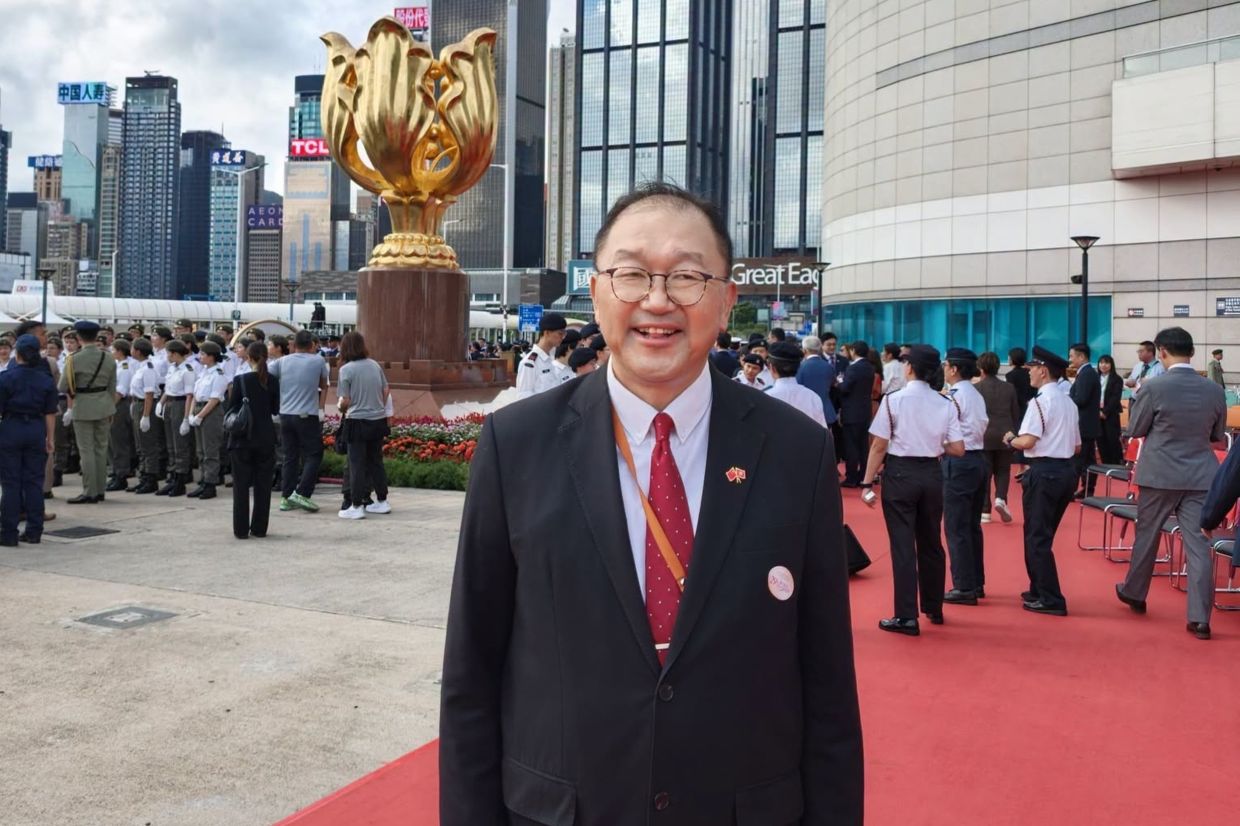
William Wong Kam-fai, a 66-year-old Hong Kong legislator, has stepped down from the Legislative Council after being arrested on suspicion of drink-driving and involvement in a hit-and-run incident, making him the first lawmaker to resign over a scandal in more than 26 years. Wong's departure on Friday came just days after his Monday evening arrest when his vehicle collided with two parked cars near a staff residence on a university campus at approximately 10.46pm. The swift departure signals the seriousness with which Hong Kong's political establishment views the incident and underscores the heightened standards expected of lawmakers in the territory.
In a carefully worded statement released following his resignation, Wong expressed remorse for the incident and its repercussions. He acknowledged the distress caused to both the broader community and the Legislative Council itself, while emphasising his desire to avoid further disruption to the legislative process. Wong noted that the ongoing police investigation prevented him from elaborating on the circumstances surrounding the collision, though he pledged to continue contributing to Hong Kong society through alternative channels in his future endeavours. His decision to step down immediately, without waiting for the conclusion of legal proceedings or formal charges, demonstrates a recognition that remaining in office would compound the reputational damage already inflicted on the institution.
Legislative Council President Starry Lee Wai-king formally acknowledged Wong's departure, expressing appreciation for his service to the chamber and his contributions to Hong Kong's development over his tenure. Lee's statement, though brief, reinforced the institutional acceptance of Wong's decision and positioned his exit as a responsible choice rather than a forced removal. This diplomatic framing reflects the political sensitivity surrounding the matter and the preference for managed transitions that preserve the appearance of institutional stability. The acceptance of Wong's resignation without public acrimony suggests consensus among leadership that his continued presence would pose greater risks to legislative credibility than his departure.
Wong held multiple positions beyond his Legislative Council seat, including membership in the Chinese People's Political Consultative Conference, the national-level advisory body comprising mainland and Hong Kong elites. His academic employer, the Chinese University of Hong Kong, suspended him immediately from administrative duties, though the university acknowledged the need to await the police investigation's outcome before determining more permanent employment consequences. This layered approach to accountability reflects institutional awareness that premature termination could complicate legal proceedings while demonstrating institutional responsiveness to public concern. The university's swift action, combined with Wong's political resignation, illustrates how serious traffic violations involving senior figures trigger coordinated responses across multiple sectors.
Political analysts and observers largely endorsed Wong's decision as strategically necessary. Lau Siu-kai, affiliated with the semi-official Chinese Association of Hong Kong and Macau Studies, characterised the resignation as the optimal approach to minimise collateral damage to both Wong's personal standing and the legislature's reputation. Lau suggested that remaining in office would have invited sustained criticism and potentially exposed the Legislative Council to attacks questioning the patriotism and integrity of its members—a particularly sensitive concern given Beijing's emphasis on merit and virtue in selecting Hong Kong's governing elite. By resigning promptly, Wong prevented his personal scandal from becoming weaponised against the broader system of governance in Hong Kong.
Lau further speculated that Wong would likely relinquish his CPPCC position as well, given the severity of the circumstances and the expectation that central authorities would accept such a resignation even though removing CPPCC members remains relatively uncommon. This analysis highlights how political accountability in Hong Kong operates through cascading resignations across multiple platforms rather than through formal disciplinary mechanisms. The voluntary surrender of prestigious positions carries greater symbolic weight in demonstrating contrition than forced removal, and authorities appear willing to accommodate such self-imposed exits as they achieve the desired outcome of separating compromised individuals from positions of influence.
Tam Yiu-chung, Hong Kong's former sole representative to the National People's Congress Standing Committee, concurred that Wong's departure represented the prudent course. Tam emphasised that legislators face heightened public expectations regarding personal conduct and integrity, making disqualification from office an appropriate consequence for serious lapses in judgment such as suspected drink-driving. Notably, Tam highlighted that Wong's constituency classification—the Election Committee rather than a functional constituency—meant his absence would not disrupt sectoral representation in the legislature or create immediate operational difficulties. This distinction became relevant to questions about whether the government would call a by-election to fill the vacant seat, a decision that rests entirely with the executive rather than the legislature.
The question of a by-election proved less straightforward than Wong's resignation itself. Tam noted that no legal obligation exists to hold a by-election following a legislator's departure, allowing the government considerable discretion in deciding whether to proceed. He referenced precedent from the previous Legislative Council, when a seat vacated by Stephen Wong Yuen-shan—another Election Committee legislator who departed in late 2022 to lead a government think tank—remained unfilled for approximately three years without a by-election being called. This historical example demonstrates that the government prioritises budgetary considerations and operational efficiency over maintaining full legislative strength, particularly when replacing a member from a constituency category lacking specific sectoral interests to represent.
Constitutional Affairs Minister Erick Tsang Kwok-wai had previously indicated that financial prudence would factor into any government decision regarding by-elections, suggesting that the government weighs cost-benefit calculations and time-to-term factors when deciding whether to incur the expense of a fresh electoral contest. With Wong's resignation now complete, the government faces a choice between scheduling a by-election or allowing the seat to remain vacant through the remainder of the current legislative term. The decision will likely depend on the timing of the next regular election and the budgetary impact of holding a special poll, rather than any obligation to restore full representation.
Wong's departure represents a significant watershed in Hong Kong's recent political history, ending a 26-year period without a legislator resigning specifically due to scandal. The previous comparable case involved Gary Cheng Kai-nam, who resigned shortly after being elected to the Legislative Council in September 2000 following revelations about undisclosed business conflicts of interest, mishandling of confidential government documents, and personal misconduct. Cheng subsequently faced criminal prosecution, ultimately receiving an 18-month prison sentence after conviction on bribery, misconduct in public office, false accounting and theft charges. That extended interval between scandal-related resignations reflects both the selectivity of legislative recruitment and the rarity of situations compelling serving lawmakers to abandon their positions voluntarily.
The incident surrounding Wong's arrest and resignation carries broader implications for Hong Kong's governance narrative and the territory's relationship with mainland authorities. Wong's rapid exit—coupled with his institutional acceptance and the apparent consensus among political leaders that resignation constituted the appropriate response—demonstrates operational mechanisms for managing reputational crises within Hong Kong's political establishment. Rather than defending compromised officials or allowing scandals to fester, the system can execute swift, coordinated transitions that restore institutional credibility while preserving hierarchical relationships and political stability. From a mainland perspective, this capability to self-regulate and enforce standards reinforces arguments that Hong Kong's governance structures function effectively under the current arrangements.
For Malaysian and broader Southeast Asian observers, the Wong episode illustrates how different governance systems respond to high-profile misconduct involving senior officials. The voluntary resignation model, underpinned by institutional consensus and coordinated action across government and academic sectors, contrasts sharply with scenarios where political leaders cling to office despite serious allegations or where prosecutions become prolonged and contentious. The efficiency and apparent lack of rancour characterising Wong's departure may reflect the centralised nature of Hong Kong's political system and the absence of divisive partisan competition that often complicates accountability mechanisms elsewhere in the region. Simultaneously, the willingness of universities and statutory bodies to suspend individuals swiftly demonstrates institutional autonomy operating within understood parameters of acceptable conduct.
Looking forward, Wong's case will likely serve as a precedent shaping expectations regarding official conduct standards in Hong Kong. The message conveyed—that serious lapses warrant immediate severance from public office—reinforces broader governance principles emphasising meritocracy, integrity and political stability. Whether future scandals receive identical treatment may depend on their severity, the status of individuals involved and political circumstances at the time. The absence of by-election provisions and the government's discretion regarding seat replacement suggest that institutional responses can vary based on administrative judgments rather than rigidly applied rules. For the Legislative Council itself, Wong's departure closes an unusual chapter while leaving unresolved questions about how the institution will evolve in light of Beijing's ongoing efforts to reshape Hong Kong's governance model through legal reforms and enhanced oversight mechanisms.

